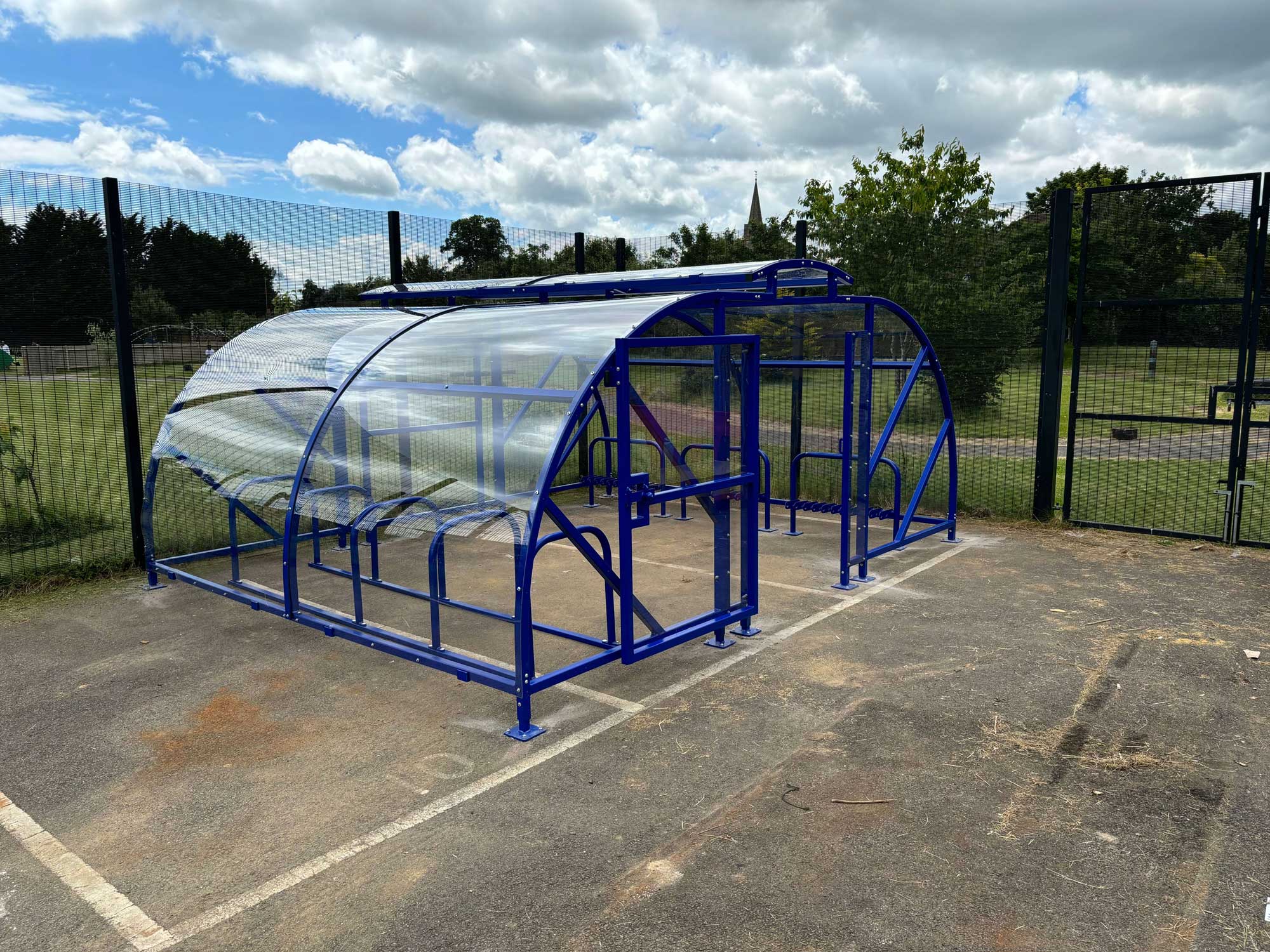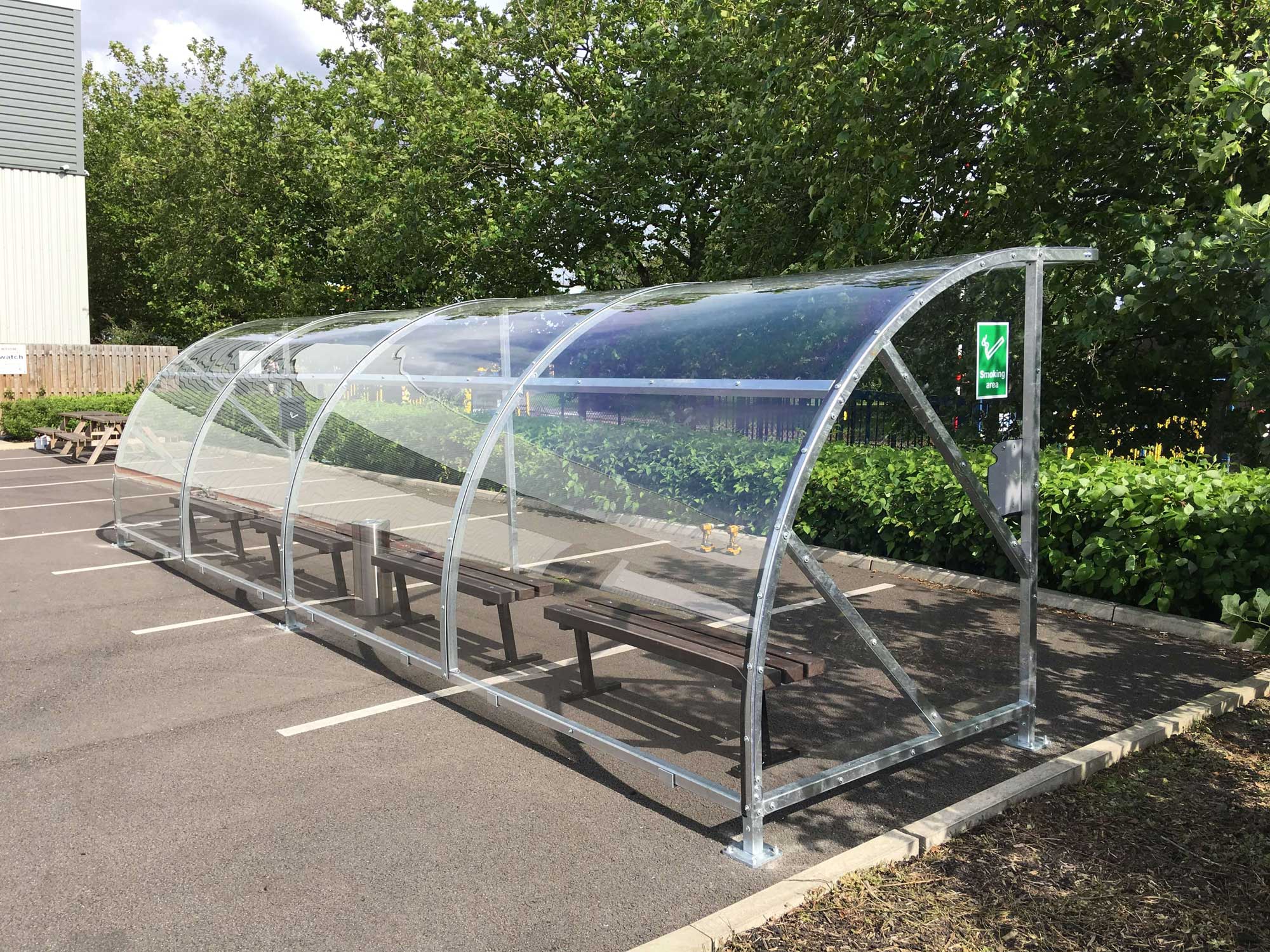
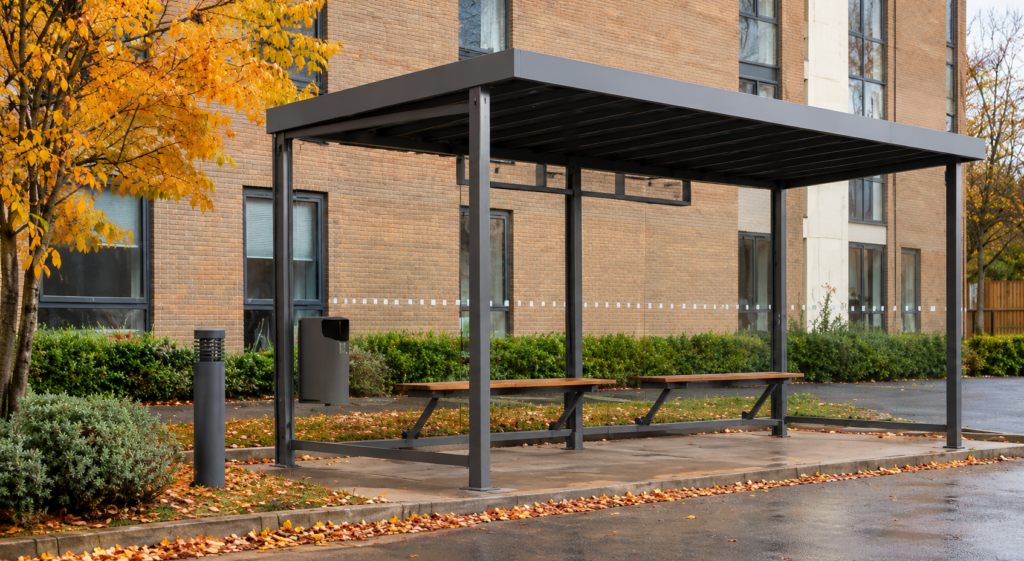
A smoking shelter can look perfectly serviceable through summer while already showing early signs of deterioration that become harder to ignore once autumn arrives.
Cracked glazing, loose panels, damaged coatings and corrosion can be easy to put off during settled weather. But as conditions become wetter and windier, existing weaknesses may become more noticeable.
For facilities and estates teams, late summer is therefore a sensible time to inspect smoking shelters and decide whether maintenance, repair or refurbishment is needed before autumn.
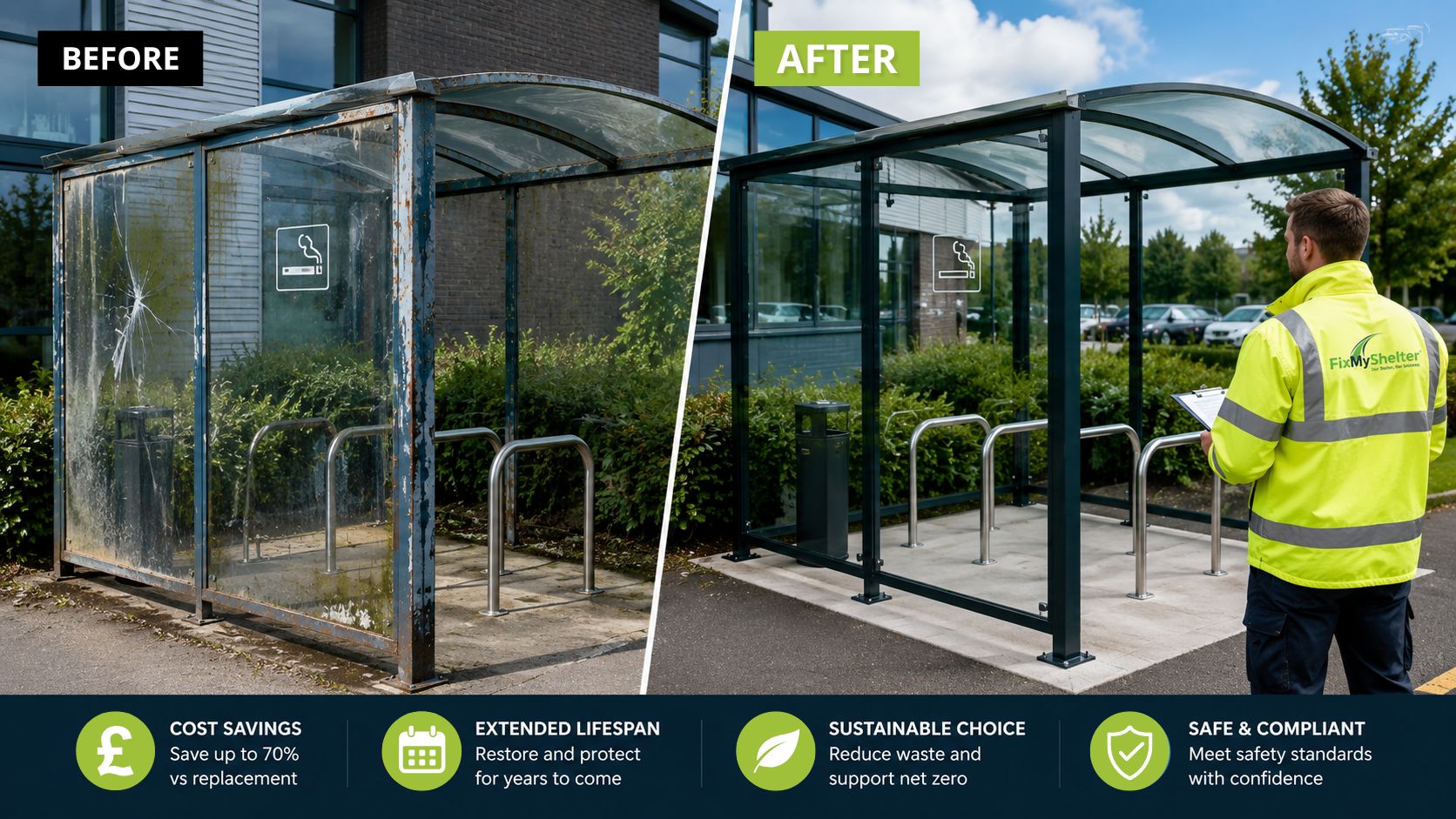
The good news is that discovering damage does not automatically mean replacing the whole shelter. Where the main structure remains suitable, individual components can often be repaired or replaced as part of a professional shelter refurbishment.
Here are the main problems worth checking.
1. Cracked, Broken or Missing Glazing Panels
Start with one of the easiest problems to spot: the glazing.
Look for cracks, impact damage, missing sections, loose panels and glazing that has become badly weathered.
Damaged glazing isn’t simply an appearance issue. Panels provide users with protection from the weather, so missing or broken sections are likely to become particularly noticeable when autumn brings more rain and wind.
Importantly, damaged glazing doesn’t necessarily mean the entire smoking shelter needs replacing.
If the underlying frame remains serviceable, individual panels or larger sections of glazing can often be replaced. Fix My Shelter’s glazing panel replacement service covers existing outdoor shelters, with supply-only and supply-and-install options available.
This allows deteriorated parts to be addressed while retaining a suitable existing structure.
2. Rust and Corrosion on the Shelter Frame
Visible corrosion is worth investigating early because the important question isn’t simply whether rust is present, but whether it is superficial or indicates more significant deterioration.
Pay particular attention to:
- areas where coatings have chipped or failed;
- scratches exposing the underlying metal;
- joints and connections;
- lower sections of the frame;
- places where moisture appears to collect.
Surface corrosion on an otherwise serviceable frame may be treatable as part of refurbishment through appropriate preparation and recoating.
Significant corrosion is different.
If metalwork is heavily deteriorated, distorted or showing substantial material loss, simply painting over it is not a repair. The structure should be professionally assessed to establish whether refurbishment remains appropriate.
Checking corrosion before another wet season gives facilities teams an opportunity to investigate the condition before deterioration progresses further.
3. Peeling or Damaged Protective Coatings
Sometimes a smoking shelter looks older than it actually is because its finish has deteriorated.
Coatings on suitable metal framework do more than determine colour and appearance. They also help protect the underlying surface.
Look for peeling, flaking, bubbling, scratches, exposed metal and areas where corrosion is beginning to appear.
Where the underlying frame remains suitable, professional preparation and recoating can form part of a wider shelter refurbishment.
Fix My Shelter’s refurbishment work can combine frame recoating with glazing panel replacement, allowing serviceable infrastructure to be retained rather than automatically removing the complete structure.
4. Loose Panels, Fixings and Components
Not every smoking shelter problem is immediately obvious.
A panel that rattles excessively during windy conditions, a visibly loose fixing or a component that has started moving deserves attention.
During a visual inspection, check accessible panel fixings, brackets, bolts, connections, roof panels and side glazing.
The purpose isn’t to encourage facilities teams to undertake structural repairs themselves. It is to identify anything unusual so it can be assessed before worsening weather places further demands on an already deteriorated component.
If the shelter appears unstable or there is concern about a structural connection, seek professional assessment.
5. Leaves, Dirt, Water and Debris
Some pre-autumn maintenance is much simpler.
Leaves, litter, dirt, moss, algae and vegetation can accumulate around outdoor shelters. Different shelter designs have different roof and drainage arrangements, but any drainage routes present should be kept clear, and areas where water repeatedly collects should be investigated.
Cleaning also provides a useful opportunity to inspect the structure properly.
Once accumulated dirt and vegetation are removed, previously hidden problems such as corrosion, damaged coatings or cracked panels can become easier to identify.
Pay particular attention to lower sections of the frame and areas that remain damp for prolonged periods.
6. Problems Around the Base and Anchoring
Don’t concentrate entirely on the roof and glazing. Check where the shelter meets the ground too.
Look for obvious movement, deterioration around fixing points, damaged surrounding surfaces, distortion, unusual leaning or visibly compromised anchoring.
These aren’t problems to disguise with cosmetic repairs.
Where there is concern about stability, foundations, anchoring or structural integrity, the shelter should receive an appropriate professional assessment.
Pre-Autumn Smoking Shelter Checklist
A straightforward visual inspection can reveal a surprising amount.
Before autumn, check:
- roof and side glazing for cracks or impact damage.
- missing, loose or badly weathered panels.
- visible panel fixings and brackets.
- the frame for rust and corrosion.
- peeling or damaged coatings.
- visible bolts and connections.
- base and anchoring areas.
- signs of unusual movement or instability.
- leaves, litter, moss and other debris.
- drainage routes where present.
- areas of standing water.
- the shelter’s general condition.
If you manage several shelters, recording defects can make it easier to prioritise maintenance across a site.
This is a visual maintenance check, not a substitute for structural inspection. Concerns about stability or structural integrity should be assessed by an appropriately competent professional.
Should You Repair, Refurbish or Replace Your Smoking Shelter?
Finding a problem is only the first step. The next question is what should be done about it.
An ageing smoking shelter does not automatically need replacing.
Where the main structure remains serviceable, deterioration may be concentrated in components that can be repaired, replaced or refurbished, such as damaged glazing or deteriorated coatings.
A sensible approach is:
- Inspect
- Assess
- Repair what is practical
- Refurbish where appropriate
- Replace when necessary.
Replacement may be more appropriate where there is significant structural corrosion, badly distorted framework, compromised foundations or anchoring, widespread deterioration, or damage that cannot safely or practically be restored.
The existing shelter may also no longer meet the operational requirements of the site.
The important thing is not to make the decision based on appearance alone.
Fix My Shelter specialises in glazing panel replacement, shelter refurbishment and complete shelter replacement, so assessing the existing structure is a sensible starting point before committing to a completely new shelter.
What Can Smoking Shelter Refurbishment Involve?
Where a smoking shelter is suitable for refurbishment, work can focus on the components that actually require attention.
Depending on its condition, this may involve replacing damaged glazing, preparing and recoating serviceable framework and replacing appropriate deteriorated components.
This refurbishment-first principle can be seen in Fix My Shelter’s work on other outdoor structures. At Swakeleys School for Girls, existing shelter structures were retained while damaged and missing glazing was replaced with new UV-resistant polycarbonate panels and upgraded fixings. The published case study reports that the work was completed within two days during the school holidays.
Although this was a school shelter project rather than a smoking shelter, it demonstrates an important principle: where the underlying structure remains suitable, replacing failed components can sometimes avoid unnecessary complete replacement.
However, refurbishment should never be chosen simply because it sounds cheaper or greener. Structural suitability comes first.
Don’t Forget the Rules Around Smoking Shelters
Refurbishment is also an opportunity to check whether a smoking shelter’s configuration remains appropriate.
In England, smoking is prohibited in enclosed and substantially enclosed workplaces and public places. For roofed smoking shelters, the commonly referenced 50% rule is important. Current local-authority guidance on smoking shelters explains that more than 50% of the perimeter under a roof or ceiling must be open space for the structure to be considered not substantially enclosed.
Doors, windows and other fittings that can be opened or closed do not count as permanent openings. Nearby walls and other structures can also affect how enclosure is assessed, so adding or altering panels should be considered carefully.
The wider legal landscape is also developing. The Tobacco and Vapes Act 2026 received Royal Assent on 29 April 2026 and provides powers that can be used to create further smoke-free places.
That does not mean every potential new outdoor smoking restriction is already in force. Government guidance published in July 2026 confirms that regulations arising from powers in the Act are still being developed in relevant areas.
Facilities managers planning significant refurbishment, relocation or replacement should therefore check the latest requirements applying to their premises and seek appropriate advice where necessary.
Fix Problems Before Autumn Finds Them for You
The best time to discover that a smoking shelter has cracked glazing, loose components or a deteriorating frame isn’t during the first spell of severe autumn weather.
A pre-autumn inspection gives facilities and estates teams time to understand the condition of the structure and make an informed decision.
Some shelters may need little more than cleaning and routine maintenance. Others may benefit from replacement glazing or more comprehensive refurbishment. Where structural deterioration has progressed too far, replacement may be the sensible option.
The key is assessment before assumption.
Fix My Shelter works with organisations across the UK to improve existing outdoor shelters through glazing replacement, refurbishment and, where necessary, complete replacement.
Before replacing the whole shelter, find out what can be saved.
Frequently Asked Questions
Can cracked smoking shelter panels be replaced?
Yes, where the existing shelter and panel arrangement are suitable. Damaged or missing glazing can often be replaced without replacing the complete shelter if the underlying structure remains serviceable.
Can a rusty smoking shelter be refurbished?
Potentially. Surface corrosion may be treatable through appropriate preparation and recoating. Significant corrosion, distortion or material loss should be professionally assessed first.
How do I know if a smoking shelter needs replacing?
Significant structural corrosion, distorted framework, compromised anchoring or foundations, extensive deterioration, or a shelter that no longer meets the site’s requirements may make replacement more appropriate.
What should I check on a smoking shelter before autumn?
Check the glazing, frame, protective coatings, visible fixings, base and anchoring areas. Look for corrosion, cracked or loose panels, debris, standing water and unusual movement.
Is it worth refurbishing an old smoking shelter?
It can be where the underlying structure remains suitable, and deterioration is concentrated in repairable or replaceable components. The overall condition should be assessed before deciding between refurbishment and replacement.