As the summer holidays draw to a close, schools across the UK are preparing classrooms, corridors, playgrounds and facilities for the start of another academic year. But there is one area that can easily be overlooked: the school cycle shelter.
After years of exposure to rain, wind, frost, UV light and everyday use, even a well-built bike shelter can begin to show signs of deterioration. Cracked or missing glazing panels, rusting frames, loose fixings and damaged cycle racks can quickly turn a useful school facility into an area that looks neglected or is no longer fit for purpose.
Before pupils return in September, it is worth asking one simple question:
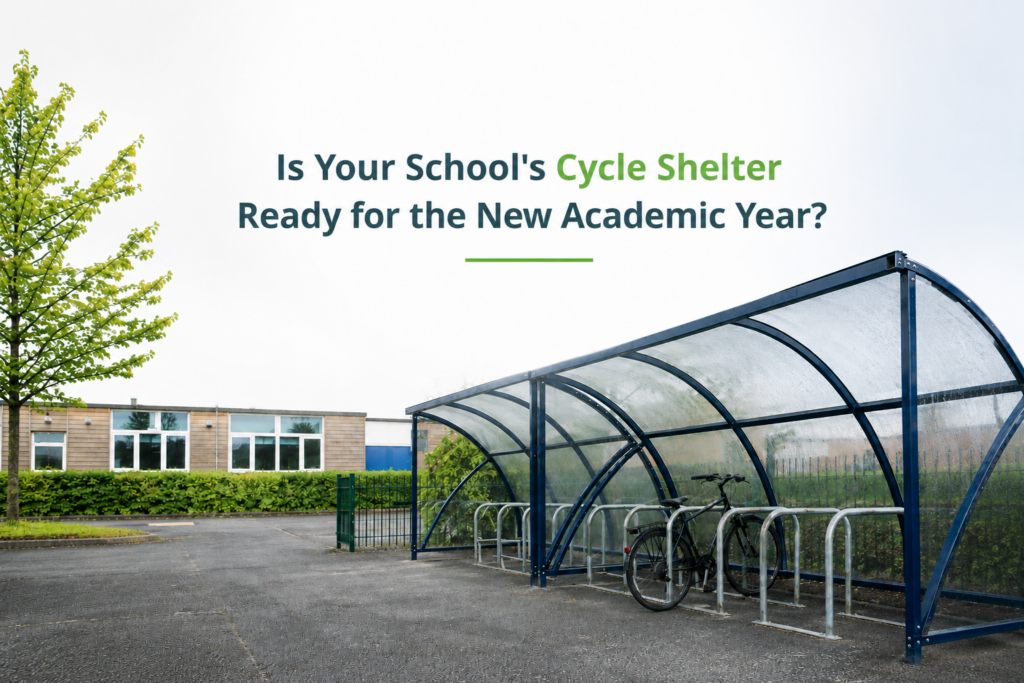
Is your school’s cycle shelter ready for the new academic year?
Why School Cycle Shelter Maintenance Matters
Cycle shelters form an important part of many school estates, particularly as schools and local authorities continue to encourage active and sustainable travel.
According to Bikeability, more than 524,000 children completed Bikeability cycle training during the 2025–26 financial year, demonstrating the continued importance of cycling skills and active travel among young people.
A clean, secure and well-maintained school bike shelter provides pupils and staff with somewhere practical to leave their bicycles protected from the weather during the school day.
It can also contribute to the overall appearance and management of the school estate.
The Department for Education’s Good Estate Management for Schools guidance states that schools should plan and maintain their estates so they remain safe and weatherproof. It also emphasises identifying property-related health and safety issues and taking appropriate action to minimise risks.
That makes the summer period an ideal opportunity to inspect outdoor structures, including cycle shelters, before pupils return.
7 Signs Your School Cycle Shelter Needs Attention
A cycle shelter does not necessarily need replacing simply because it looks old.
In many cases, the main steel framework may still be perfectly serviceable while individual components have deteriorated.
Here are some of the most common problems to look for.
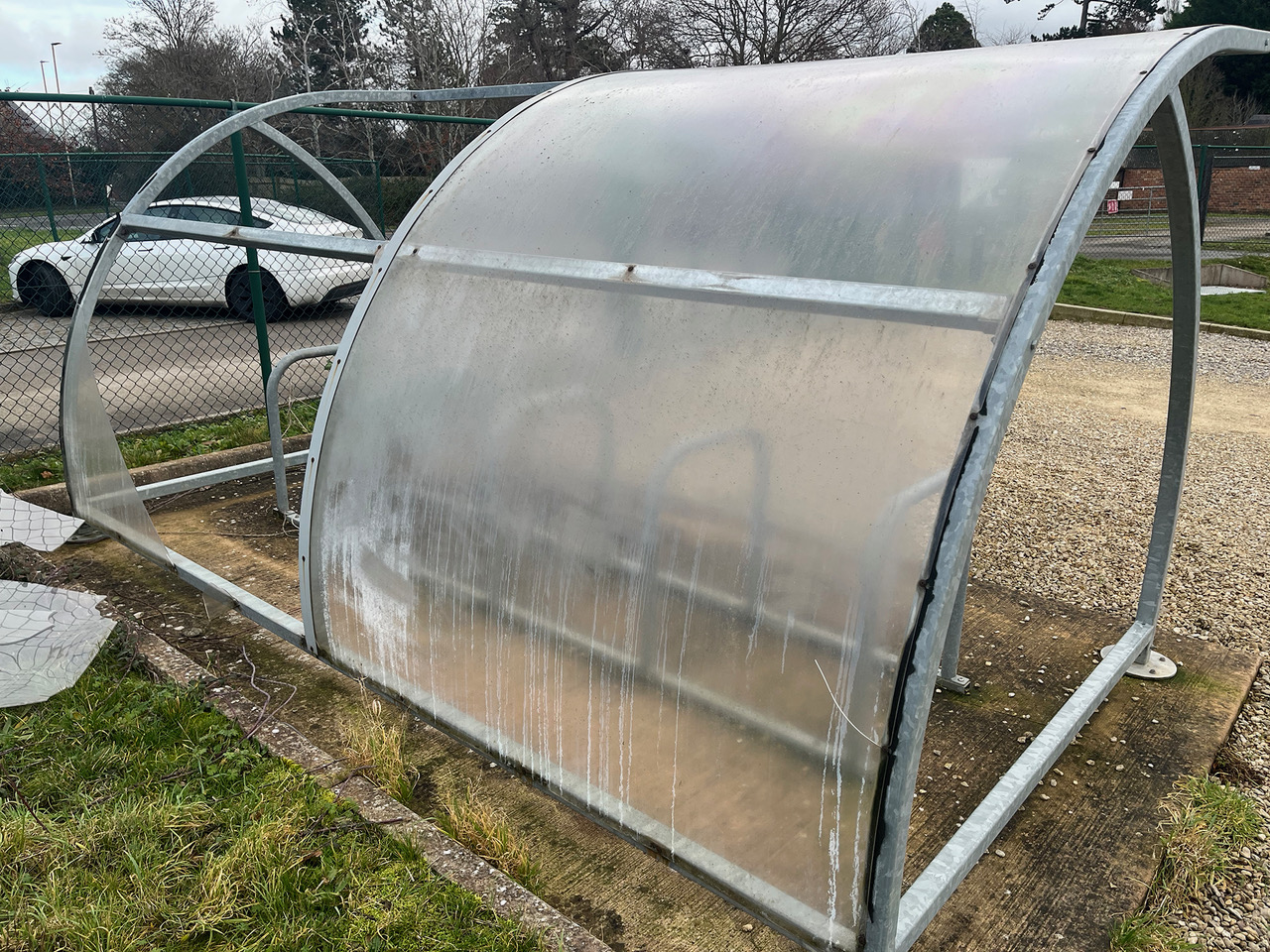
1. Cracked or Broken Glazing Panels
Take a close look at the shelter’s roof, side and rear panels.
Are there cracks, holes, sharp damaged sections or panels that have disappeared altogether?
Damaged cycle shelter glazing panels can reduce weather protection and potentially create unnecessary hazards around areas used by pupils.
Replacing individual panels can often restore the shelter without replacing the complete structure.
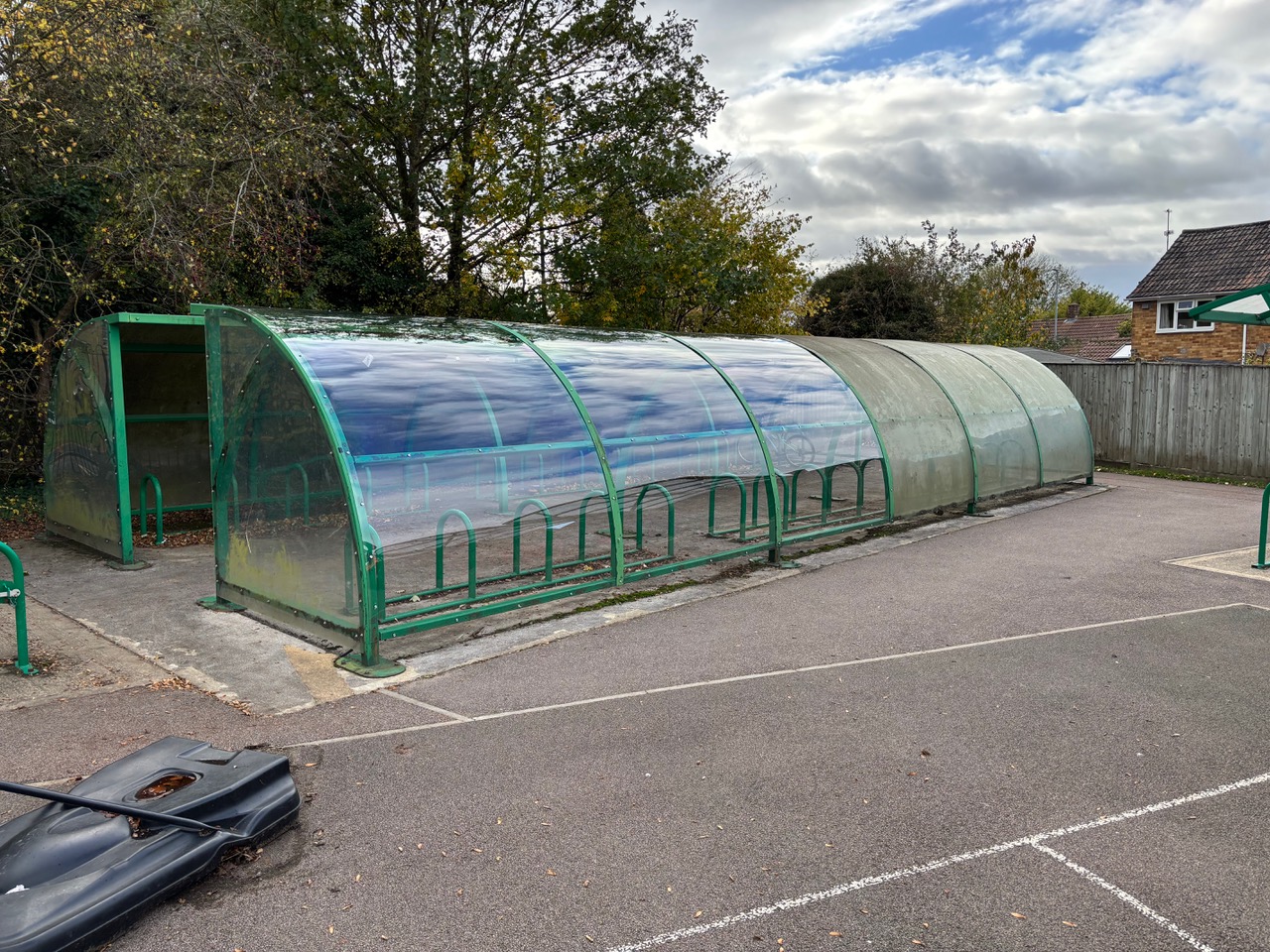
2. Cloudy or Discoloured Panels
Older plastic glazing can become scratched, cloudy or discoloured after years outdoors.
Although the shelter may remain functional, heavily weathered panels can make an otherwise good school facility appear considerably older.
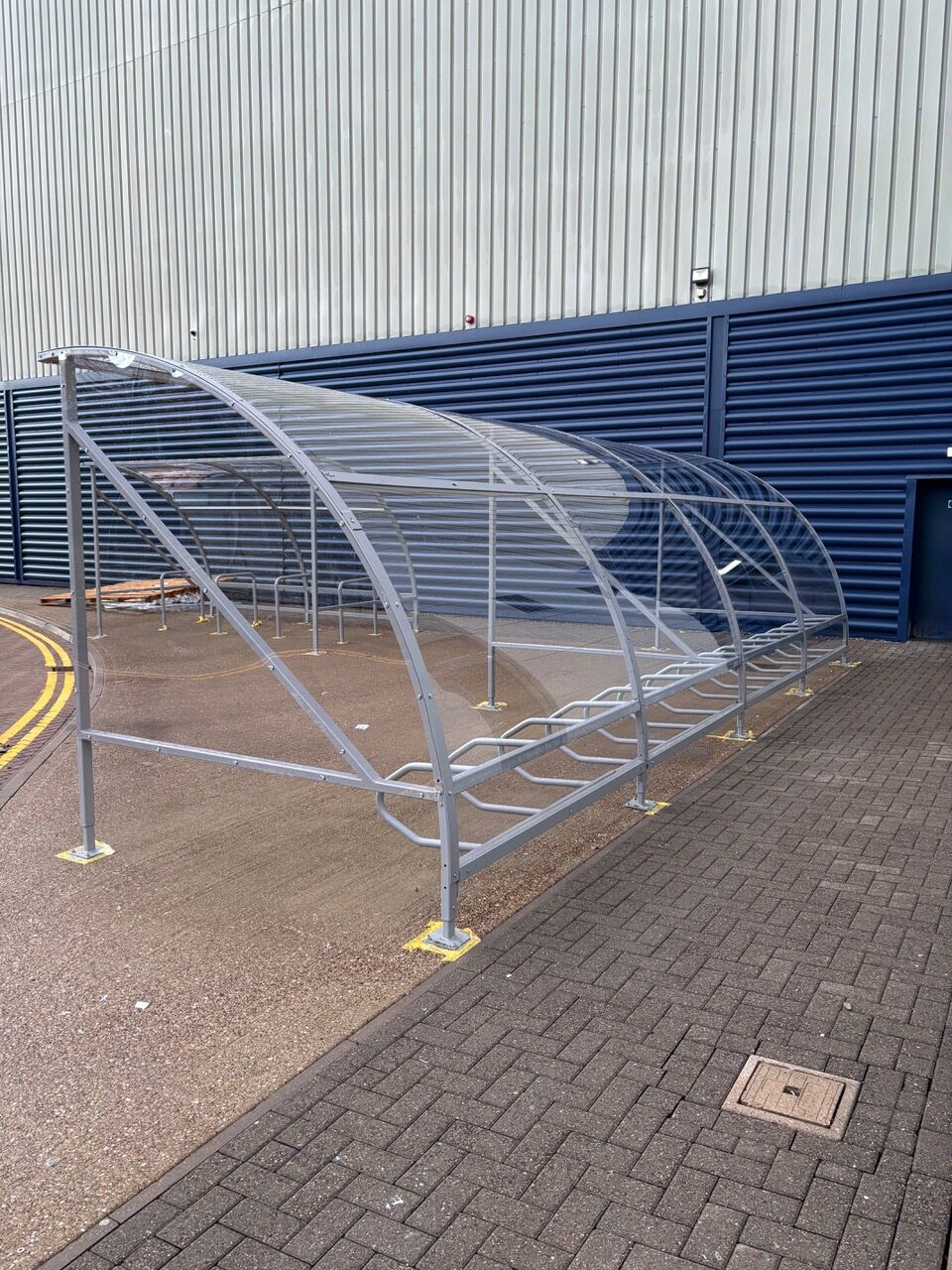
Replacing worn panels with modern polycarbonate cycle shelter panels can give an existing structure an immediate visual improvement while restoring clear weather protection.
3. Rust and Corrosion on the Frame
Small patches of surface rust should not automatically mean a cycle shelter has reached the end of its life.
However, corrosion should not simply be ignored.
Check areas around the base of the shelter, joints, welds and fixing points as well as sections where the original coating has chipped or peeled.
Where the underlying frame remains structurally suitable, professional cycle shelter refurbishment can include surface preparation and recoating to help protect the existing steelwork and dramatically improve its appearance.
4. Loose or Missing Fixings
Schools should also inspect bolts, brackets, glazing fixings and other connections.
Constant use, weather exposure and accidental impacts can gradually loosen components.
A relatively small maintenance issue is usually much easier to address before it develops into a larger repair.
5. Leaking or Damaged Roof Panels
A cycle shelter is there to protect bicycles from the elements.
If rainwater is coming through damaged roof panels, pupils may be returning to wet bikes and saddles at the end of the school day.
Check for cracks, gaps, missing sections and obvious signs of water ingress.
A bike shelter roof panel replacement may be all that is required rather than investing in an entirely new shelter.
6. Damaged or Inadequate Cycle Parking
Don’t only inspect the shelter itself.
Look at the cycle stands or racks underneath it.
Are they securely fixed? Are any damaged or badly corroded? Is there enough usable space for pupils to park and secure their bicycles properly?
The start of a new academic year is an ideal time to review whether your existing cycle storage still meets the school’s needs.
7. The Shelter Simply Looks Tired
Appearance matters too.
Peeling coatings, algae, dirt, faded panels and surface corrosion can make an otherwise functional structure look neglected.
A professional school cycle shelter refurbishment can transform an ageing shelter without the cost, waste and disruption associated with automatically removing it and starting again.
Refurbish or Replace Your School Cycle Shelter?
One of the biggest mistakes schools can make is assuming that an old-looking cycle shelter automatically needs complete replacement.
Often, it doesn’t.
At Fix My Shelter, we take a refurbishment-first approach. If the existing structure is suitable for refurbishment, it may be possible to retain the main frame and replace or restore only the parts that need attention.
Depending on the shelter’s condition, refurbishment can include:
- Replacement Perspex, polycarbonate or PETG glazing panels
- Roof and side panel replacement
- Removal and treatment of surface corrosion
- Preparation and recoating of the steel framework
- Replacement of damaged or missing fixings
- Repairs and general restoration
- Improvements to cycle parking arrangements
This can provide a more cost-effective and sustainable alternative to complete replacement.
However, refurbishment isn’t suitable for every shelter. Where the frame is seriously damaged, distorted or no longer appropriate for the site, a new cycle shelter replacement may be the better long-term solution.
The important thing is to assess the condition before deciding.
Why the Summer Holidays Are Ideal for Cycle Shelter Refurbishment
For schools, timing maintenance work can be almost as important as the work itself.
Carrying out school cycle shelter repairs during the summer holidays can reduce disruption because there are fewer pupils moving around the site and contractors can often access outdoor areas more easily.
Fix My Shelter recently completed glazing replacement work at Swakeleys School for Girls in Hillingdon, where damaged and missing panels across existing shelters were replaced with new UV-resistant, impact-resistant polycarbonate glazing. The work was scheduled during the school holidays and completed within two days, avoiding interruption to normal school operations.
That is exactly why July and August can be valuable maintenance periods.
Instead of discovering problems when hundreds of pupils return in September, schools can begin the academic year with outdoor facilities already inspected, repaired and ready for use.
Refurbishment Can Be the More Sustainable Choice
There is another important reason to consider refurbishment: waste reduction.
Removing a complete steel cycle shelter when much of the structure remains usable can mean discarding materials unnecessarily.
Refurbishment takes a different approach:
Keep what is still serviceable and replace what has actually deteriorated.
By extending the usable life of existing outdoor infrastructure, schools can reduce waste while making better use of the assets they already own.
For schools and academy trusts looking at sustainability across their estates, cycle shelter restoration can therefore make both environmental and financial sense.
Your Back-to-School Cycle Shelter Checklist
Before pupils return, walk around your cycle storage area and check:
- Are any glazing or roof panels cracked or missing?
- Is there visible rust or corrosion?
- Are panels and fixings secure?
- Are there sharp or damaged sections?
- Is the shelter still protecting bikes effectively from the weather?
- Are cycle stands secure and usable?
- Is the shelter clean and presentable?
- Is there sufficient cycle parking capacity?
- Could the existing structure be refurbished rather than replaced?
If you answer no to any of these questions, now is the time to investigate.
Get Your School Cycle Shelter Ready for September
A damaged cycle shelter does not necessarily need to become an expensive replacement project.
From replacing broken glazing panels to completely refurbishing an ageing structure, targeted repairs can give an existing school bike shelter a new lease of life.
Fix My Shelter provides cycle shelter refurbishment and repair services for schools across the UK, including glazing panel replacement, frame recoating, shelter restoration and complete replacement where refurbishment is no longer practical.
Our aim is simple: retain what can be saved, repair what needs attention and replace only when necessary.
So, before the first bell rings and pupils return for another academic year, take another look at your cycle storage.
A relatively tired shelter could be much closer to looking like new than you think.
Does Your School Cycle Shelter Need Repairing?
Whether you have broken Perspex panels, damaged polycarbonate glazing, corrosion, missing sections or an ageing shelter that needs a complete refurbishment, Fix My Shelter can help assess the most practical solution.
From individual panel replacement to full school cycle shelter refurbishment, we provide services across the UK designed to extend shelter lifespan, reduce unnecessary replacement costs and minimise disruption to your school.
Get in touch with Fix My Shelter to discuss your school cycle shelter before the new academic year begins.