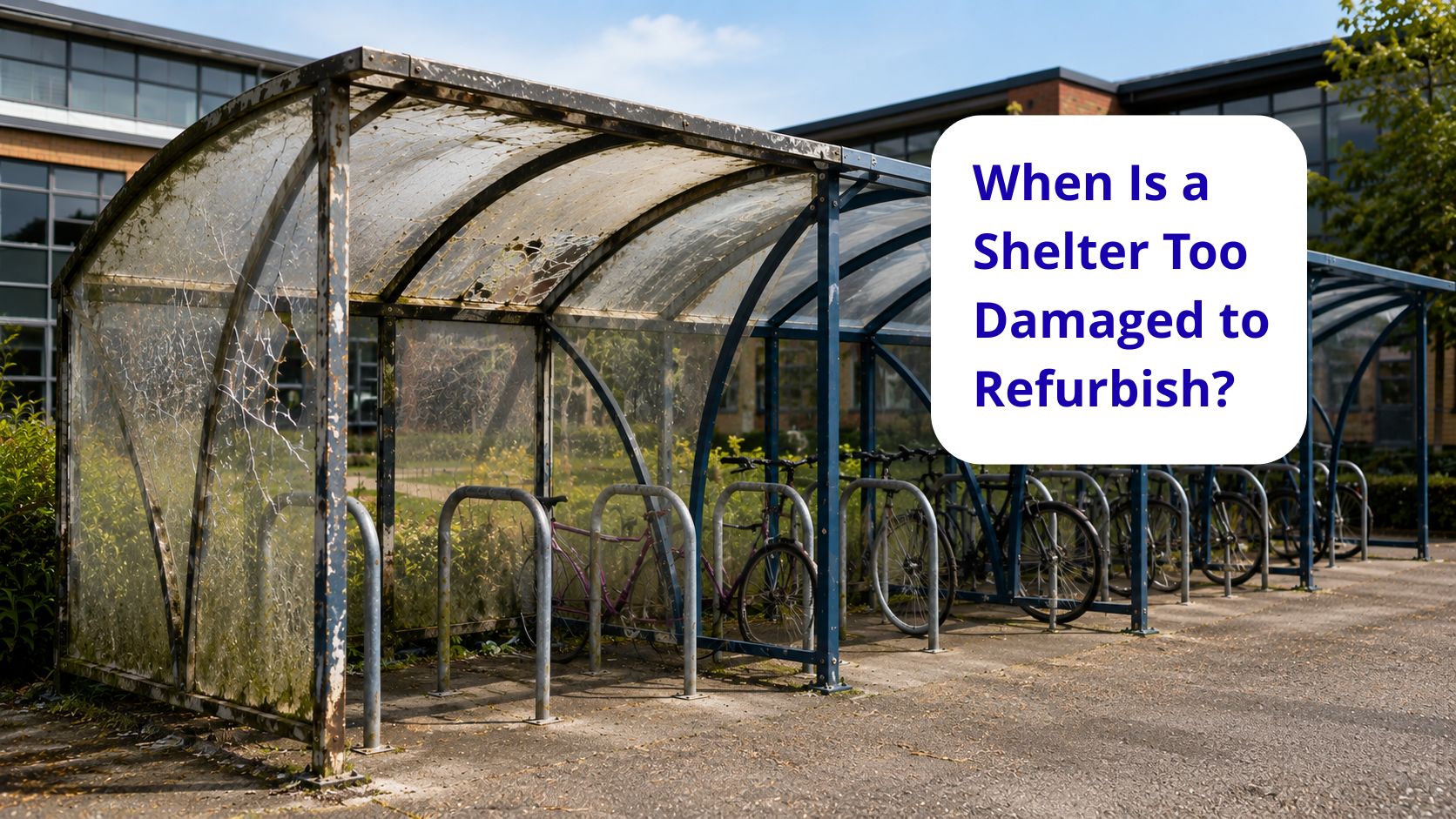
Outdoor shelters take a daily beating in the UK: wind-driven rain, UV exposure, grit, knocks from bikes, trolleys and bins, plus occasional vandalism. Over time, even well-made smoking shelters and bike shelters can start to look tired or feel less safe, with clouded glazing, loose fixings, corrosion spots, leaking roofs, rattles in high winds, or bent brackets.
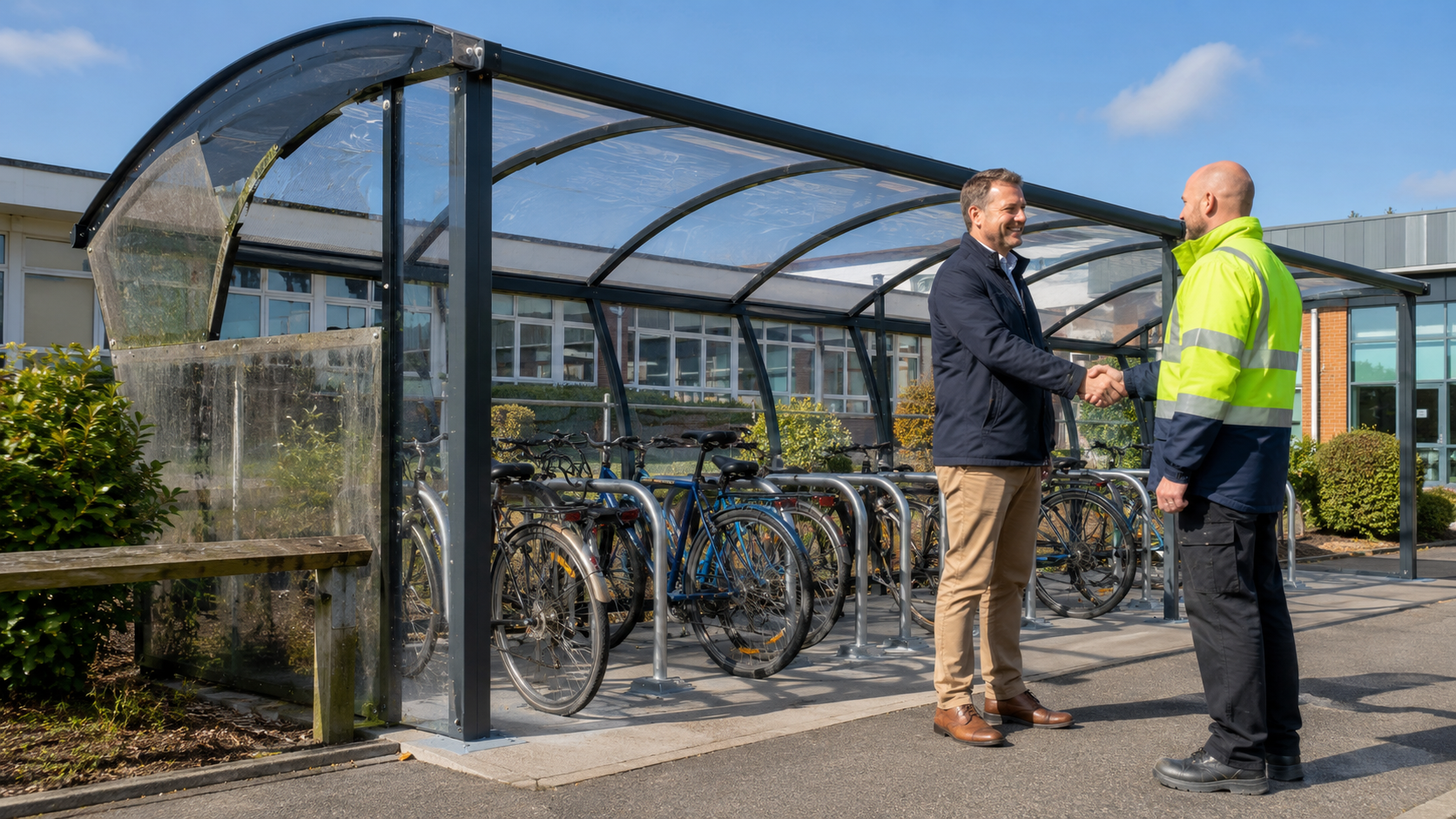
The good news is that refurbishment/restoration (rather than full replacement) can often return a shelter to “as-good-as-new” condition, extend its service life, and improve appearance and safety without the cost and disruption of starting from scratch. This is exactly why refurbishment has become a practical facilities-management strategy for schools, warehouses, offices, transport hubs, hospitals and public-sector sites.
Below is a clear, facilities-focused guide to how refurbishment extends shelter lifespan, what to prioritise, and what to check first.
Why shelters deteriorate faster than you expect
Most smoking and cycle shelters fail in predictable ways:
1) Glazing and roof panels degrade
Perspex acrylic and PETG plastic sheets can become scratched, cloudy, yellowed or cracked with age and UV exposure. Impact damage (including vandalism) is a common culprit. Upgrading to UV-stable, impact-resistant polycarbonate can significantly improve resilience in higher-risk locations.
2) Corrosion starts at the edges and fixings
Shelters are typically steel or aluminium framed, meaning corrosion often begins where water sits: base plates, cut edges, joints, bolt holes, or where paint has chipped.
3) Fixings loosen over time
Constant vibration from wind and repeated use can loosen bolts and fittings, leading to rattles, misalignment, and additional water ingress.
4) Drainage and seals fail
Blocked gutters, perished seals, and poor run-off create persistent damp points that accelerate corrosion and damage.
Refurbishment vs replacement: the real “lifespan extension” logic
A shelter’s frame (especially if galvanised) can often last far longer than the glazing, fixings, and coatings. That makes shelters ideal candidates for a targeted refurb.
Fix My Shelter describes a typical outdoor shelter lifecycle of 10–15 years, which can be extended with timely maintenance and refurbishment.
From a sustainability perspective, retaining and upgrading existing assets is also aligned with the broader industry push to reduce “embodied carbon” impacts by avoiding unnecessary replacement.
So, refurbishment extends lifespan by:
- restoring performance (weather protection, structural stability, safe access)
- arresting deterioration (stopping corrosion spread, preventing leaks)
- upgrading weak points (stronger glazing, improved coatings, better fixings)
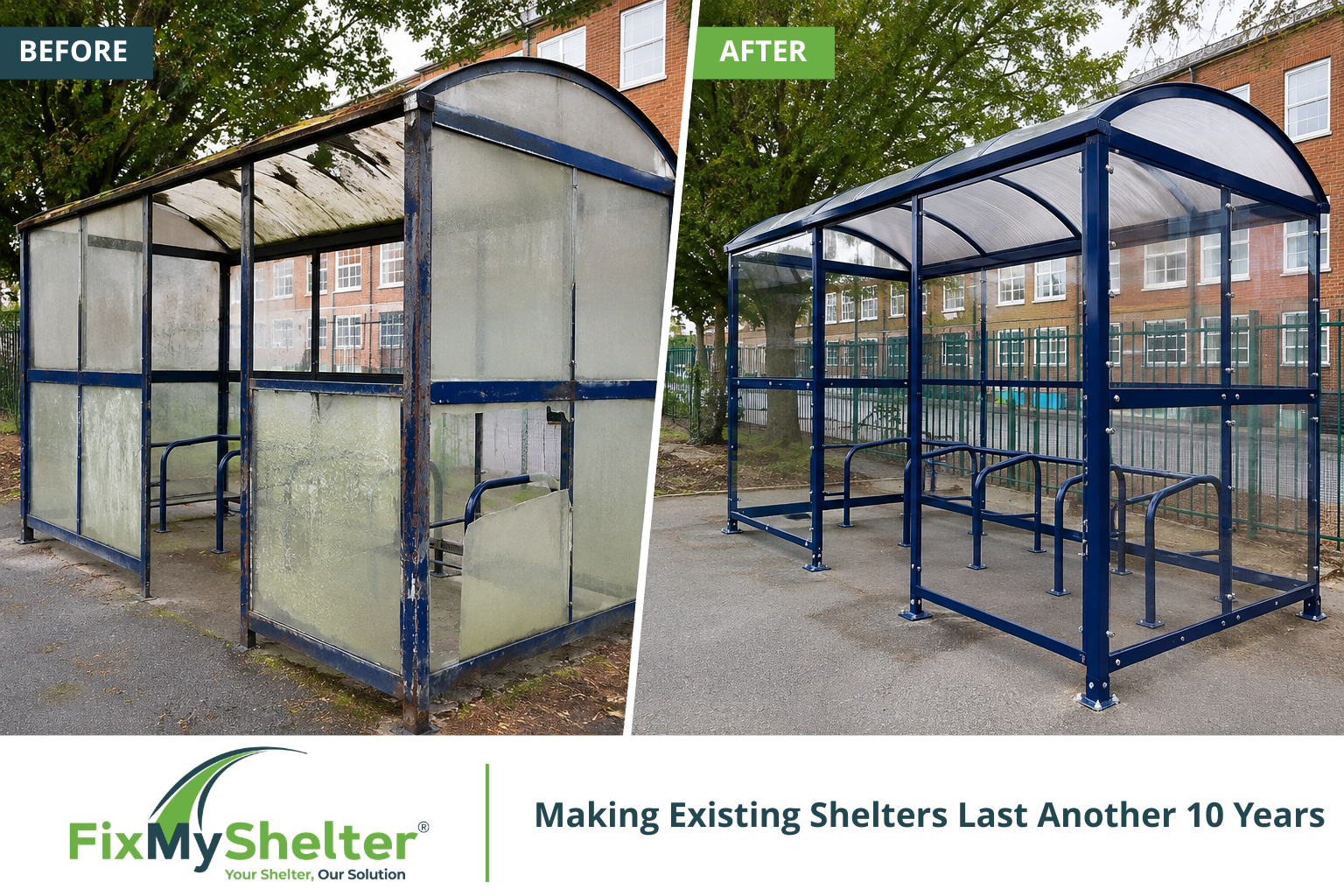
The biggest win: replacing damaged Perspex plastic glazing panels
If your shelter looks “tatty”, glazing is often the reason. Scratched, fogged, or cracked panels make a site look uncared for and can become a safety risk.
Replacing glazing panels is one of the most cost-effective refurbishment actions because it instantly improves:
- appearance
- weather protection
- user comfort
- safety and risk profile
Fix My Shelter specifically highlights that Perspex sheets can be replaced to extend the shelter’s life and maintain safety and functionality.
For cycle shelters, Fix My Shelter refurbishment service focuses on replacing clear Perspex panels to keep shelters functional and visually pleasing without a full overhaul.
Polycarbonate is commonly chosen as an alternative for high-impact environments because of its toughness compared with acrylic, making it popular for vandal-resistant shelter applications.
Steelwork lifespan: galvanising + powder coating refresh
Many UK shelters are supplied galvanised, sometimes with optional powder coating. Over time, scratches and chips expose vulnerable areas; once corrosion starts, it spreads.
A refurb can include:
- cleaning/preparation
- treating corrosion
- touch-up protection or full re-coat where needed
- replacing corroded fixings/brackets
- checking base plates and anchors
Guidance from galvanising industry sources also notes that powder coating can be successfully applied to hot-dip galvanised steel, which is a common route to extend durability while improving appearance.
(And in practical fabrication terms, galvanised vs powder-coated systems are often discussed as complementary durability strategies.)
Smoking shelters: refurbishment that supports legal compliance
For workplace smoking areas, the condition is only half the story, as you also need to consider the smoke-free law.
UK law bans smoking in enclosed or substantially enclosed workplaces and public places.
Local authority guidance commonly uses the “more than 50% enclosed” concept when assessing whether a shelter is substantially enclosed.
A smart refurb can help you stay on the right side of compliance by:
- replacing missing panels with like-for-like (so you don’t accidentally over-enclose)
- repairing doors/screens so they don’t “stick” shut
- ensuring signage and placement still make sense for the site
Fix My Shelter also provides guidance content around enclosed smoking shelters, useful when you’re assessing layout and enclosure.
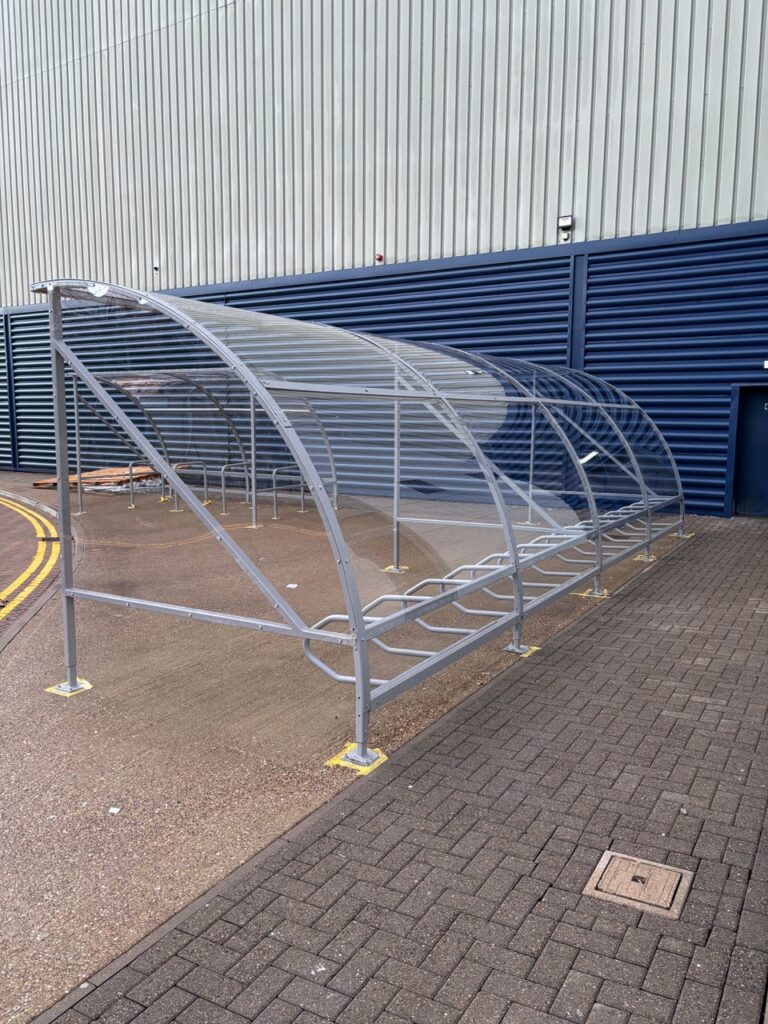
What a “high value” cycle shelter refurb usually includes
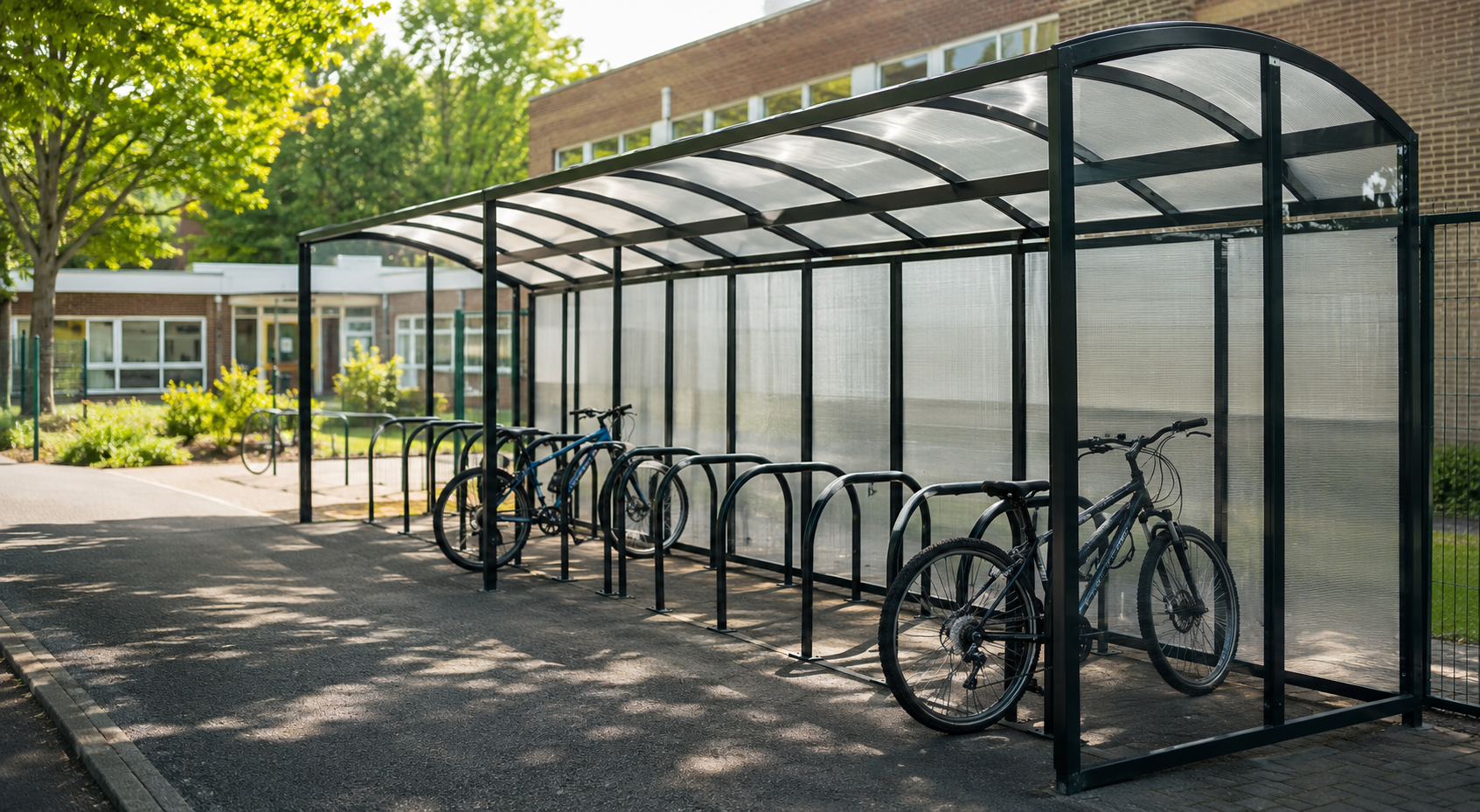
For cycle shelters (especially at schools, NHS sites, business parks and rail-adjacent locations), refurbishment often focuses on:
- panel replacement (clear, UV-stable, vandal-resistant)
- re-sealing roof edges and joints
- replacing or tightening fixings
- straightening frames, brackets and rails
- repairing or upgrading cycle stands/racks
- checking ground anchors and base plates
The goal is simple: keep bikes protected and encourage use while reducing theft/vandalism risk and keeping the facility presentable.
A practical inspection checklist (what to check this month)
If you manage multiple sites, do a quick visual audit and log issues:
- Any cracked, cloudy, or missing panels?
- Leaks or pooling water after rain?
- Rust spots on legs, base plates, and bolts?
- Loose panels (rattle in the wind)?
- Sharp edges, broken trims, exposed fixings?
- Roof discolouration or stress cracks?
- Gutters blocked or overflowing?
- Shelter feels “wobbly” when pushed?
If you’re seeing two or more of the above, you’re typically in the sweet spot where refurbishment gives the best ROI (before small defects become structural problems).
Why refurbishment is often the best value decision
Refurbishment extends shelter lifespan in three ways:
Cost control: You replace only what’s worn (panels, fixings, seals), not the whole frame and foundations.
Operational continuity: Less downtime for staff and cyclists; fewer site works than a full replacement.
Site standards: A refreshed shelter improves first impressions and supports a “well-managed site” message, important for schools, commercial estates and public-facing locations.
And if you’re also working towards sustainability targets, keeping existing assets in use is increasingly aligned with embodied-carbon thinking: don’t replace what can be safely upgraded.