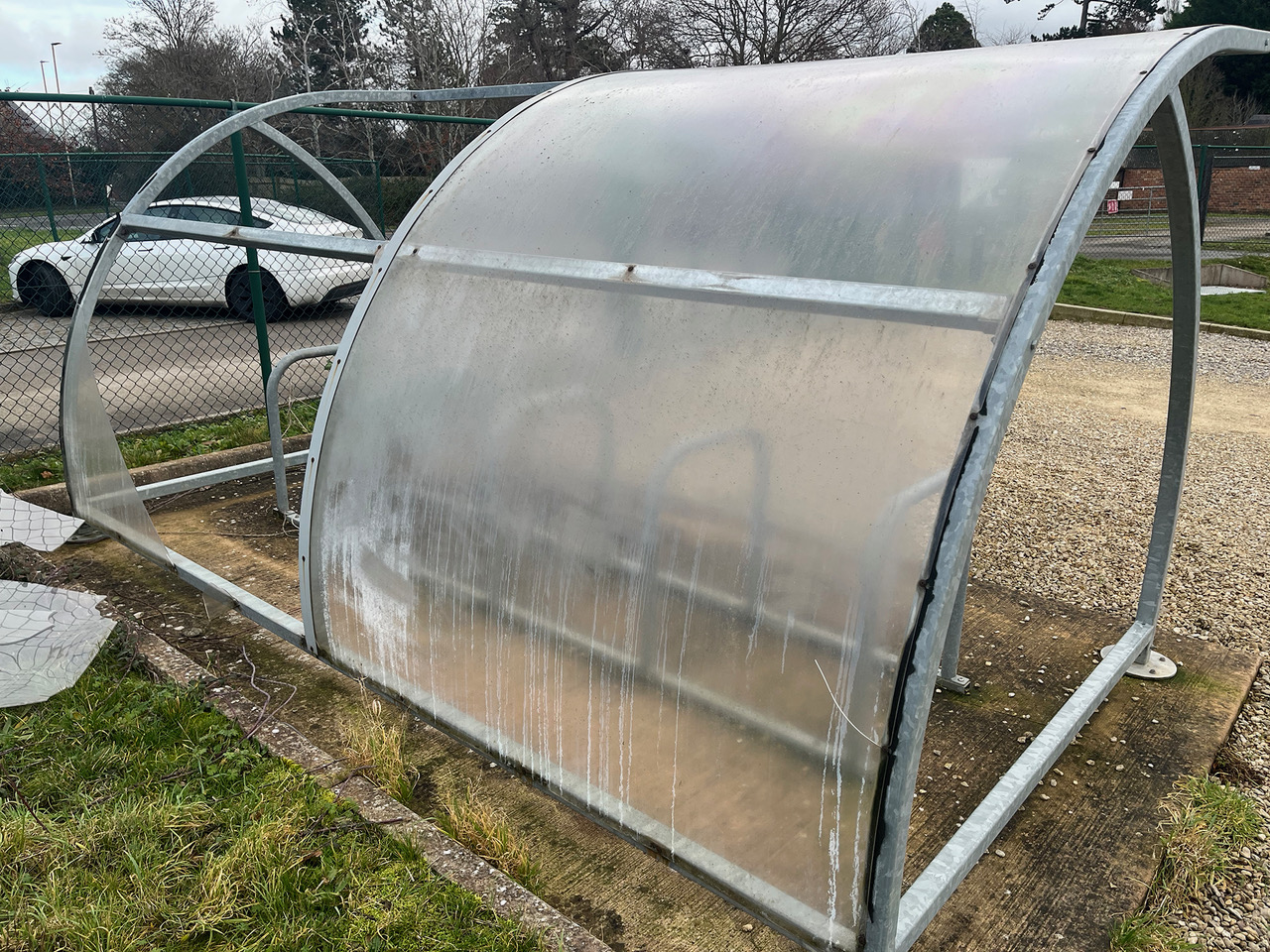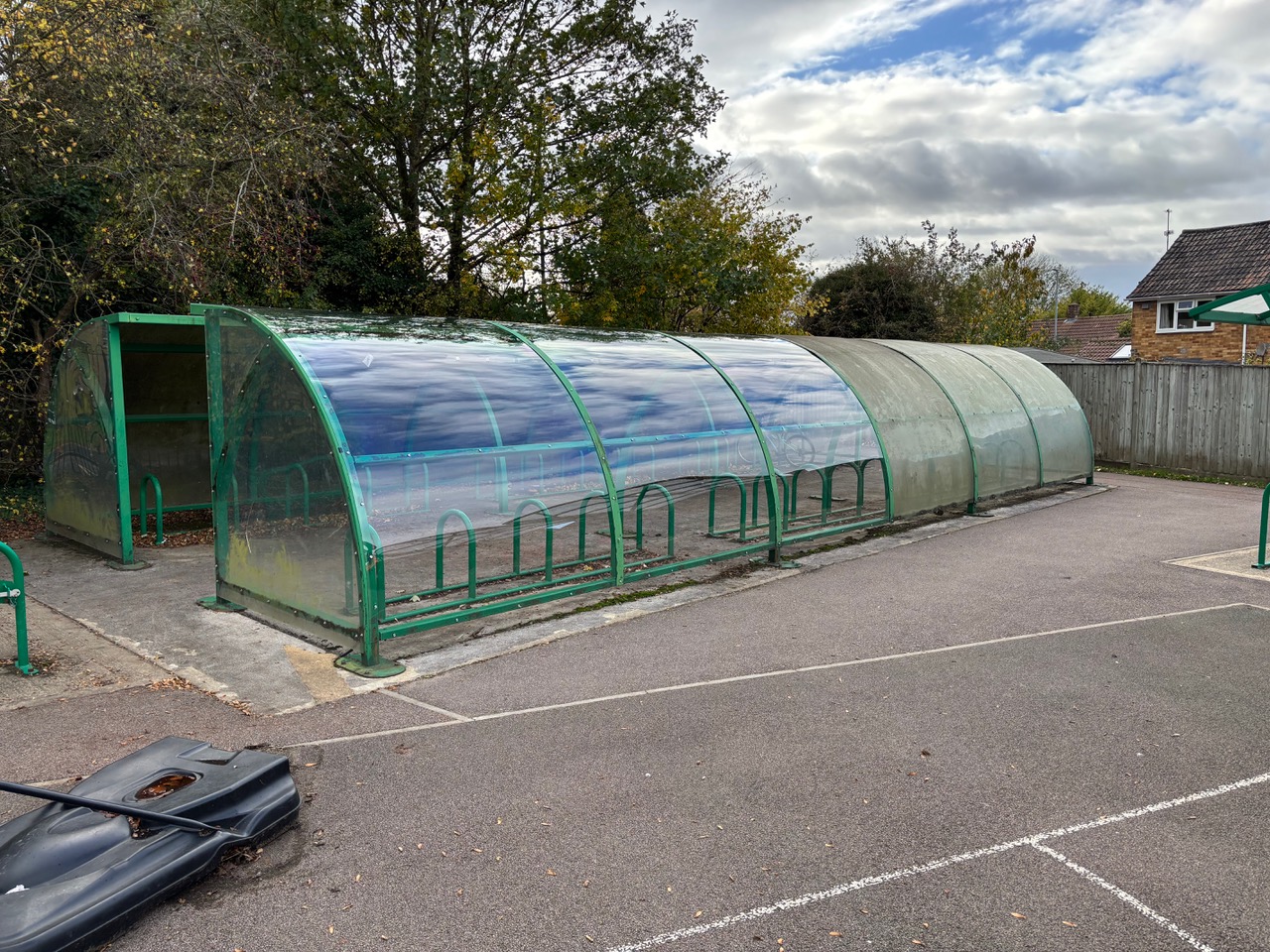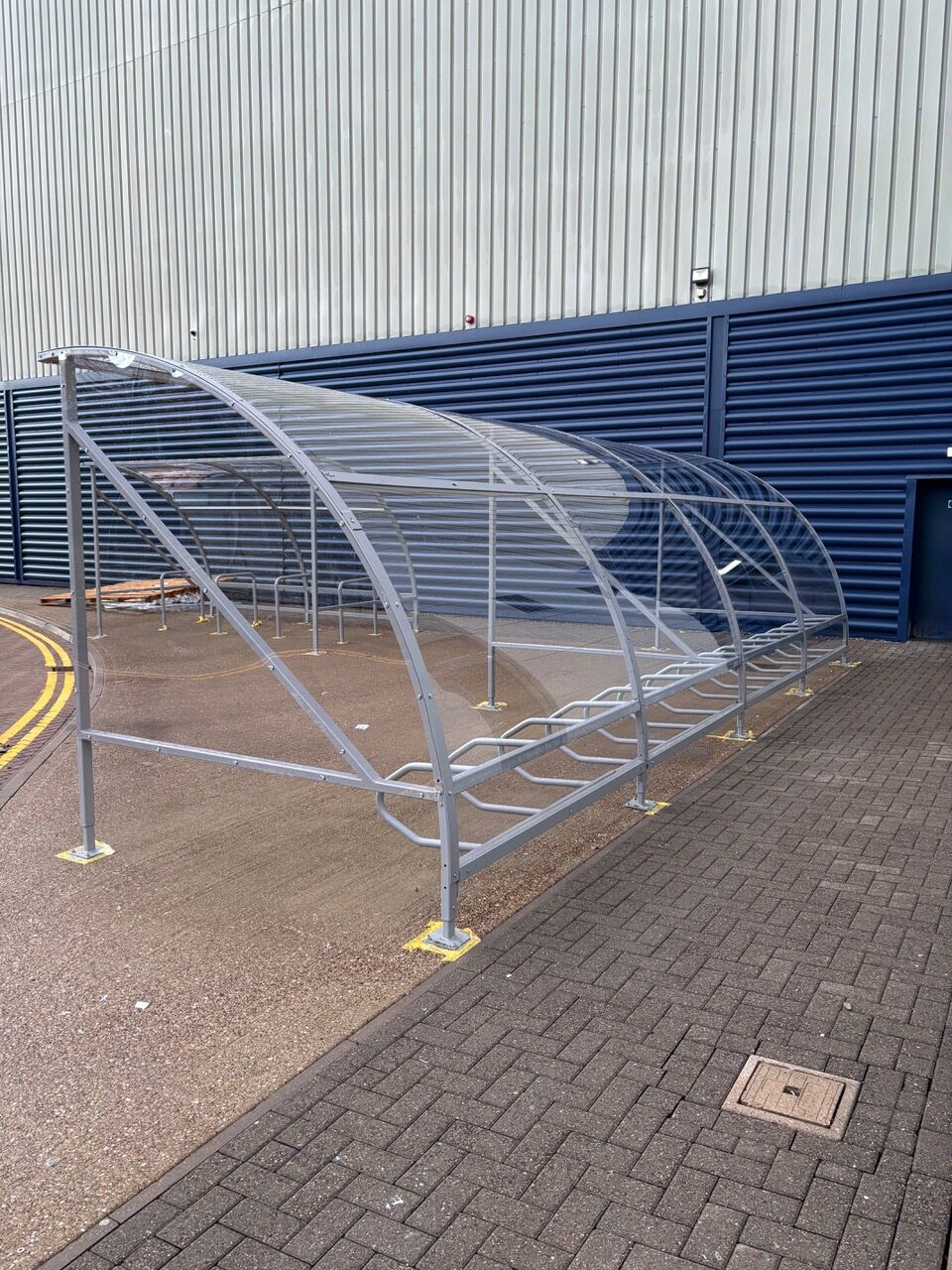
When an outdoor shelter starts to look tired, replacement can seem like the obvious next step. Cracked or missing glazing, weathered coatings, surface corrosion and deteriorated fixings can make a cycle shelter, smoking shelter or other outdoor structure appear to have reached the end of its life.
But appearance does not always tell you what condition the underlying structure is in.
If the main framework remains structurally suitable, shelter refurbishment can potentially give an existing shelter many more years of useful service. In the right circumstances, that could mean around another decade.
Fix My Shelter has seen this in practice. During a refurbishment project at Swakeleys School for Girls in Hillingdon, 12 existing shelter frames were retained and refurbished rather than replaced. The completed work was estimated to extend their usable lifespan by a further 8–10 years.
That does not mean every ageing shelter can be guaranteed another 10 years. It does show why organisations should ask an important question before automatically budgeting for replacement:
Is the shelter really at the end of its life, or are the parts that have deteriorated repairable or replaceable?
Can an Existing Shelter Really Last Another 10 Years?
Potentially, yes, but the answer depends on its condition.
Outdoor shelters contain different components, and they do not necessarily deteriorate at the same rate. Glazing can crack or become damaged while the steel frame remains serviceable. Protective finishes can deteriorate without the structure underneath necessarily requiring replacement.
That makes condition more important than appearance alone.
Before deciding whether a shelter is suitable for refurbishment, consider:
- the structural condition of the frame;
- the extent and location of corrosion;
- roof and side glazing;
- fixings and connections;
- foundations and anchoring;
- physical damage or distortion;
- whether the shelter still meets the site’s requirements.
Where the main structure remains suitable, replacing deteriorated components and refurbishing the existing framework could extend its useful life considerably.
Where significant structural deterioration is found, replacement may be the more appropriate option.
The Refurbish-or-Replace Test
For facilities and estates teams responsible for ageing shelters, three questions can help.
1. Is the Main Structure Still Suitable?
This is the starting point.
A shelter with a serviceable framework may remain a strong candidate for refurbishment even when damaged glazing and weathered finishes make it look considerably worse than it really is.
Significant structural corrosion, distorted steelwork, movement, serious impact damage or problems with foundations require a different assessment. A cosmetic refurbishment should never disguise serious structural deterioration.
2. Are the Problems Mainly with Replaceable Components?
Look at what has actually failed.
If the main issues are cracked glazing, missing panels, deteriorated fixings, worn coatings or manageable surface corrosion, there may be no reason to remove a serviceable frame simply because components around it need attention.
This is where outdoor shelter refurbishment can provide an alternative: retain what is still doing its job and concentrate the work on what has deteriorated.
3. Does the Shelter Still Meet the Site’s Needs?
A shelter may be capable of refurbishment but no longer suit the site. More cycle parking may be required, its location may need changing, or a different design may now be more appropriate.
The sensible approach is:
1. Assess
2. Retain what is serviceable
3. Refurbish where practical
4. Replace when necessary.
What Parts of an Outdoor Shelter Can Be Refurbished?
The exact work depends on the shelter’s condition, but several common problems can potentially be addressed without removing the complete structure.
Damaged or Missing Glazing
Panels can become cracked, broken, missing or discoloured through age, impact and vandalism.
Where the framework remains suitable, shelter glazing replacement can renew these areas while retaining the original structure. Suitable materials such as polycarbonate can also provide high impact resistance where durability is important.
Weathered Frames and Coatings
A shelter can look considerably older once its protective finish deteriorates.
Where the underlying frame remains serviceable, appropriate surface preparation and recoating can restore its appearance and renew the protective finish.
Corrosion should always be assessed properly. Surface deterioration and serious structural corrosion are not the same thing, and a new coating is not a substitute for addressing structural problems.
Fixings, connections and associated components should also be considered as part of the overall assessment.
Real-World Proof: An Estimated 8–10 More Years
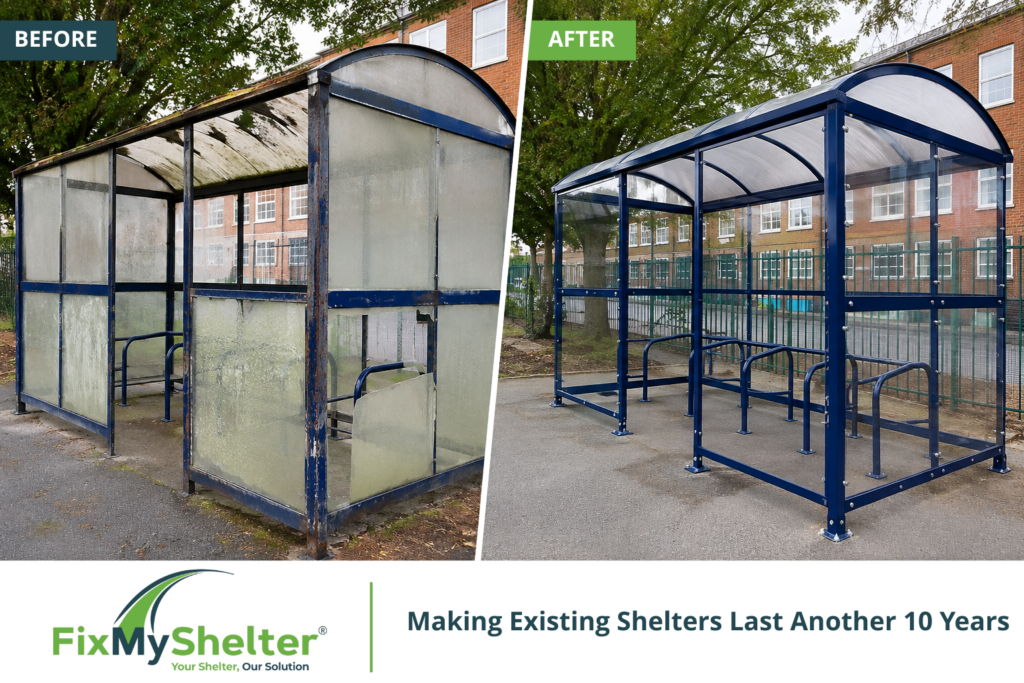
The Swakeleys School for Girls shelter refurbishment project demonstrates what can be possible when an existing structure is worth retaining.
The school’s shelters had cracked and missing glazing. Instead of automatically replacing them, Fix My Shelter surveyed the existing frames and assessed their structural integrity.
The frames were suitable for retention.
Fix My Shelter refurbished 12 shelters, installing new UV-resistant, impact-resistant polycarbonate glazing, additional side protection and vandal-resistant fixings while retaining the existing metal structures.
The work was completed during the school holidays in two days and was estimated to provide the shelters with a further 8-10 years of usable life.
This is not a universal lifespan claim. What it demonstrates is that visible deterioration does not necessarily mean the entire asset has reached the end of its useful life.
Is Refurbishment Better Value Than Replacement?
It can be when enough of the existing structure remains suitable for reuse.
Complete replacement can involve more than buying another shelter. Depending on the project, it may also involve dismantling and removal, disposal, delivery and installation, potential groundwork and disruption to the site.
Refurbishment takes a different approach by concentrating resources on the parts that actually require attention.
Fix My Shelter states that refurbishment can offer savings of up to 70% compared with full replacement, although actual savings depend on the shelter, its condition and the work required.
For organisations responsible for multiple shelters, assessing existing structures before allocating budget for replacement can therefore be particularly worthwhile.
Can Refurbishment Be a More Sustainable Approach?
There is also a resource argument for keeping serviceable structures in use.
UK Government circular-economy guidance supports keeping materials and resources at their highest value for as long as possible, including through repair and refurbishment.
If an existing steel framework remains suitable, retaining it while replacing failed components can keep useful material in service rather than discarding the entire structure.
That does not mean refurbishment is automatically the more sustainable choice in every case. But there is an important difference between replacing something because it has genuinely reached the end of its useful life and replacing it because some of its components have.
What About Cycle and Smoking Shelters?
Cycle shelter refurbishment can be particularly relevant for schools, workplaces, hospitals and other sites where damaged glazing, vandalism or weathered finishes make otherwise serviceable structures appear ready for replacement.
Existing smoking shelters may also be suitable for refurbishment where the underlying structure remains serviceable.
Smoking shelters require additional consideration. In England, the Smoke-free (Premises and Enforcement) Regulations 2006 set out when premises are considered enclosed or substantially enclosed for smoke-free requirements.
The Tobacco and Vapes Act 2026 also provides powers relating to additional smoke-free places, while the government has consulted on proposals concerning certain outdoor places in England.
Organisations considering the refurbishment, relocation or replacement of a smoking shelter should therefore check the current requirements applying to their particular site.
When Is Replacement the Better Decision?
Refurbishment is not about saving every shelter.
Replacement may be more appropriate where there is significant structural corrosion, serious frame damage or distortion, unsuitable foundations, extensive deterioration or where the existing shelter no longer provides the capacity or functionality required.
A good refurbishment decision is therefore not simply about keeping an old structure for as long as possible.
It is about determining whether there is still something worthwhile to retain.
Before You Replace It, Find Out What Is Worth Saving
A shelter can look old without actually being finished.
Cracked glazing can potentially be replaced. Weathered finishes can be renewed. Fixings can be addressed. Most importantly, a serviceable frame may still have years of useful life left.
At Swakeleys School, assessing what was already there meant 12 shelter structures could be retained and given an estimated further 8-10 years of usable life.
Not every shelter will achieve the same result, and some will genuinely need replacing.
That is why the first question should not necessarily be:
“Which new shelter should we buy?”
It should be:
“Is the shelter we already have worth saving?”
Fix My Shelter specialises in glazing panel replacement, complete shelter refurbishment and replacement shelters, allowing the condition of the existing asset to guide the solution.
If you have an ageing cycle shelter, smoking shelter or other outdoor structure, contact Fix My Shelter to discuss whether refurbishment or replacement is the more appropriate route.
Frequently Asked Questions
Can refurbishment make a shelter last another 10 years?
Potentially. The result depends on the condition of the frame, corrosion, glazing, fixings and future maintenance. One Fix My Shelter school project recorded an estimated 8–10 year extension in usable shelter life, but this is not a guarantee for every structure.
Can damaged shelter glazing be replaced without replacing the frame?
Yes, where the existing frame remains suitable. Cracked, missing or deteriorated panels can potentially be replaced independently, allowing serviceable infrastructure to remain in use.
Is it better to refurbish or replace a cycle shelter?
It depends on its condition and the site’s requirements. If the frame remains suitable and deterioration is concentrated in glazing, coatings or other replaceable components, refurbishment may be appropriate. Significant structural deterioration may make replacement the better option.
How do I know if my shelter is worth refurbishing?
Start by assessing the frame, corrosion, glazing, fixings, foundations and overall suitability. This helps establish what remains serviceable before deciding between targeted refurbishment and complete replacement.