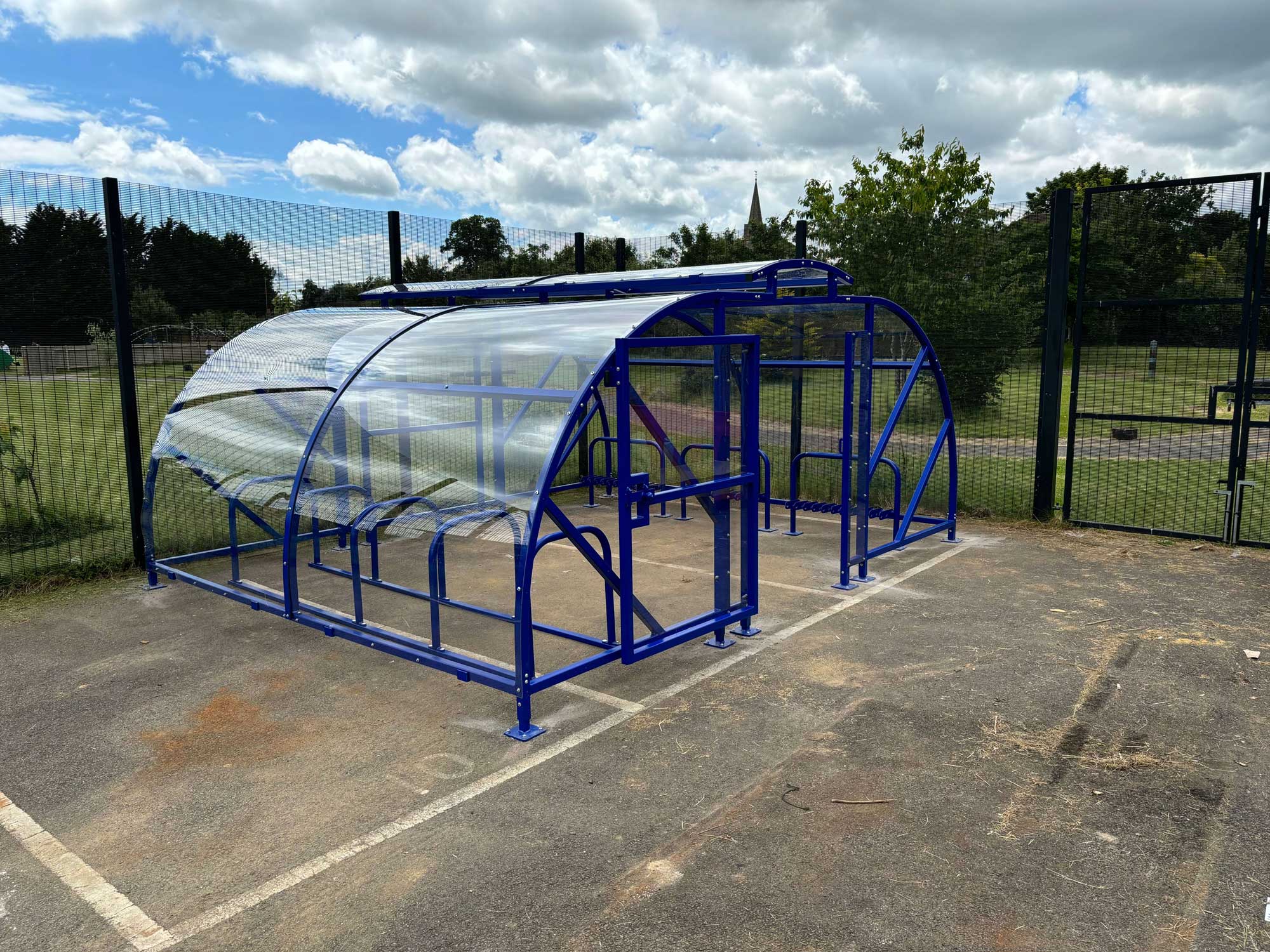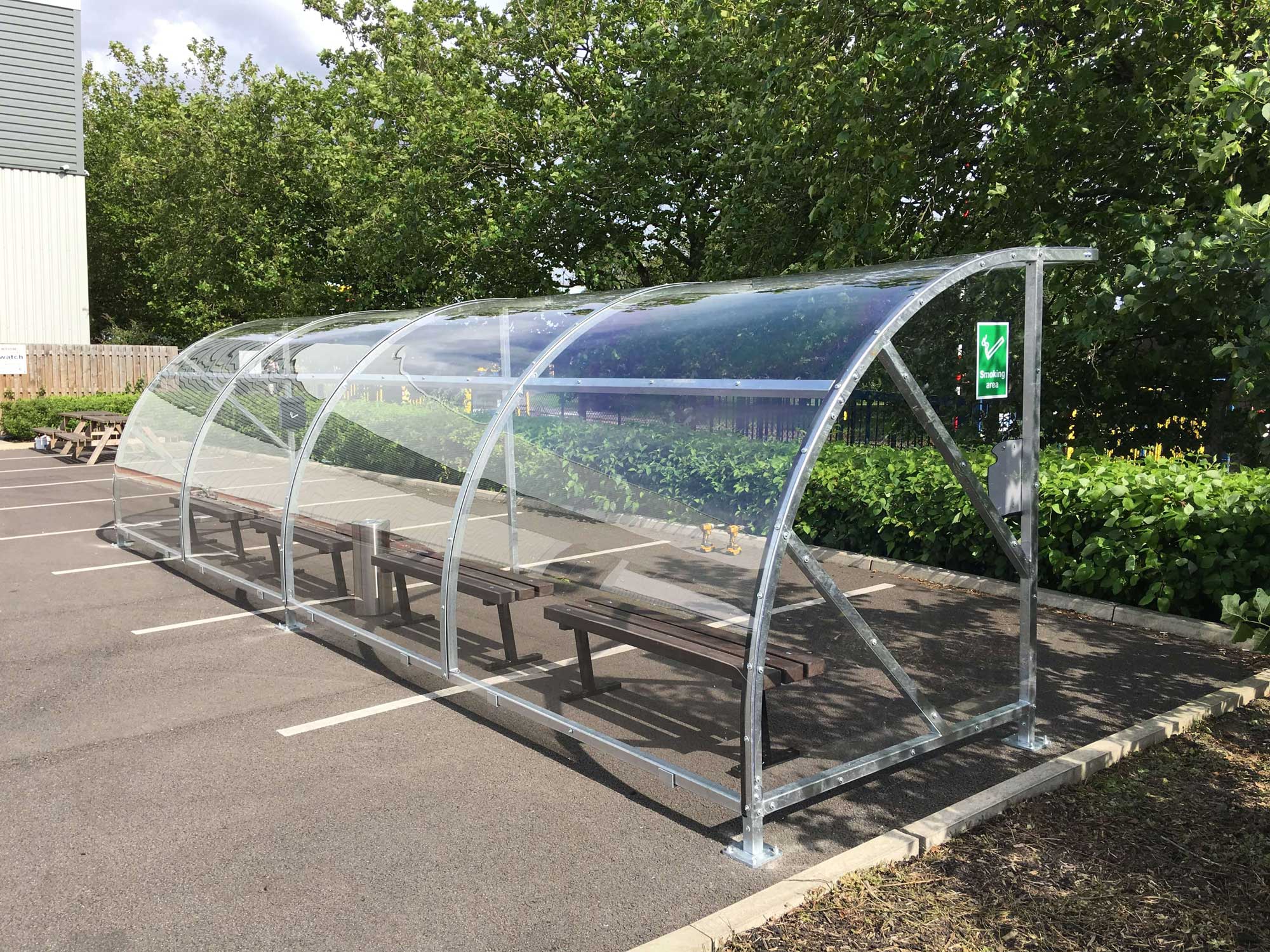
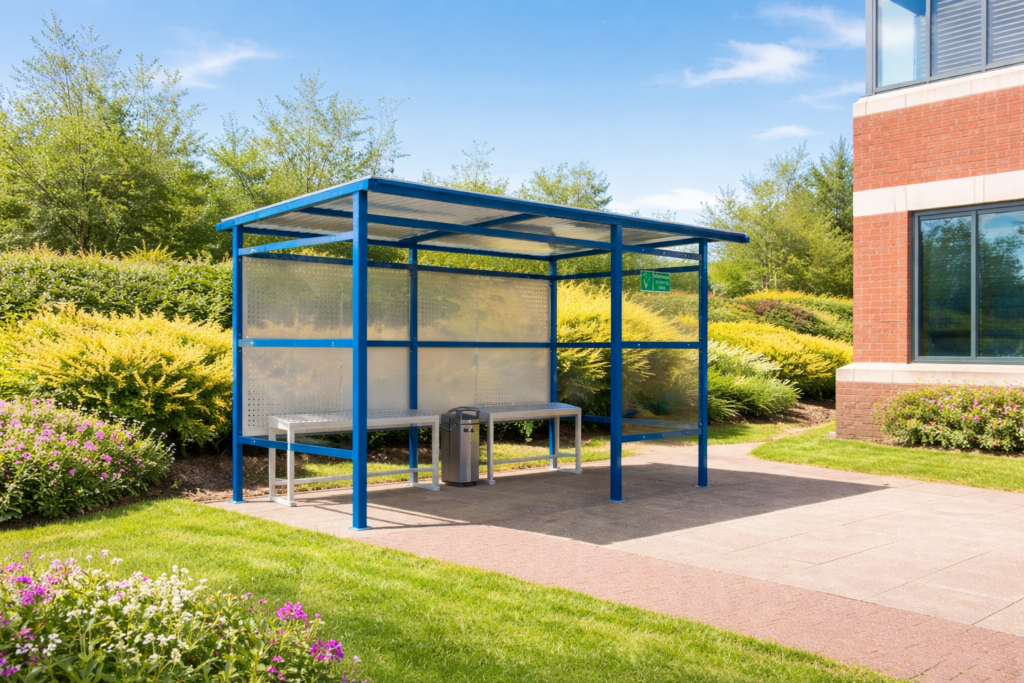
As winter fades and longer days return, spring presents the ideal opportunity for businesses, schools, and organisations across the UK to assess and upgrade their outdoor facilities. Whether you manage smoking shelters, cycle shelters, waiting shelters, or canopies, this season offers the perfect conditions for refurbishment.
If your outdoor structures have endured months of harsh weather, now is the time to restore, upgrade, and future-proof them. In this guide, we explore why spring is the best time to refurbish your outdoor shelters and how doing so can save money, improve safety, and enhance your site’s overall appearance.
The Impact of Winter on Outdoor Shelters
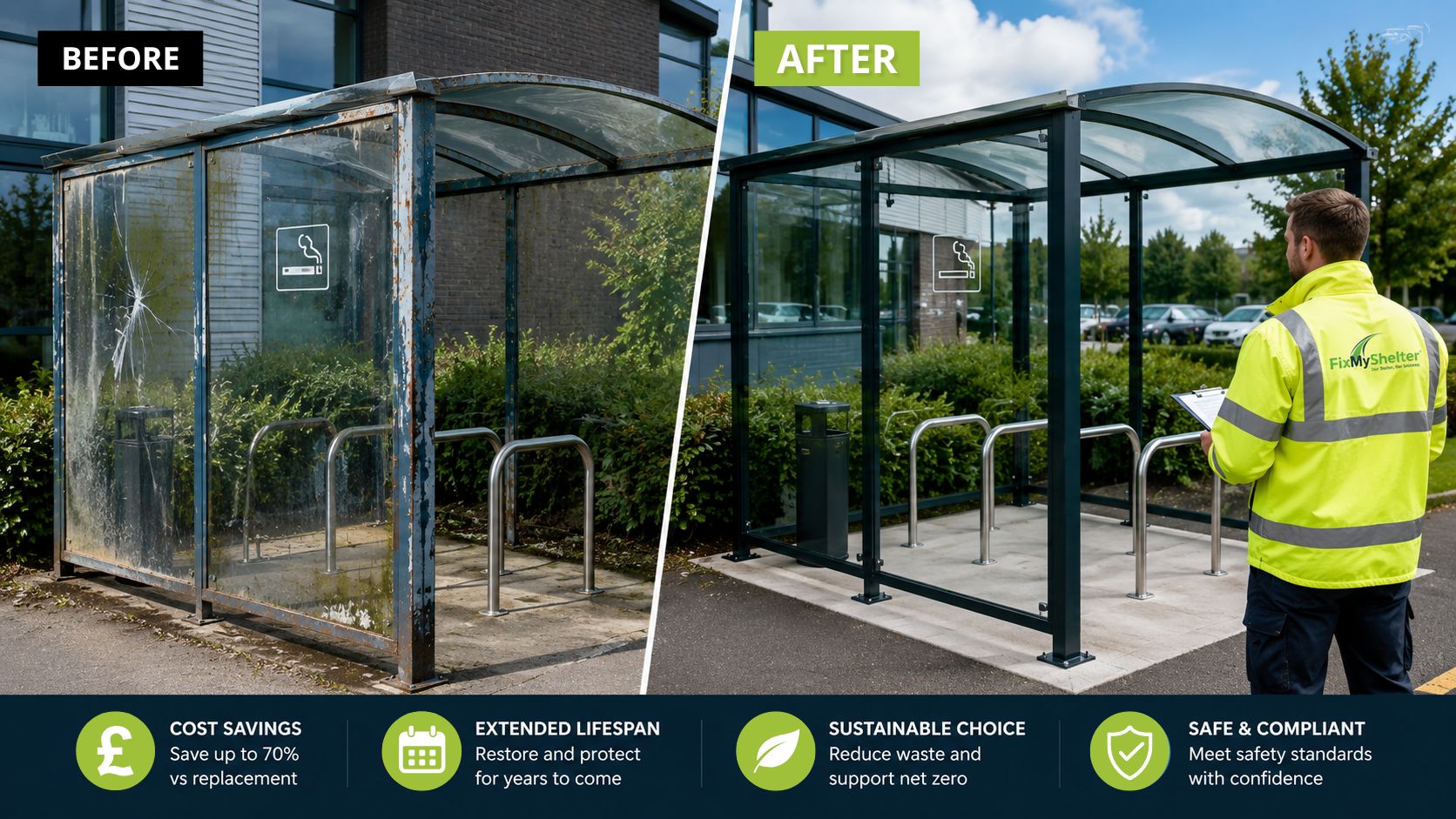
Outdoor shelters in the UK face significant wear and tear during winter. Exposure to rain, wind, frost, and debris can damage key components such as glazing panels, fixings, and coatings.
Over time, this can lead to:
- Cracked or cloudy polycarbonate panels
- Rust or corrosion on metal frames
- Loose fixings and reduced structural integrity
- General wear affecting aesthetics and usability
Shelters are designed to protect users from the elements while providing comfort and security. However, without regular maintenance, their effectiveness declines. Spring acts as a natural checkpoint after winter, making it the ideal time to assess and refurbish.
Ideal Weather Conditions for Refurbishment
Spring offers the most practical weather window for outdoor refurbishment works in the UK.
Compared to winter:
- Temperatures are milder
- Rainfall is less severe and more predictable
- Daylight hours are longer
This makes installation, repairs, and upgrades more efficient and safer to carry out. Tasks such as replacing glazing panels, recoating steel frameworks, and installing new shelter accessories can be completed faster and with fewer delays.
A Cost-Effective Alternative to Replacement
One of the biggest advantages of refurbishing outdoor shelters is cost savings. In many cases, the main steel framework remains structurally sound, even when external elements have deteriorated.
Refurbishment allows you to upgrade specific components rather than replacing the entire structure.
For example:
- Replacing damaged polycarbonate or Perspex panels
- Upgrading fixtures such as bike racks or smoking bins
- Adding new features like lighting or signage
This targeted approach is far more economical and can extend the life of a shelter by several years. For organisations managing multiple sites, this can result in significant long-term savings.
Extending the Lifespan of Your Shelters
Outdoor shelters typically last between 10 to 15 years, but this lifespan can be extended with proper maintenance and refurbishment.
Spring refurbishment helps to:
- Prevent minor issues from becoming major repairs
- Maintain structural integrity
- Ensure continued compliance with safety standards
Taking action early helps avoid costly emergency repairs later in the year, particularly during periods of high usage.
Improving Safety and Compliance
Safety is a key consideration for all outdoor facilities, especially in commercial and public environments.
For example, smoking shelters in the UK must:
- Remain at least 50 percent open for ventilation
- Be positioned away from entrances
- Use durable, weather-resistant materials
Refurbishment ensures your shelters meet current regulations, provide safe surfaces, and maintain proper airflow and accessibility. Spring is the ideal time to address these requirements before increased footfall in summer.
Enhancing Appearance and First Impressions
Your outdoor facilities are often the first thing visitors, employees, or customers see.
A worn or damaged shelter can:
- Create a poor first impression
- Reflect negatively on your brand
- Deter usage
Refurbishment improves visual appeal, cleanliness, and overall site professionalism. A well-maintained shelter shows that your organisation values quality and user experience.
Preparing for Increased Use in Warmer Months
As the weather improves, outdoor spaces naturally see increased use. This includes smoking areas, cycle parking, waiting zones, and outdoor seating areas.
Shelters play an important role in:
- Protecting users from sun and UV exposure
- Providing comfort throughout the day
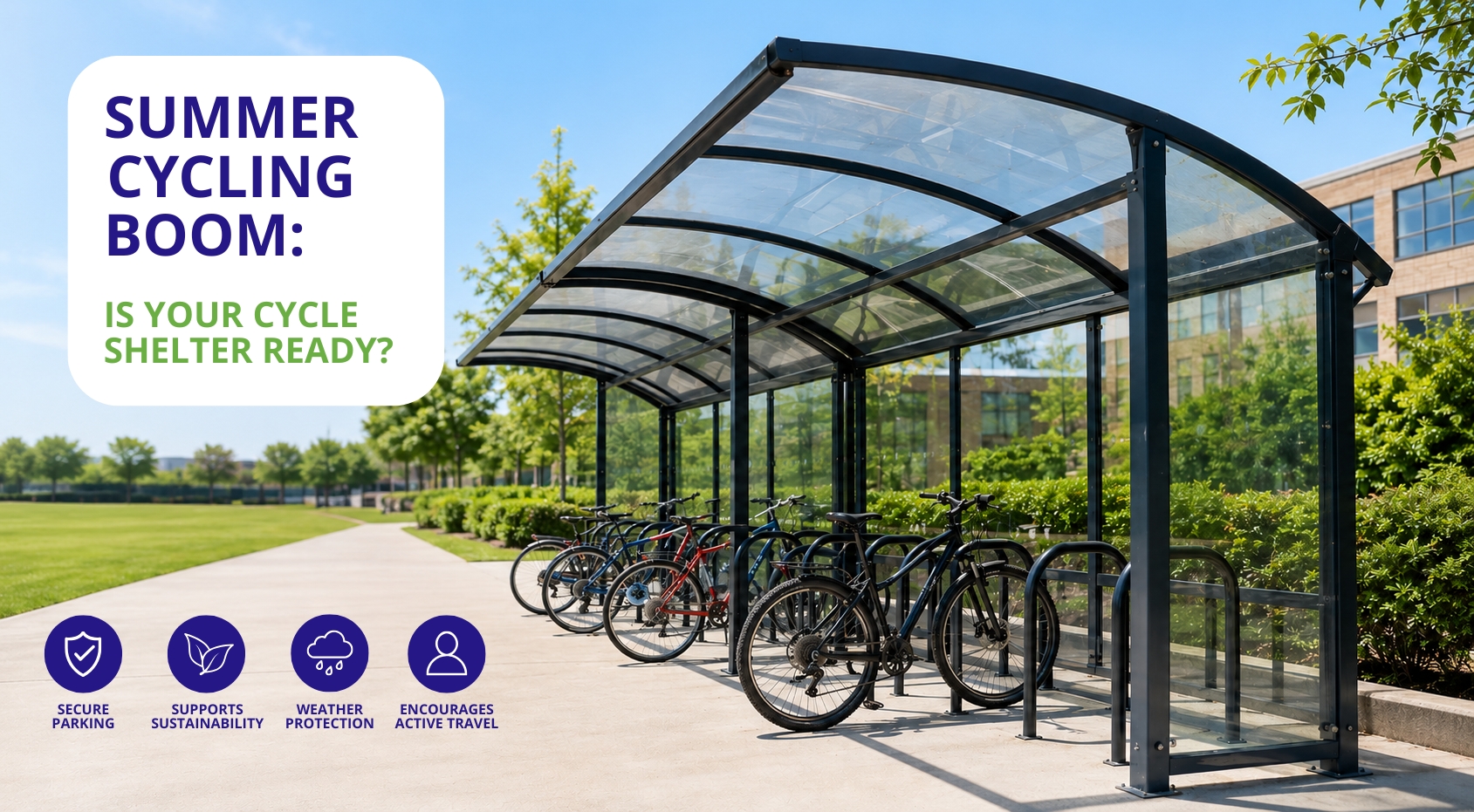
- Supporting active travel such as cycling
By refurbishing in spring, you ensure your facilities are fully prepared for higher demand during spring and summer.
Supporting Sustainability Goals
Refurbishment is not only cost-effective but also environmentally responsible.
Instead of replacing entire structures, refurbishment focuses on:
- Reusing existing frameworks
- Reducing waste
- Lowering carbon impact
Upgrades can also include eco-friendly coatings, recycled materials, and energy-efficient lighting. This aligns with sustainability goals that many UK organisations are now prioritising.
Minimising Disruption to Operations
Spring is often a quieter operational period compared to peak summer or winter seasons. This makes it easier to schedule refurbishment works with minimal disruption.
Refurbishment projects can be planned to:
- Avoid busy periods
- Reduce inconvenience to staff and visitors
- Be completed efficiently within short timeframes
With proper planning, upgrades can be carried out smoothly without affecting day-to-day operations.
Improving Functionality and Usability
Refurbishment is also an opportunity to improve how your shelter functions.
Enhancements may include:
- Adding seating or lighting
- Improving accessibility
- Upgrading cycle storage systems
- Incorporating branding or signage
Modern shelters are expected to be both functional and visually appealing. Spring upgrades ensure your facilities meet current user expectations.
Future-Proofing Your Investment
Outdoor shelters are a long-term investment, and regular refurbishment helps maximise their value.
By upgrading materials and components, you can:
- Improve durability
- Enhance weather resistance
- Reduce ongoing maintenance costs
Modern materials such as UV-stabilised polycarbonate offer better longevity and improved appearance, ensuring your shelters remain effective for years to come.
When Should You Refurbish Your Outdoor Shelters?
You should consider refurbishment if:
- Panels are cracked, faded, or damaged
- The structure shows signs of rust or wear
- Usage has increased since installation
- The shelter no longer meets current standards
If any of these apply, spring is the best time to take action.
Final Thoughts
Spring is the optimal time to refurbish outdoor shelters in the UK. It offers the right weather conditions, cost advantages, and preparation time ahead of increased seasonal use.
By refurbishing your shelters now, you can extend their lifespan, improve safety, enhance appearance, and ensure your facilities are ready for the months ahead.
For businesses, schools, and public sector organisations, investing in refurbishment is a smart, practical decision that delivers long-term value.