Outdoor shelters play an important role in schools, hospitals, workplaces, leisure facilities, and public spaces across the UK. Whether it’s a cycle shelter, smoking shelter, waiting shelter, or covered walkway, these structures are exposed to harsh weather conditions year after year.
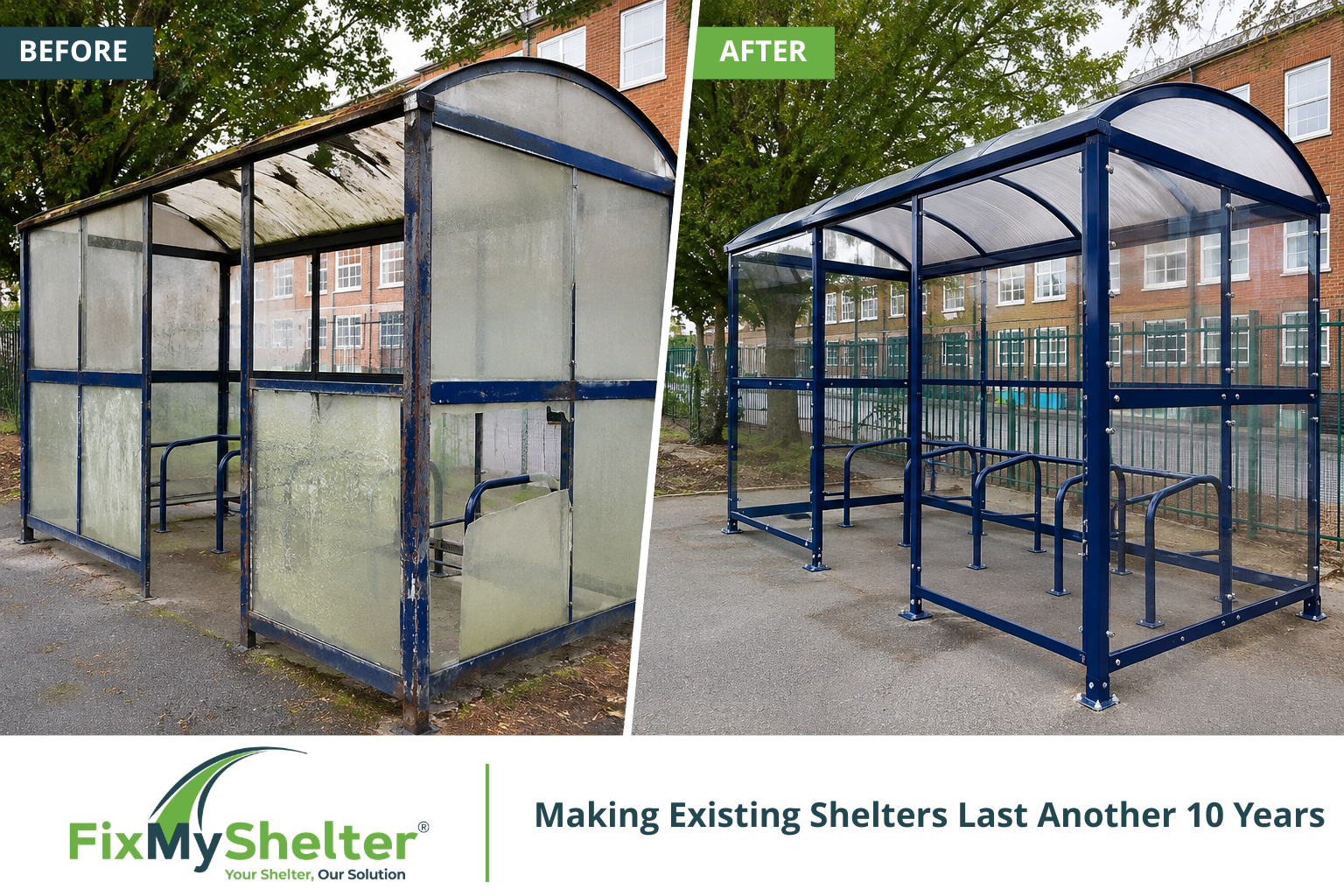
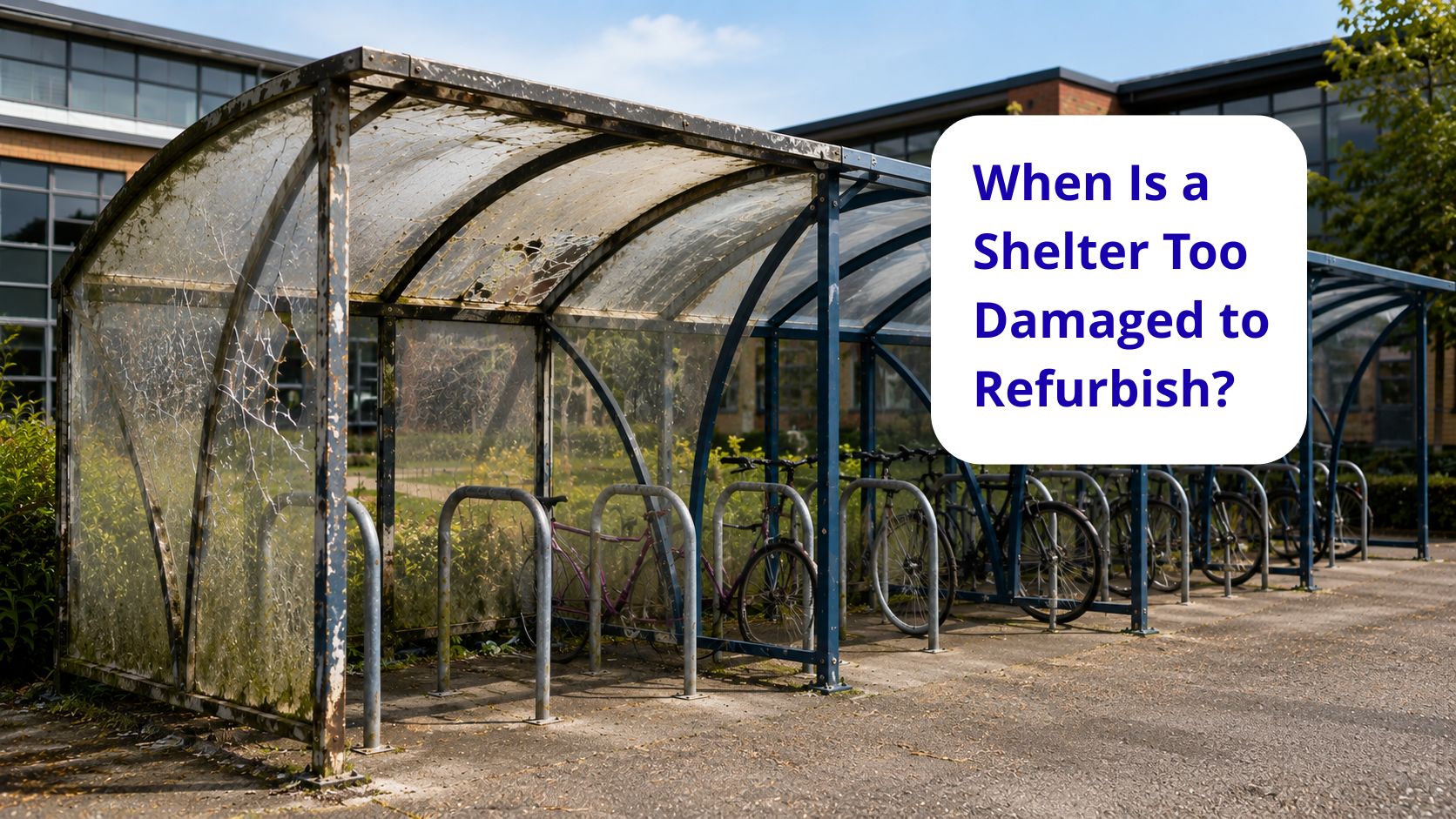
Over time, glazing panels become damaged, frames begin to fade or corrode, and shelters can start to look tired and neglected. When this happens, many organisations immediately assume a complete replacement is required. However, in most cases, shelter refurbishment offers a far more cost-effective solution.
At Fix My Shelter, we help organisations across the UK extend the life of their existing shelters through professional refurbishment services, including glazing panel replacement, frame recoating, structural repairs, and shelter restoration.
Here are five key ways shelter refurbishment can save money compared with replacing your shelter entirely.
1. Refurbishment Costs Significantly Less Than Full Replacement
The most obvious financial benefit is the upfront cost saving.
A complete shelter replacement involves removing and disposing of the existing structure, preparing the site, manufacturing a new shelter, delivering it, and carrying out a full installation. These costs quickly add up.
By comparison, refurbishment focuses on restoring the parts of the shelter that need attention while retaining the existing framework where possible. Common refurbishment works include:
- Shelter glazing panel replacement
- Frame preparation and recoating
- Replacement fixings and brackets
- Roof panel replacement
- Structural repairs
- General cleaning and restoration
Many shelters remain structurally sound even when they appear worn or damaged. Refurbishing these assets can often save up to 70% compared with a full replacement while still delivering a like-new appearance.
For schools, councils, NHS facilities, and businesses operating under tight budgets, this can free up valuable funds for other projects.
2. Extends the Lifespan of Existing Assets
One of the biggest mistakes organisations make is replacing a shelter before it has reached the end of its useful life.
In many cases, the shelter frame remains perfectly serviceable while only specific components require attention. Polycarbonate glazing panels may become cracked, fixings may loosen, or paintwork may deteriorate, but these issues can often be resolved without replacing the entire structure.
Professional refurbishment can:
- Restore structural integrity
- Improve weather protection
- Prevent corrosion from spreading
- Improve user safety
- Enhance appearance
Routine maintenance and refurbishment have been shown to prolong shelter life while reducing future repair costs.
By investing in refurbishment now, organisations can often gain many additional years of service from their existing shelter.
3. Avoids Expensive Disposal and Installation Costs
Replacing a shelter involves much more than purchasing a new structure.
There are several hidden costs that are often overlooked, including:
Removal of Existing Shelter
The existing shelter must be dismantled and removed safely.
Waste Disposal
Large quantities of metal, glazing panels, roofing materials, and fixings may need to be disposed of or recycled.
Groundworks
Replacement shelters may require new foundations or alterations to existing bases.
Installation Labour
A complete replacement generally requires more labour, equipment, and installation time.
Refurbishment avoids many of these expenses because much of the original structure remains in place. The result is a more efficient project with lower overall costs and fewer logistical challenges.
4. Reduces Site Disruption and Operational Costs
For schools, hospitals, offices, and public facilities, disruption can be costly.
A full shelter replacement may take several days or even weeks depending on the size and complexity of the project. During this period, cycle parking areas or smoking shelters may be unavailable.
This can create:
- Safety concerns
- Operational disruption
- Temporary access issues
- Reduced user satisfaction
Refurbishment projects are typically completed much faster than full replacements because the existing structure remains in place.
Many cycle shelter refurbishment projects can be completed during school holidays, weekends, or planned maintenance periods, minimising disruption to staff, students, visitors, and contractors.
For businesses, this means less downtime and fewer indirect costs associated with the project.
5. Supports Sustainability and Reduces Future Spending
Sustainability has become a major priority for organisations throughout the UK.
Replacing a shelter generates waste, requires additional manufacturing, and increases the carbon footprint of the project.
Refurbishment takes a more sustainable approach by preserving existing materials and extending the life of the structure. This helps reduce landfill waste and supports environmental objectives.
From a financial perspective, refurbishment can also reduce future spending by:
- Preventing small issues becoming major repairs
- Protecting steelwork from corrosion
- Maintaining structural performance
- Improving durability
- Reducing emergency repair costs
Organisations that implement planned shelter maintenance programmes often spend significantly less over the long term than those that wait until complete replacement becomes unavoidable.
What Parts of a Shelter Can Usually Be Refurbished?
Many people are surprised by how much of a shelter can be restored.
Common refurbishment works include:
Glazing Panel Replacement
Replace cracked, broken, cloudy, or vandalised panels.
Shelter Recoating
Restore faded, scratched, or rusting framework with a professional recoat.
Roof Panel Replacement
Replace damaged roofing sheets while retaining the existing structure.
Fixings and Hardware
Upgrade worn fixings, brackets, bolts, and connectors.
Structural Repairs
Address corrosion, impact damage, and general wear.
Deep Cleaning and Restoration
Remove dirt, moss, algae, and environmental staining.
In many cases, a refurbished shelter looks almost identical to a brand-new installation but at a fraction of the cost.
When Should You Consider Shelter Refurbishment?
Shelter refurbishment is usually the best option when:
- The main framework remains structurally sound
- Only glazing panels are damaged
- The shelter looks tired but is still functional
- Corrosion is limited to surface areas
- Budgets are restricted
- Sustainability targets are important
Replacement may only be necessary when the primary structure has suffered severe structural damage or has reached the end of its safe service life.
Conclusion
If your cycle shelter, smoking shelter, waiting shelter, or covered walkway is beginning to show signs of age, replacement is not always the answer.
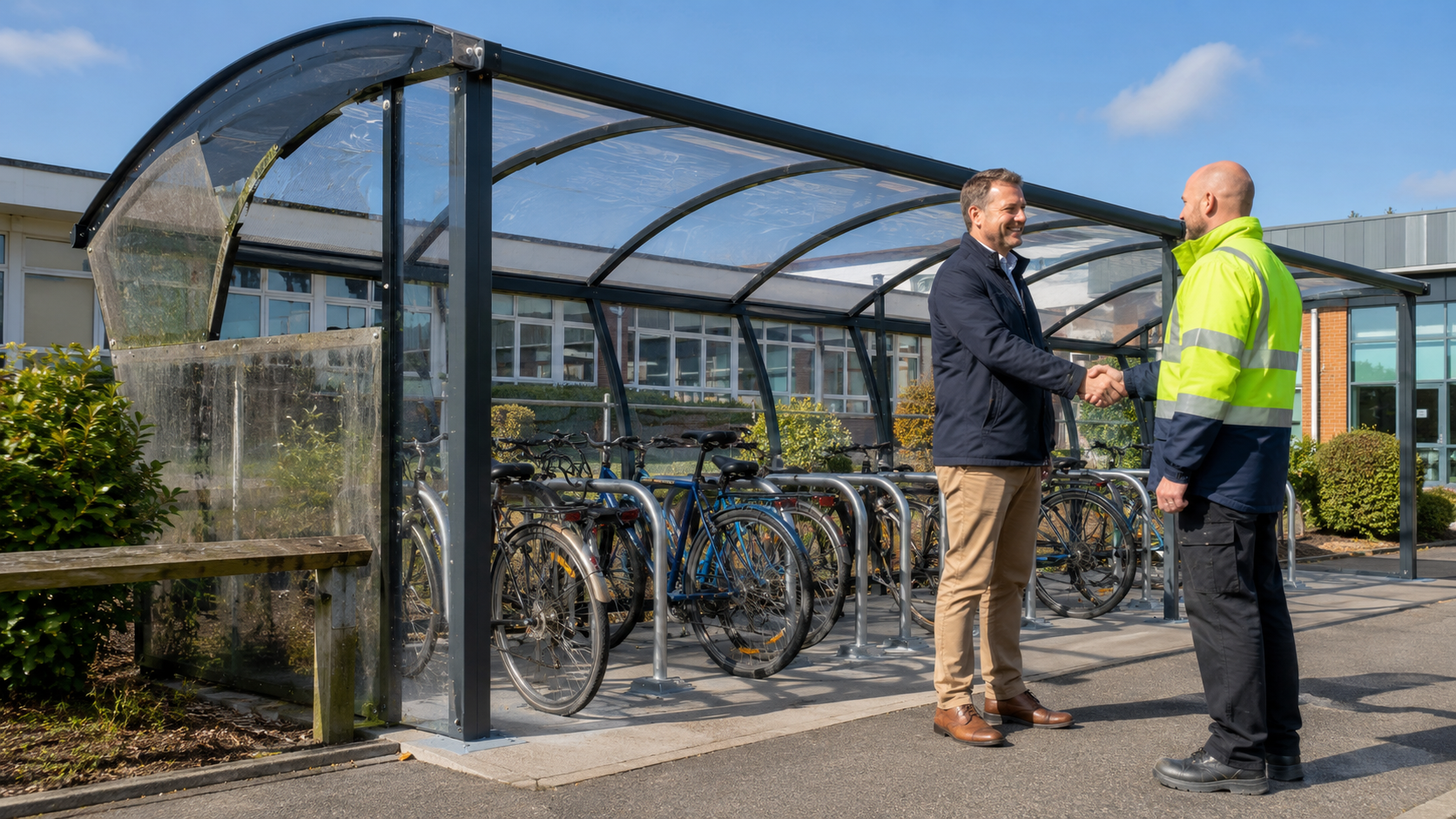
Professional shelter refurbishment can deliver substantial cost savings, extend the life of your existing asset, reduce disruption, and support sustainability goals. From glazing panel replacement and frame recoating to complete shelter restoration, refurbishment often provides the best return on investment.
At Fix My Shelter, we help schools, NHS facilities, councils, commercial businesses, and public sector organisations across the UK restore their shelters safely, professionally, and cost-effectively.
Before investing in a complete replacement, speak to our team and discover whether refurbishment could save your organisation thousands of pounds while delivering a shelter that looks and performs like new.
Need Expert Shelter Refurbishment Advice?
At Fix My Shelter, we specialise in cycle shelter refurbishment, smoking shelter refurbishment, glazing panel replacement, shelter recoating and complete shelter restoration services across the UK.
Whether your shelter requires new panels, a full frame recoat or a complete refurbishment programme, our experienced team can help extend its lifespan while saving you money compared to replacement.
Contact Fix My Shelter today to discuss your shelter refurbishment project and discover how much of your existing structure can be restored rather than replaced.