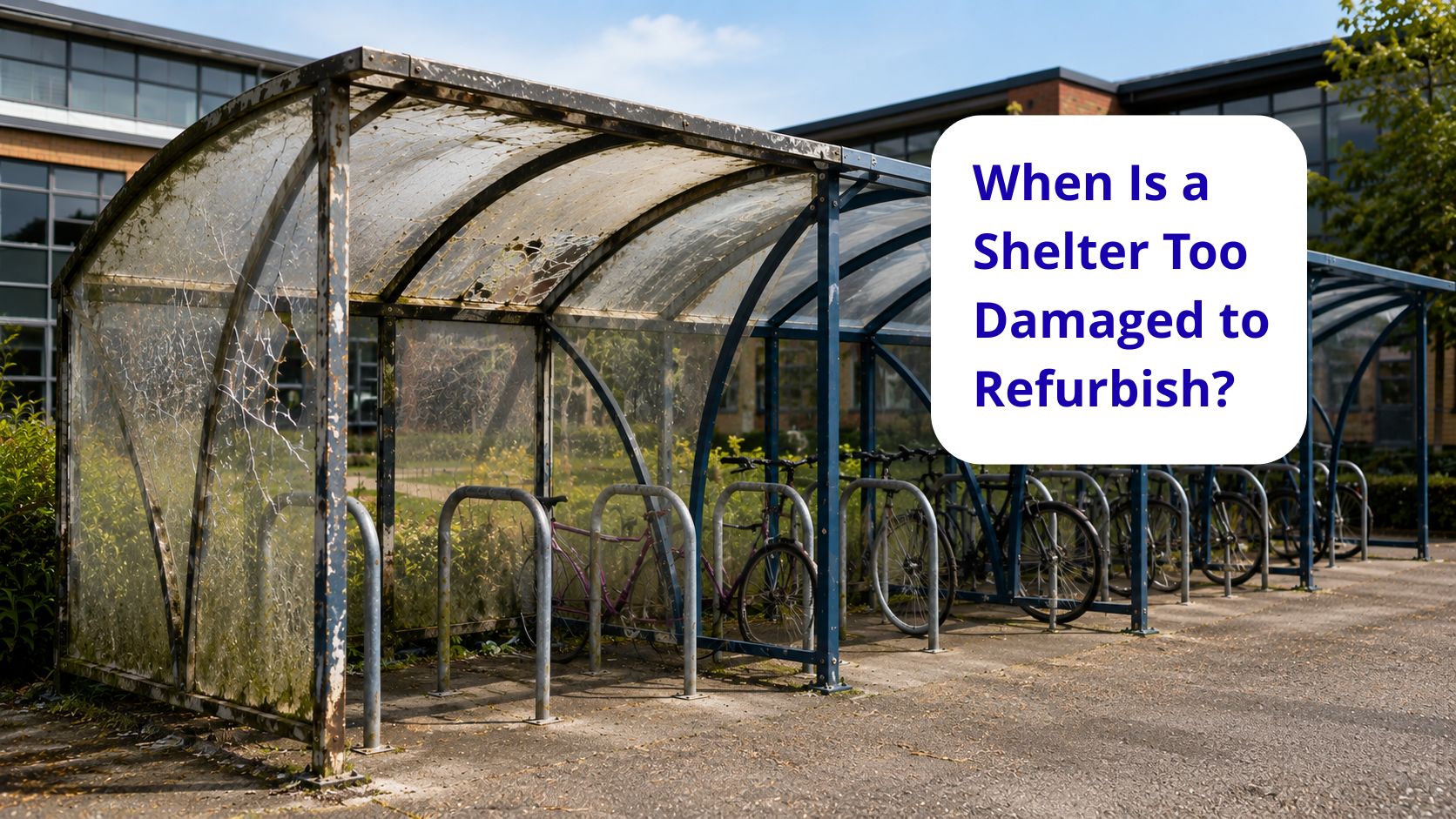
Cycle shelters, smoking shelters, waiting shelters and canopies are designed to withstand years of exposure to the British weather. However, even the most robust structures eventually show signs of wear and tear. Cracked glazing panels, rusted frames, damaged fixings and faded finishes are common issues that develop over time.
One of the most common questions we receive at Fix My Shelter is:
“Should we refurbish our shelter or replace it completely?”
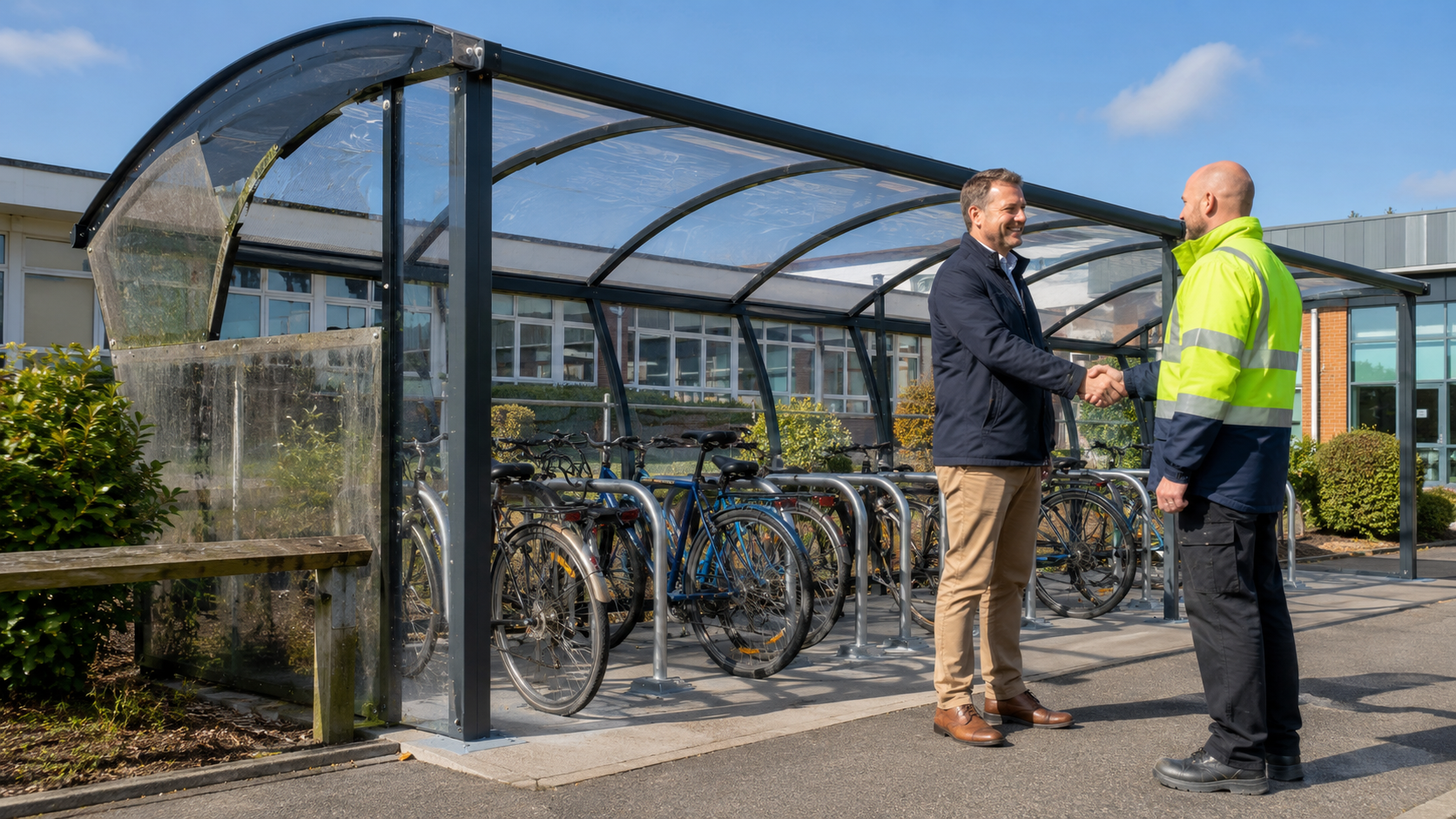
The good news is that many shelters that appear beyond repair can often be successfully restored through professional refurbishment. However, there are situations where replacement becomes the safer and more cost-effective option.
In this guide, we’ll explain how to identify whether your cycle shelter, smoking shelter or waiting shelter is suitable for refurbishment or whether a complete replacement may be required.
Why Refurbishment Is Often the Better Option
For schools, local authorities, healthcare facilities and commercial businesses, shelter refurbishment is usually significantly more affordable than purchasing a brand-new structure.
A professional refurbishment can include:
- Glazing panel replacement
- Frame recoating and repainting
- Roof panel replacement
- Fixing and bracket replacement
- Corrosion treatment
- Structural repairs
- General maintenance and cleaning
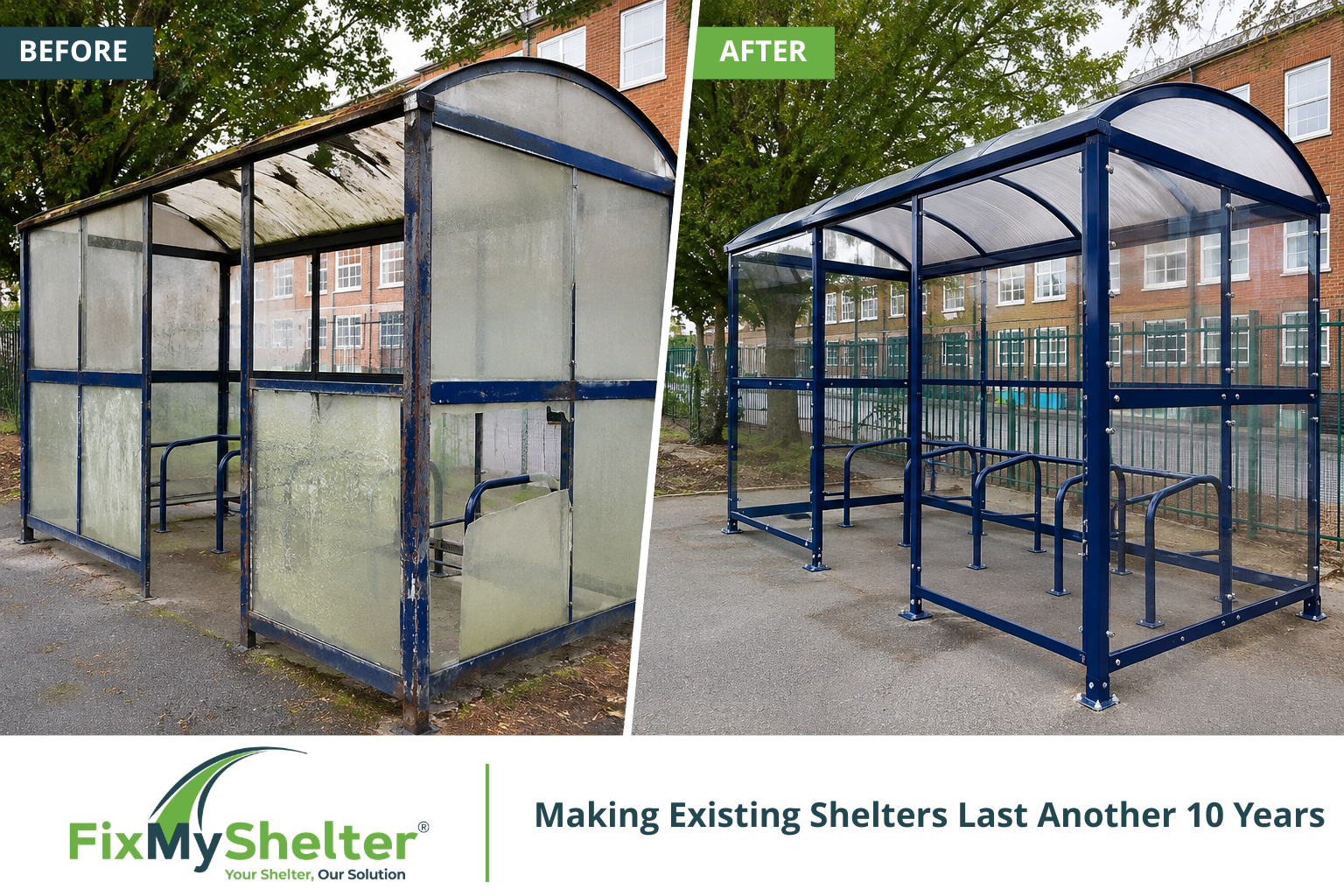
In many cases, retaining the existing framework can extend the life of a shelter by many years while reducing waste and minimising disruption. Replacing glazing panels and restoring existing steelwork is often faster and more cost-effective than installing a completely new shelter.
Signs Your Shelter Can Be Refurbished
1. Damaged or Broken Glazing Panels
Broken polycarbonate, PETG or perspex panels are one of the most common shelter issues.
These problems often occur due to:
- Vandalism
- Accidental impacts
- Storm damage
- Ageing materials
Fortunately, glazing panels can usually be replaced without affecting the main structure.
If the steel frame remains sound, new panels can restore the shelter’s appearance and weather protection at a fraction of the cost of replacement.
2. Surface Rust and Corrosion
Many shelter owners assume rust means the structure must be replaced.
In reality, surface corrosion can often be treated through:
- Mechanical preparation
- Rust removal
- Protective primers
- Specialist recoating systems
Where corrosion has not significantly weakened the steel, refurbishment can restore both appearance and durability. Regular maintenance and treatment can significantly extend shelter lifespan.
3. Faded or Worn Paint Finishes
Years of UV exposure, rain and pollution can leave shelters looking tired and neglected.
Common signs include:
- Peeling paint
- Discolouration
- Surface staining
- Graffiti damage
A professional shelter recoating service can transform the appearance of an ageing shelter, making it look almost new again while providing additional protection against future corrosion.
4. Loose Fixings and Minor Structural Damage
Over time, bolts, brackets and fixings can loosen due to weather and repeated use.
During a refurbishment project, these components can usually be:
- Tightened
- Replaced
- Upgraded
This helps restore structural integrity without requiring full replacement. Many refurbishment projects include replacement fixings alongside new glazing and recoating works.
When a Shelter May Be Too Damaged to Refurbish
While refurbishment is often the preferred solution, there are circumstances where replacement becomes necessary.
1. Severe Structural Corrosion
The biggest warning sign is extensive corrosion affecting load-bearing elements.
If rust has:
- Penetrated deeply into the steel
- Reduced structural thickness
- Compromised support columns
- Weakened roof beams
The shelter may no longer be structurally safe.
In these situations, refurbishment may only provide a temporary solution. A structural assessment should always be carried out before deciding on repairs. Extensive corrosion is one of the key indicators that full replacement may be required.
2. Significant Structural Movement
If a shelter frame has:
- Bent significantly
- Twisted out of alignment
- Suffered vehicle impact damage
- Developed unstable foundations
Replacement may be the most practical option.
Structural movement can place additional stress on joints and fixings, making long-term repairs difficult and potentially unsafe.
3. Multiple Major Component Failures
Sometimes shelters suffer from several issues simultaneously, including:
- Extensive corrosion
- Broken glazing throughout
- Damaged roof sheets
- Failed fixings
- Deformed framework
When repair costs approach the cost of a new shelter, replacement often provides better long-term value.
4. Outdated Design or Non-Compliance
Some older shelters no longer meet modern requirements.
For example:
- Insufficient cycle capacity
- Poor accessibility
- Inadequate weather protection
- Obsolete designs
Even if refurbishment is technically possible, upgrading to a modern shelter may provide greater benefits for users and site operators. Extensive structural issues or failure to meet operational needs are common reasons for replacement rather than refurbishment.
The Importance of Professional Assessment
The condition of a shelter cannot always be judged by appearance alone.
What appears to be serious damage may only require:
- New glazing panels
- Frame recoating
- Replacement fixings
Conversely, a shelter that looks acceptable may conceal underlying structural deterioration.
Professional inspections help identify:
- Corrosion levels
- Structural integrity
- Safety risks
- Refurbishment viability
- Cost-effective solutions
Industry guidance consistently highlights the importance of inspections and maintenance to identify deterioration before it becomes a major structural issue.
Refurbishment vs Replacement: Which Is Right for You?
Every shelter is different.
In our experience, many cycle shelters and smoking shelters that appear old, worn or vandalised can be successfully refurbished.
Refurbishment is often the preferred solution when:
- The framework remains structurally sound
- Damage is mainly cosmetic
- Glazing panels require replacement
- Surface corrosion can be treated
- Budget considerations are important
Replacement may be necessary when:
- Structural corrosion is extensive
- Safety is compromised
- The shelter no longer meets operational requirements
- Repair costs exceed replacement value
Speak to the Shelter Refurbishment Specialists
At Fix My Shelter, we always assess whether refurbishment is a viable option before recommending replacement. Our aim is to help schools, businesses, councils and healthcare organisations maximise the lifespan of their existing shelters while reducing costs and waste.
Whether you need cycle shelter refurbishment, smoking shelter refurbishment, glazing replacement, frame recoating or a complete shelter assessment, our experienced team can help.
Contact Fix My Shelter today for a free shelter condition survey and discover whether your shelter can be restored rather than replaced.