When an outdoor shelter begins to show signs of wear and tear, many organisations automatically assume replacement is the only solution. However, for schools, hospitals, offices, local authorities, retail parks, and industrial facilities across the UK, a complete replacement is often unnecessary.
In many cases, the existing shelter structure remains perfectly serviceable, while only certain components, such as glazing panels, protective coatings, or surface finishes, require attention. This is why more organisations are choosing shelter refurbishment as a cost-effective alternative to full replacement.
The return on investment (ROI) of refurbishing an existing shelter can be significant, delivering substantial cost savings, reducing disruption, improving site appearance, and extending the life of existing infrastructure for many years.
Understanding the True Cost of Shelter Replacement
Replacing an outdoor shelter involves far more than simply purchasing a new structure.
A complete replacement project often includes:
- Removal and disposal of the existing shelter
- Groundwork alterations
- New foundations were required
- Delivery and installation costs
- Site disruption
- Labour costs
- Potential planning considerations
These additional expenses can quickly increase project budgets.
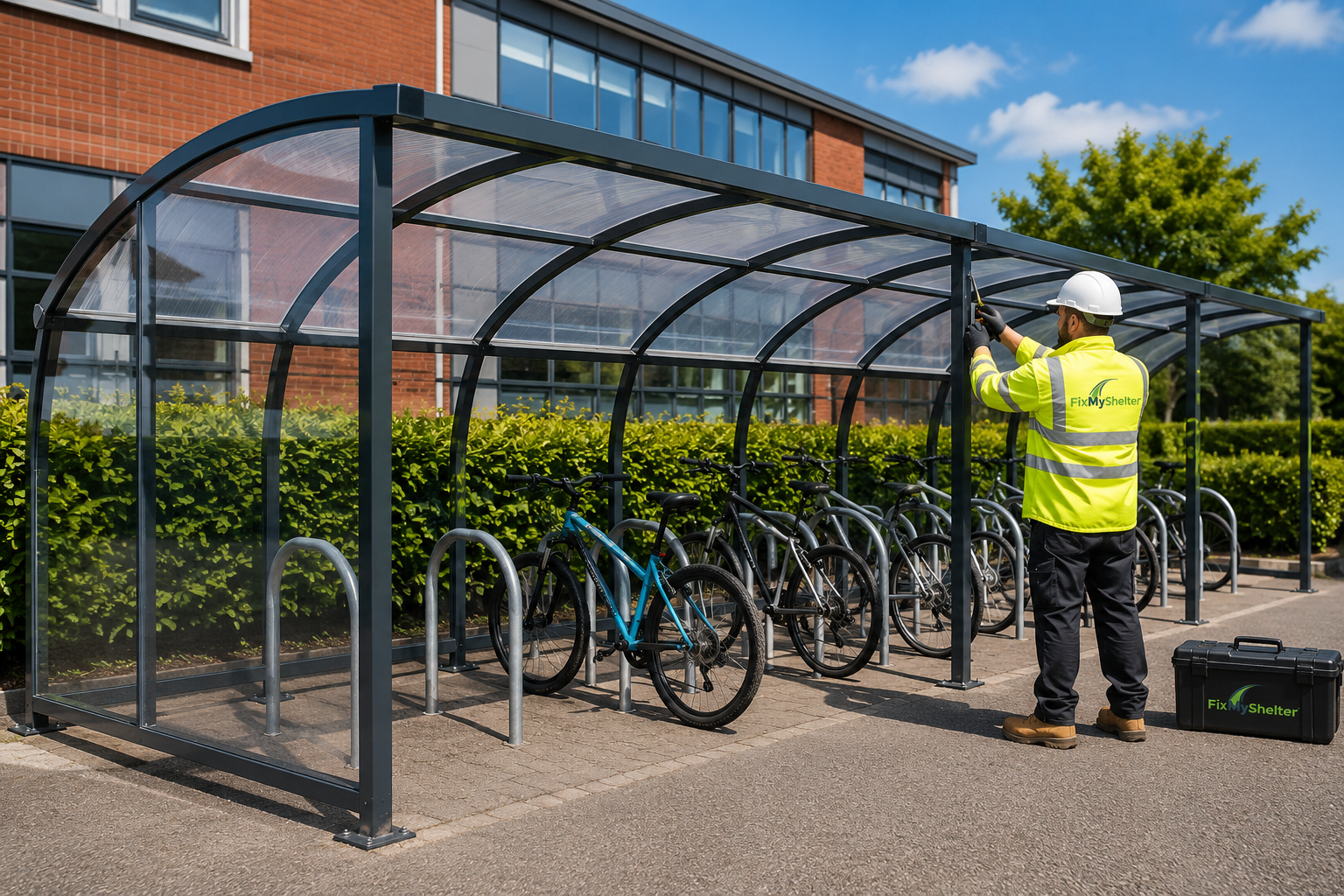
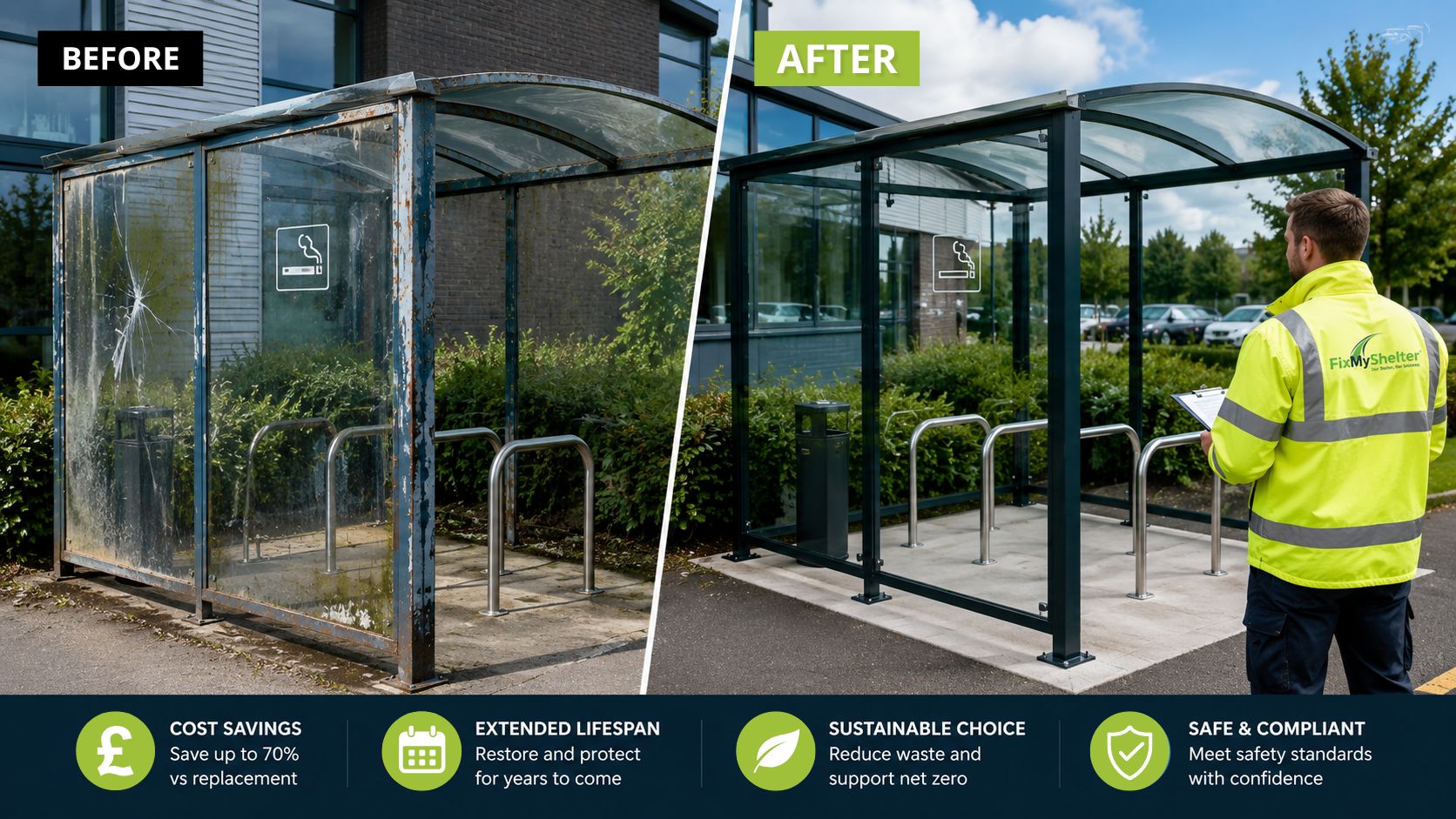
By comparison, outdoor shelter refurbishment focuses on restoring and upgrading the existing structure, allowing organisations to retain the core framework while replacing worn components and improving appearance.
For many smoking shelters, cycle shelters, waiting shelters, and covered walkways, the steel framework often remains structurally sound long after glazing panels and surface finishes have deteriorated. Retaining these elements can dramatically reduce project costs.
Immediate Cost Savings
One of the biggest benefits of shelter refurbishment is the immediate financial savings.
According to Fix My Shelter, organisations can achieve savings of up to 70% compared to a complete shelter replacement by refurbishing existing structures instead.
Rather than paying for a completely new shelter, refurbishment allows businesses to target the areas that genuinely need attention, including:
- Glazing panel replacement
- Frame recoating
- Corrosion treatment
- Structural repairs
- Signage upgrades
- Shelter accessories and improvements
This approach delivers a like-new appearance at a fraction of the cost.
For facilities managers operating under strict maintenance budgets, this can free up funds for other essential projects while still improving site infrastructure.
Extending Shelter Lifespan
A well-executed refurbishment can significantly extend the life expectancy of an outdoor shelter.
Many shelters are constructed from galvanised steel frameworks that remain structurally sound for decades. In most cases, deterioration occurs in the external coatings and glazing rather than the main structure itself.
Refurbishment typically includes:
- Rust treatment
- Surface preparation
- Professional recoating
- Replacement glazing panels
- Fixing upgrades
- General repairs
These improvements help protect the shelter from further environmental damage while restoring functionality and appearance.
The result is a shelter that can continue serving users for many additional years without the need for a complete replacement.
Reduced Disruption to Daily Operations
One often-overlooked cost associated with replacement is operational disruption.
Installing a brand-new shelter can involve extensive site works, excavation, delivery logistics, and prolonged installation periods.
For schools, healthcare facilities, commercial premises, and transport hubs, this disruption can affect day-to-day operations.
Refurbishment projects are generally completed much faster than full replacement projects, helping organisations minimise downtime and maintain normal site activities. Replacing glazing panels and recoating existing frameworks can often be completed in a fraction of the time required for a complete installation.
This reduced disruption translates into further financial savings and a smoother project experience.
Improved Appearance and First Impressions
Outdoor shelters play an important role in the overall appearance of a site.
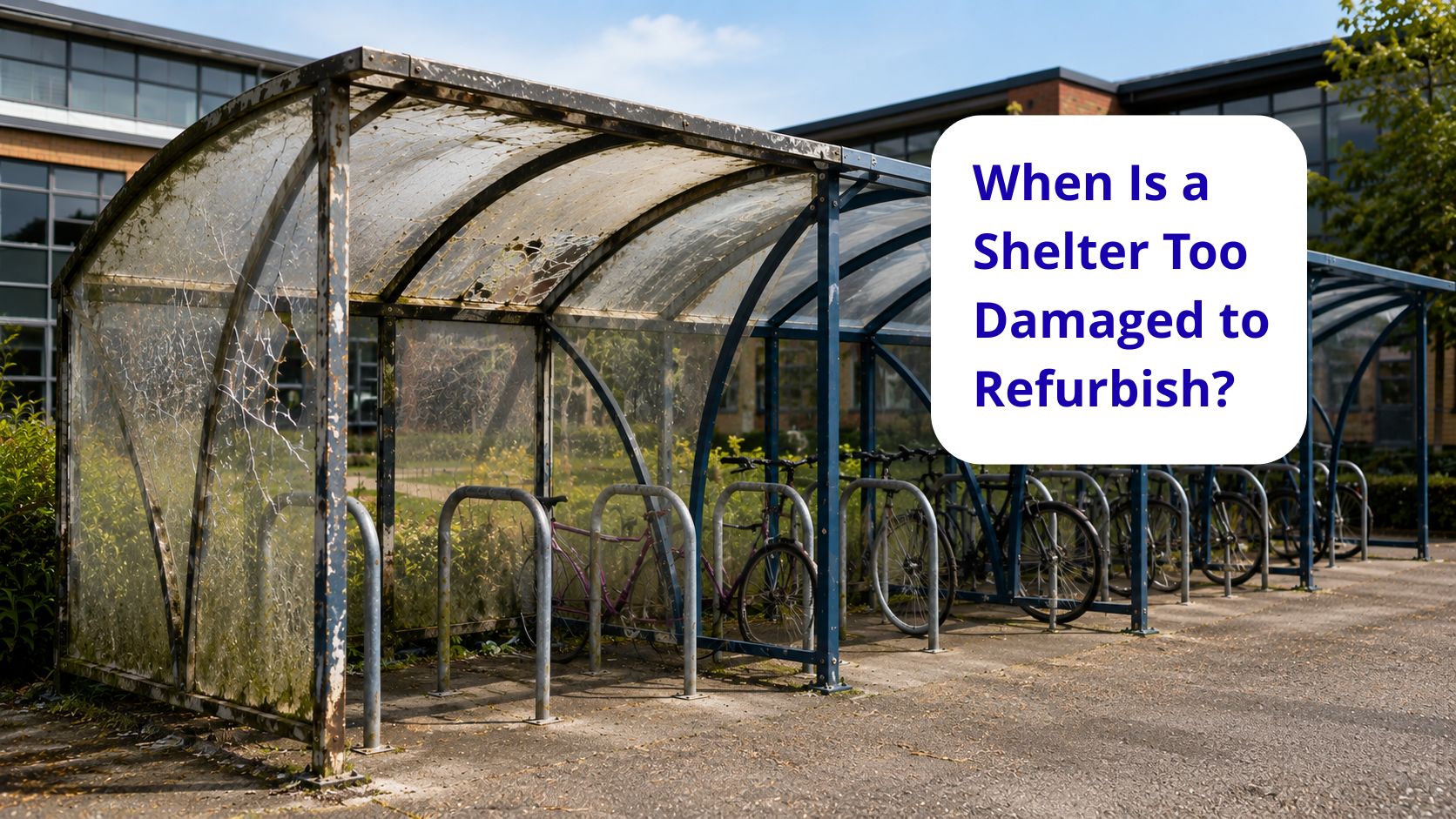
Faded paintwork, cracked glazing panels, corrosion, and vandal damage can create a poor first impression for visitors, staff, students, and customers.
A professionally refurbished shelter can transform the visual appearance of a facility by:
- Restoring colour and finish
- Improving transparency and visibility
- Removing signs of wear
- Enhancing cleanliness and presentation
Whether it is a smoking shelter, cycle shelter, waiting shelter, or covered walkway, a refurbished structure helps maintain a professional image and demonstrates a commitment to maintaining facilities.
Sustainability Benefits and Environmental ROI
Sustainability is becoming an increasingly important factor in facilities management decisions.
Refurbishment supports environmental goals by retaining the majority of the existing structure and reducing waste sent to landfill.
Rather than manufacturing, transporting, and installing a completely new shelter, refurbishment focuses on extending the useful life of existing assets. This reduces embodied carbon and minimises the consumption of raw materials.
Fix My Shelter highlights refurbishment as an environmentally responsible option that helps organisations support their sustainability and net-zero objectives.
For organisations with ESG targets or sustainability commitments, this environmental ROI can be just as valuable as the financial return.
Enhanced Safety and Compliance
Damaged glazing panels, corrosion, and structural wear can create safety concerns.
Refurbishment projects allow facilities managers to address these issues before they become larger problems.
Typical improvements include:
- Replacement of damaged glazing
- Structural repairs
- Corrosion treatment
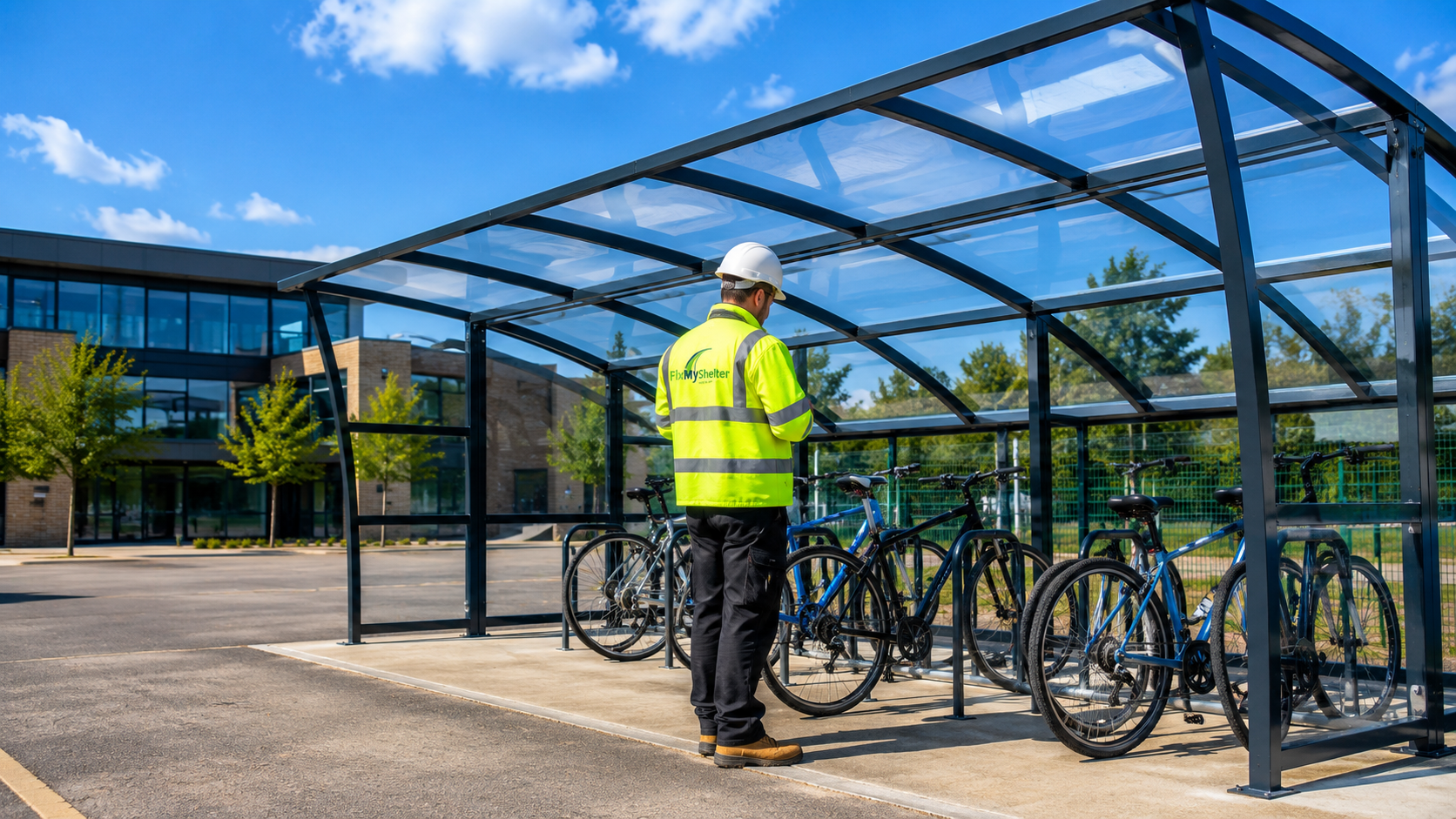
- Safety inspections
- Upgraded fixings and components
These upgrades help ensure shelters remain safe, functional, and compliant for users.
Addressing issues proactively can also help avoid larger repair costs in the future.
When Replacement May Be Necessary
While refurbishment offers excellent ROI in many situations, there are occasions where replacement is the better option.
A new shelter may be required if:
- The framework has suffered extensive structural damage
- The shelter no longer meets site requirements
- Significant expansion is needed
- The existing shelter is beyond economical repair
However, these situations are often less common than many organisations assume.
A professional shelter assessment can determine whether refurbishment or replacement will deliver the best long-term value.
Calculating Your Shelter Refurbishment ROI
When comparing refurbishment versus replacement, consider:
- Initial project cost
- Installation timescales
- Operational disruption
- Future maintenance requirements
- Environmental impact
- Asset lifespan extension
For many organisations, the figures clearly favour refurbishment.
Lower upfront costs, reduced disruption, improved appearance, extended service life, and sustainability benefits combine to create an impressive return on investment.
Conclusion
For schools, universities, hospitals, offices, transport operators, local authorities, and commercial facilities throughout the UK, outdoor shelter refurbishment is often the smartest financial decision.
Rather than investing heavily in a complete replacement, refurbishment allows organisations to restore, modernise, and protect existing assets while achieving substantial cost savings.
With benefits including lower costs, faster installation, improved appearance, enhanced sustainability, and extended lifespan, the ROI of smoking shelter refurbishment, cycle shelter refurbishment, and shelter glazing replacement is difficult to ignore.
Before committing to a complete replacement, it is worth exploring whether a professional refurbishment could deliver the same result for a fraction of the cost.
For expert advice on shelter refurbishment, glazing panel replacement, and outdoor shelter repairs across the UK, Contact Fix My Shelter Now