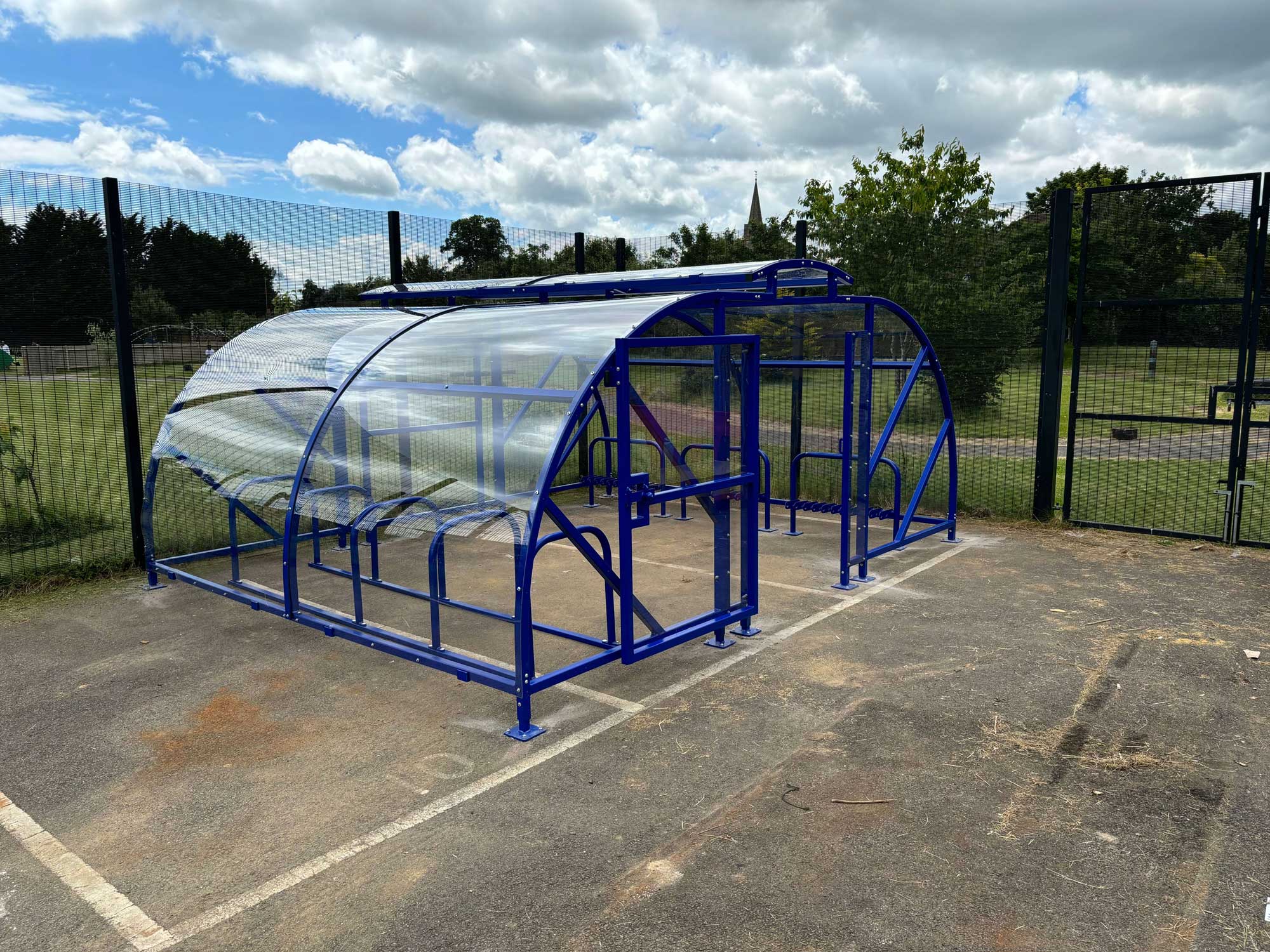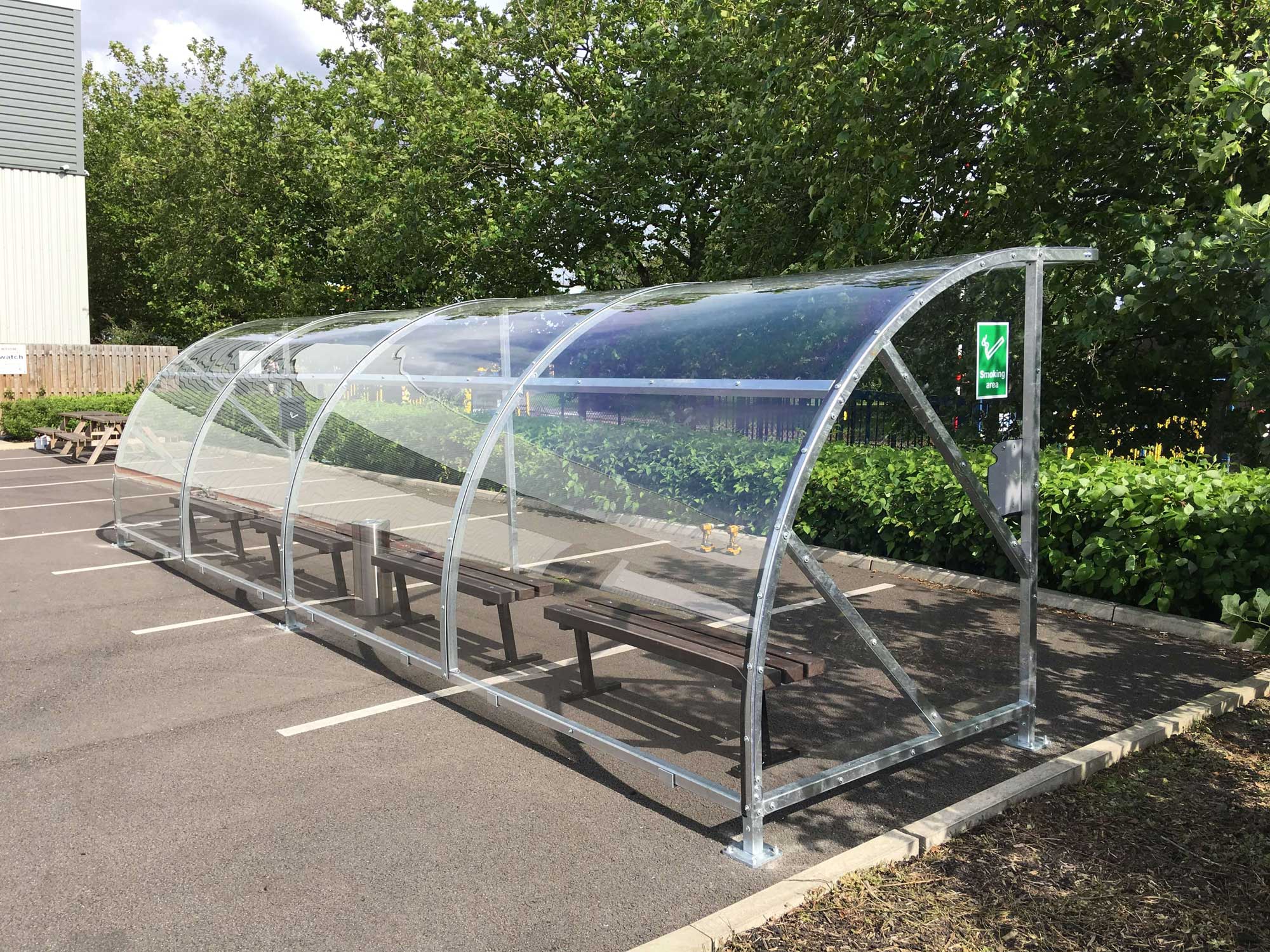
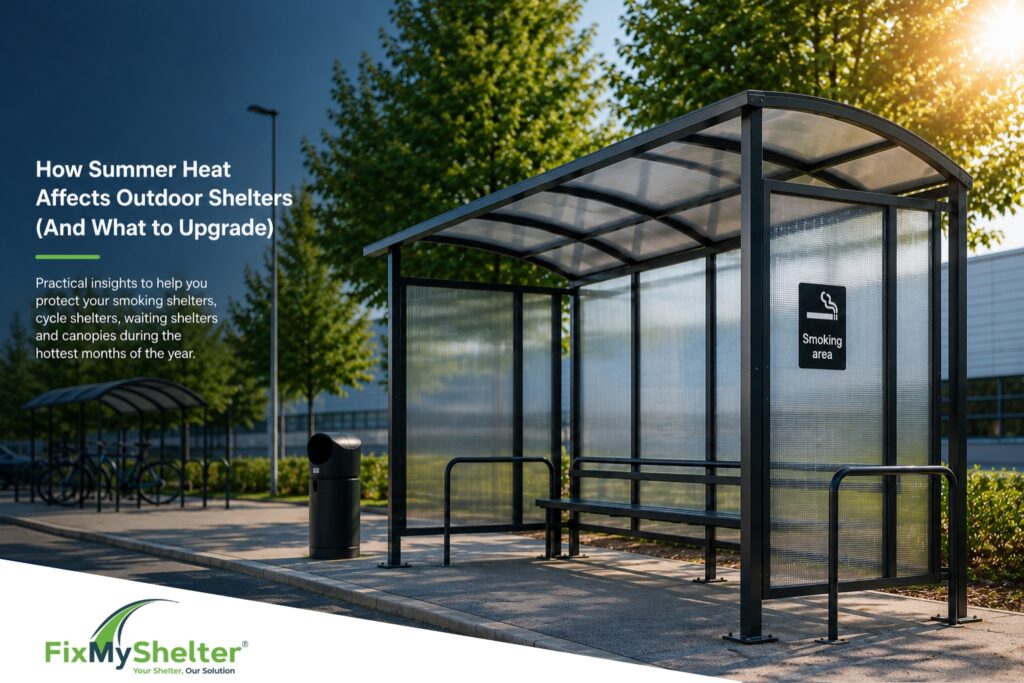
As temperatures continue to rise across the UK, many organisations are focusing on the impact that summer weather has on their buildings and outdoor facilities. While outdoor shelters are designed to withstand the elements, prolonged exposure to heat, UV rays, and fluctuating temperatures can gradually reduce their performance, appearance, and lifespan.
Whether you manage a school, business premises, hospital, warehouse, or public facility, understanding how summer heat affects your smoking shelters, cycle shelters, waiting shelters, and canopies can help you avoid costly repairs and extend the life of your assets.
Why Summer Heat Matters for Outdoor Shelters
Many people associate shelter damage with winter storms and heavy rainfall. However, summer can be equally challenging.
High temperatures and prolonged sunlight can cause:
- Material expansion and contraction
- UV degradation
- Fading and discolouration
- Cracking of glazing panels
- Sealant deterioration
- Structural movement
- Reduced user comfort
Over time, these issues can affect both the appearance and structural integrity of outdoor shelter systems. Studies on polycarbonate and glazing materials show that prolonged UV exposure and temperature fluctuations can cause yellowing, brittleness, loss of transparency, and thermal movement if components are not properly maintained. (GOODLIFE)
Common Summer Problems Affecting Outdoor Shelters
1. UV Damage to Polycarbonate Glazing Panels
Many smoking shelters, cycle shelters, and covered walkways use polycarbonate glazing because it is lightweight, durable, and impact-resistant.
However, over years of exposure to sunlight, UV radiation can gradually break down the material, leading to:
- Yellowing panels
- Reduced visibility
- Surface crazing
- Loss of impact resistance
- Brittle glazing
Older shelters are particularly vulnerable if they were installed before modern UV-protected materials became standard. Research shows UV exposure can significantly affect polycarbonate performance and appearance over time. (GOODLIFE)
Upgrade Recommendation
Replace ageing glazing with modern UV-resistant polycarbonate panels. New glazing systems offer improved clarity, better weather resistance, and longer service life.
2. Thermal Expansion and Structural Movement
One of the biggest challenges during hot weather is thermal expansion.
As temperatures rise, materials such as steel, aluminium, and polycarbonate naturally expand. When temperatures drop, they contract again.
This continuous movement can lead to:
- Loose fixings
- Misaligned panels
- Distorted framework
- Stress around connection points
- Increased wear on joints and brackets
Experts note that repeated expansion and contraction cycles can eventually create permanent structural issues and cracks if not properly managed. (RWA Consulting)
Upgrade Recommendation
Inspect:
- Framework connections
- Fixing points
- Expansion gaps
- Roof panel fixings
During a shelter refurbishment, damaged components can be replaced before larger structural issues develop.
3. Fading and Deterioration of Shelter Frameworks
The UK’s summer sun can be surprisingly harsh on painted steel structures.
Over time, UV exposure can cause:
- Colour fading
- Surface chalking
- Coating breakdown
- Corrosion exposure
This is especially noticeable on older smoking shelters and cycle shelters where protective coatings have reached the end of their lifespan.
Research shows prolonged UV exposure can significantly accelerate the degradation of external coatings and finishes. (Cladding Coatings)
Upgrade Recommendation
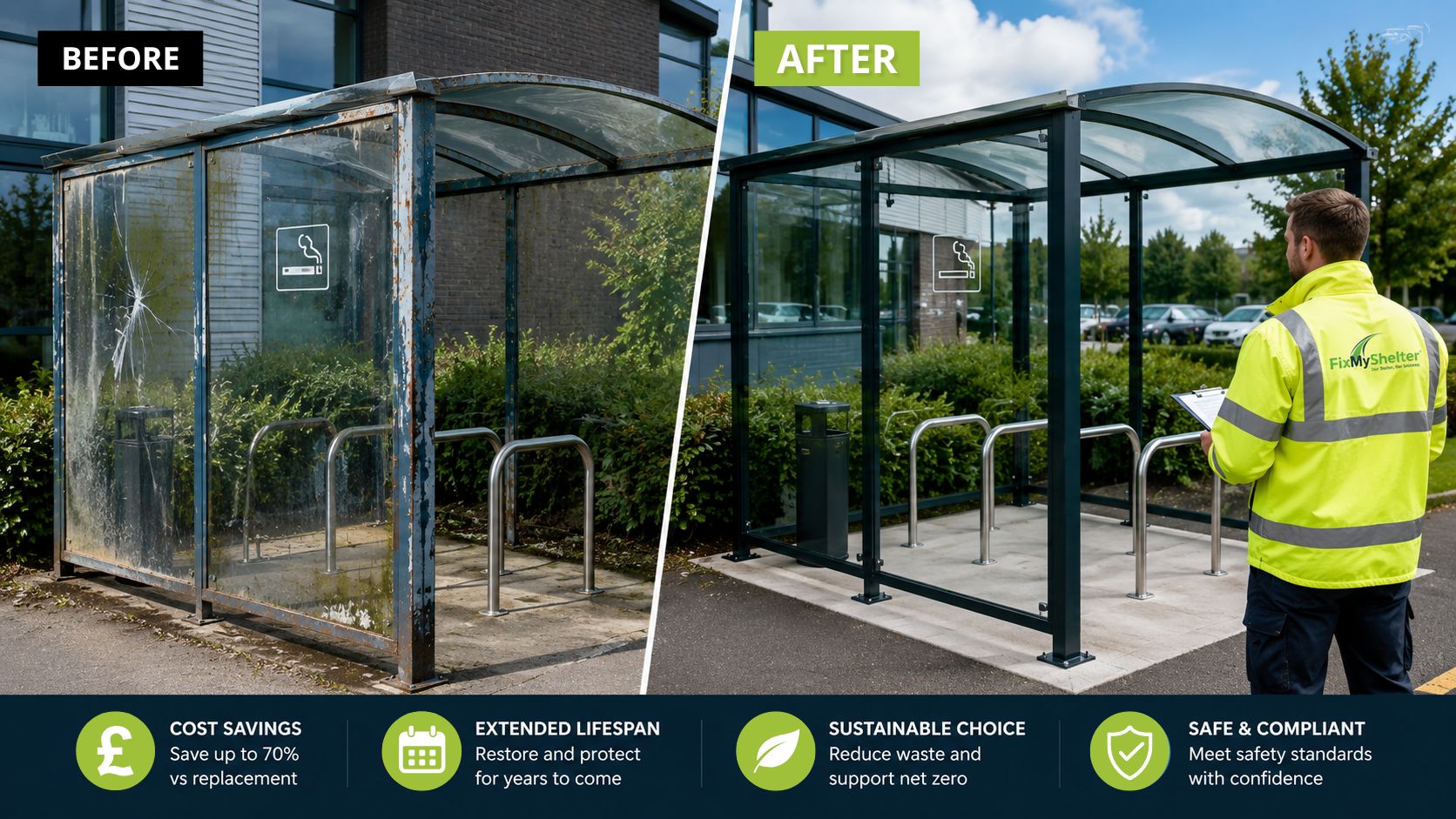
Consider a professional shelter recoating service.
A high-quality powder-coated or specialist industrial coating system can:
- Restore appearance
- Protect against corrosion
- Improve weather resistance
- Extend shelter lifespan
For many organisations, recoating is significantly more cost-effective than replacing the entire shelter.
4. Sealant Failure and Water Ingress
Summer heat doesn’t only affect visible components.
Sealants around glazing panels and joints can deteriorate under prolonged UV exposure and high temperatures.
Common symptoms include:
- Shrinking sealants
- Cracked joints
- Water ingress
- Internal staining
- Reduced weather protection
Industry experts highlight that UV exposure and sustained heat can accelerate sealant degradation and compromise overall system performance. (glassaftercare.com)
Upgrade Recommendation
Inspect all:
- Panel seals
- Joint connections
- Roof junctions
- Weatherproofing systems
Replacing deteriorated sealants can prevent more expensive repairs later.
5. Increased Heat Build-Up Inside Smoking Shelters
Summer temperatures can make enclosed smoking shelters uncomfortable.
Problems often include:
- Excessive heat retention
- Reduced airflow
- User discomfort
- Increased condensation risk
This can affect employee wellbeing and reduce shelter usability during hot weather.
Upgrade Recommendation
Consider:
- Improved ventilation
- Additional side openings
- Replacement roof materials
- Refurbished glazing systems
Modern shelter designs often incorporate improved airflow while maintaining weather protection.
6. Corrosion Hidden Beneath Damaged Coatings
When protective coatings begin to fail, steel components become exposed to moisture and environmental contaminants.
Although corrosion may not be immediately visible, summer heat can accelerate the deterioration process by weakening already damaged coatings.
Signs include:
- Rust spots
- Bubbling paint
- Surface flaking
- Discoloured framework
Upgrade Recommendation
A professional shelter inspection can identify corrosion before structural replacement becomes necessary.
In many cases, localised repairs and recoating can restore the structure at a fraction of replacement costs.
Why Refurbishment Often Makes More Sense Than Replacement
Many organisations assume that an ageing shelter needs complete replacement.
In reality, refurbishment can often provide:
- Significant cost savings
- Reduced disruption
- Improved appearance
- Extended service life
- Better sustainability outcomes
Typical refurbishment projects may include:
- Shelter glazing replacement
- Framework recoating
- Roof panel replacement
- Structural repairs
- Fixing and seal replacement
This approach allows businesses and schools to modernise their shelters without the expense of purchasing entirely new structures.
Summer Shelter Maintenance Checklist
Before peak summer temperatures arrive, consider checking:
- Polycarbonate panels for yellowing or cracks
- Framework coatings for fading or corrosion
- Sealants for signs of deterioration
- Roof fixings and structural connections
- Ventilation and airflow
- Drainage systems and gutters
- Shelter stability and alignment
Regular inspections can significantly reduce long-term maintenance costs and help maximise the lifespan of outdoor shelters.
Final Thoughts
Summer weather can place considerable stress on outdoor shelters, particularly older smoking shelters, cycle shelters, waiting shelters, and canopies. UV exposure, thermal expansion, coating deterioration, and ageing glazing systems all contribute to gradual wear and tear.
The good news is that many of these issues can be resolved through targeted refurbishment rather than complete replacement. Upgrading glazing panels, recoating frameworks, replacing damaged components, and improving ventilation can dramatically improve both appearance and performance.
By addressing problems early, organisations can protect their investment, improve user experience, and extend the life of their outdoor shelter infrastructure for many years to come.
Need Help Refurbishing Your Outdoor Shelter?
Whether you need shelter glazing replacement, smoking shelter refurbishment, cycle shelter repairs, or a complete shelter recoating service, our team can help restore your existing structure and extend its lifespan.
Contact Us Now to learn more about our refurbishment and repair services across the UK.