As spring arrives across the UK, it’s the perfect time for businesses, schools, and commercial sites to review their outdoor facilities, especially smoking shelters. With increased usage during the warmer months, ensuring your smoking shelter is fully compliant with UK regulations is not just good practice, it is essential.
Many organisations install smoking shelters to create a designated area, reduce litter, and protect non-smokers. However, over time, shelters can fall out of compliance due to wear and tear, modifications, or outdated designs.
This guide will help you understand whether your smoking shelter is still compliant and why spring is the ideal time to refurbish and upgrade.
Understanding UK Smoking Shelter Regulations
Before assessing your shelter, it is important to understand the core legal requirements.
Under UK smoke-free legislation, smoking is prohibited in enclosed or substantially enclosed workplaces. A smoking shelter must therefore:
- Not be fully enclosed
- Not be substantially enclosed
- Have at least 50 percent of its sides open
This is commonly known as the 50 percent open rule, meaning that more than half of the shelter’s perimeter must remain open to allow proper airflow.
In addition, shelters should:
- Be positioned away from entrances, windows, and ventilation systems
- Prevent smoke from entering buildings
- Include proper signage and clearly designated smoking areas
Failing to meet these requirements can lead to complaints, enforcement action, and potential fines.
Why Compliance Matters Before Summer
Spring is a critical time to review compliance because:
- Outdoor smoking areas see increased use
- Businesses experience higher footfall
- Health and safety inspections are more common
- Poor conditions become more noticeable
A non-compliant shelter does not just pose a legal risk, it can also negatively impact your brand image and workplace environment.
Your Shelter Is Too Enclosed
One of the most common compliance issues is shelters becoming too enclosed over time.
This can happen when:
- Additional panels are added for weather protection
- Temporary coverings are installed
- Structures are positioned against walls or fences
Even if these changes are well-intentioned, they can result in the shelter exceeding the 50 percent enclosure limit.
If more than half of the structure is enclosed, smoking is not permitted.
What to do:
- Remove or adjust panels
- Redesign the shelter layout
- Consider refurbishment to restore compliance
Poor Ventilation or Smoke Build-Up
A compliant smoking shelter must allow proper airflow to prevent smoke from accumulating.
If you notice:
- Smoke is lingering inside the shelter
- Strong odours near entrances
- Complaints from staff or visitors
This is a clear sign your shelter is not functioning as intended.
Shelters are designed to prevent second-hand smoke exposure and must allow air to circulate freely.
What to do:
- Improve airflow by opening up the sides
- Reposition the shelter if necessary
- Upgrade to a more open and compliant design
Shelter Located Too Close to Buildings
Location plays a key role in compliance.
Smoking shelters should be positioned at a reasonable distance from:
- Building entrances
- Windows
- Ventilation systems
This helps prevent smoke from entering indoor spaces and affecting non-smokers.
If your shelter is too close, even if the structure itself is compliant, it can still create issues.
What to do:
- Review the placement of your shelter
- Relocate if necessary
- Ensure clear separation from high-traffic areas
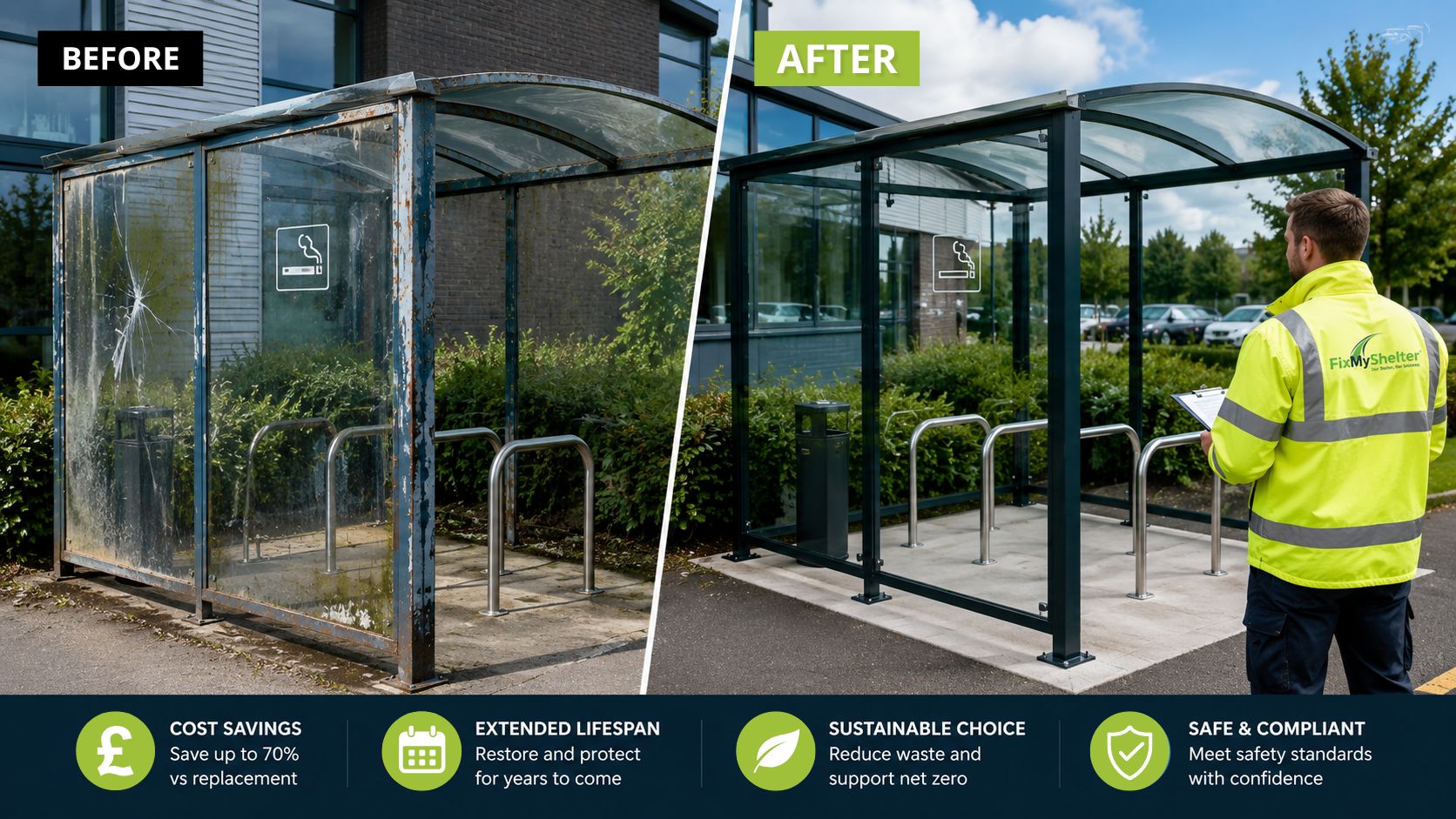
Damaged Structure or Outdated Materials
Compliance is not only about design, but also about condition.
Over time, shelters can deteriorate due to:
- Weather exposure
- Rust or corrosion
- Broken panels or fixings
Damaged shelters may become unsafe, fail to meet structural standards, and appear unprofessional.
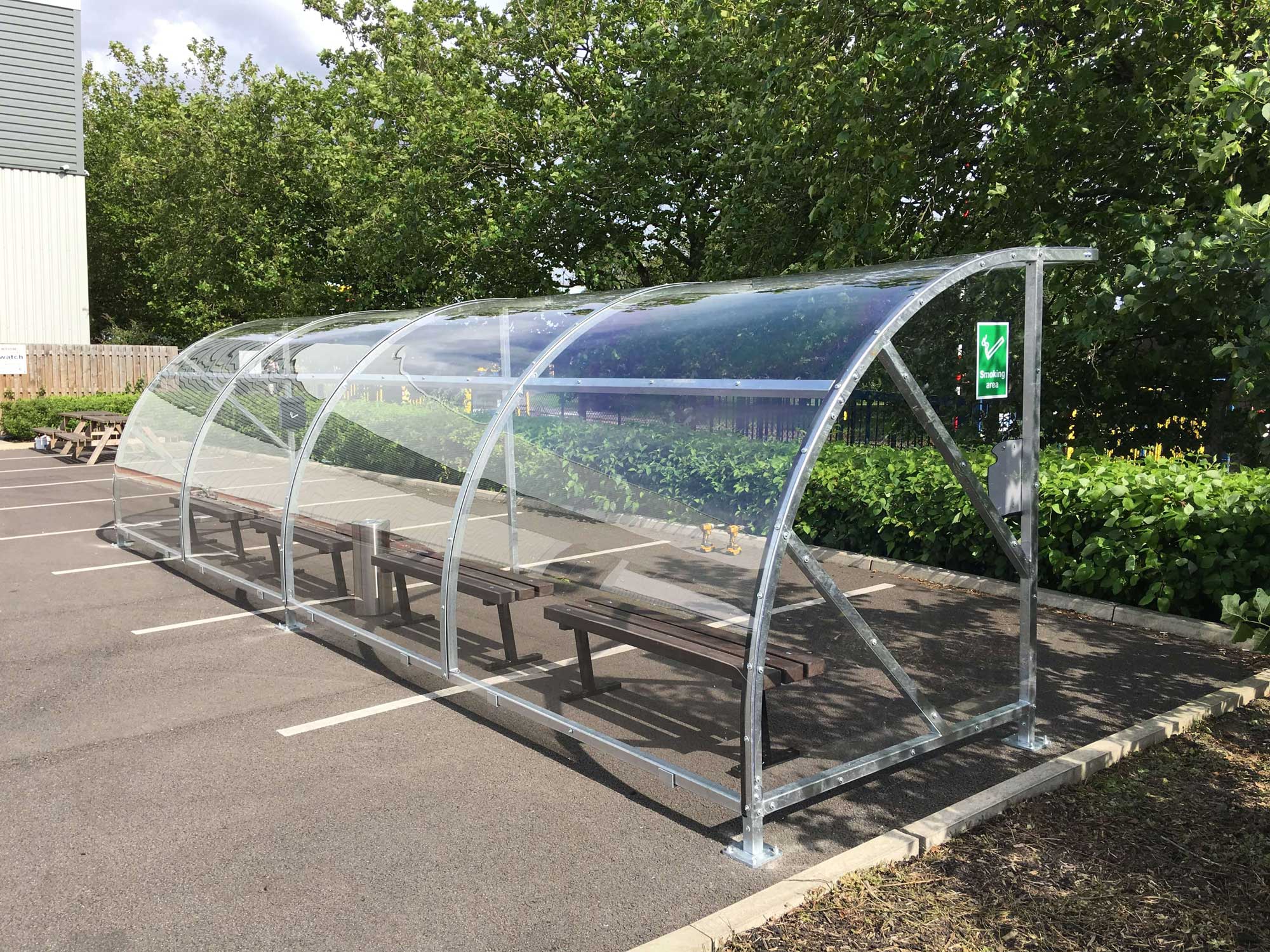
Modern smoking shelters are typically built with galvanised steel and UV-resistant polycarbonate, designed for durability and long-term performance.
What to do:
- Replace damaged panels
- Recoat or repair the frame
- Upgrade materials for improved durability
Lack of Proper Facilities and Signage
A compliant smoking area should be clearly defined and properly equipped.
Common issues include:
- No designated cigarette bins or ashtrays
- Poor signage indicating smoking areas
- Litter build-up around the shelter
Providing a well-maintained shelter helps contain cigarette waste, reduce fire risks, and improve site cleanliness.
What to do:
- Install ashtrays and bins
- Add clear signage
- Maintain regular cleaning schedules
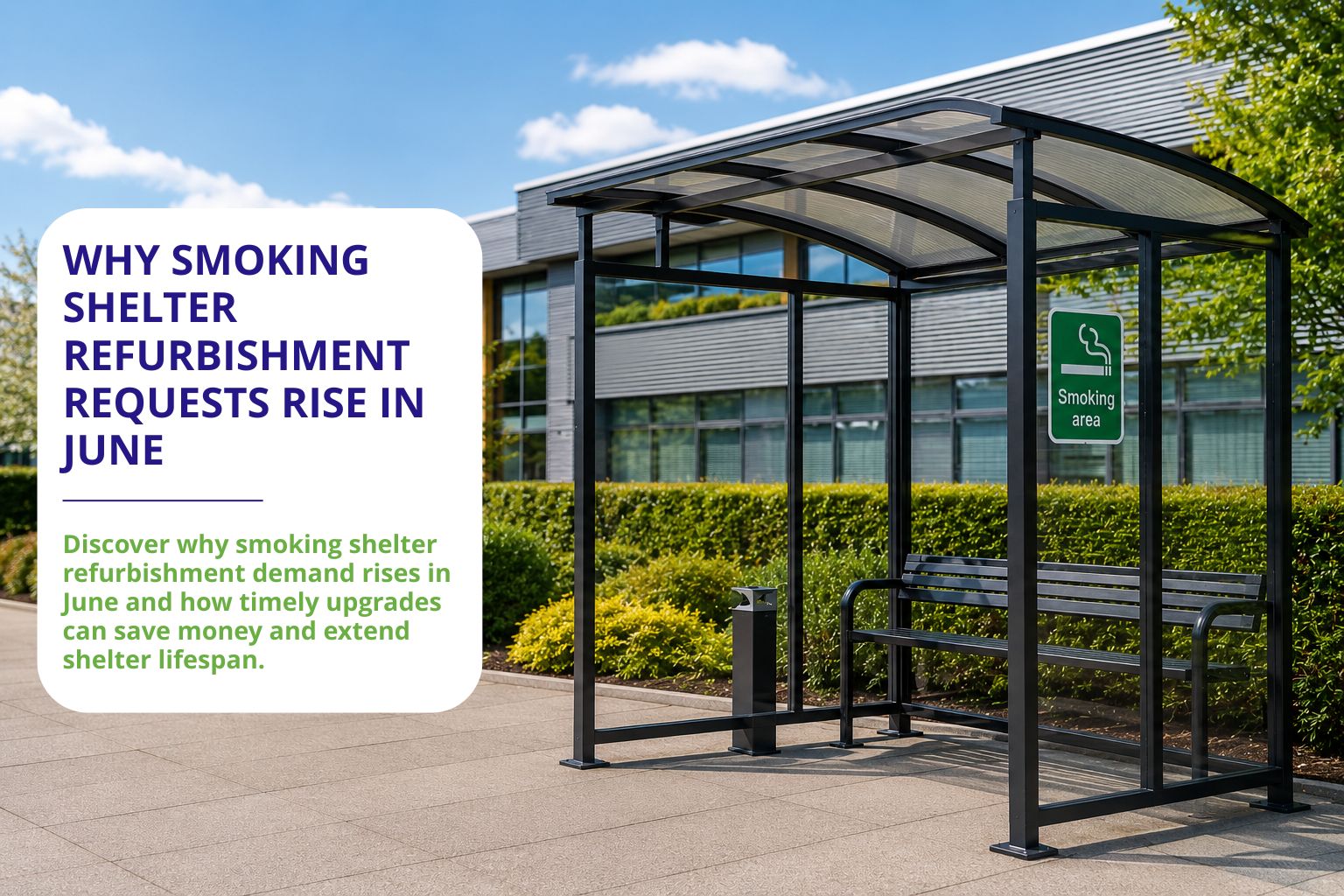
Why Spring Is the Best Time to Refurbish
Spring offers the ideal conditions to bring your smoking shelter back into compliance.
Benefits of refurbishing in spring include:
- Better weather for installation and repairs
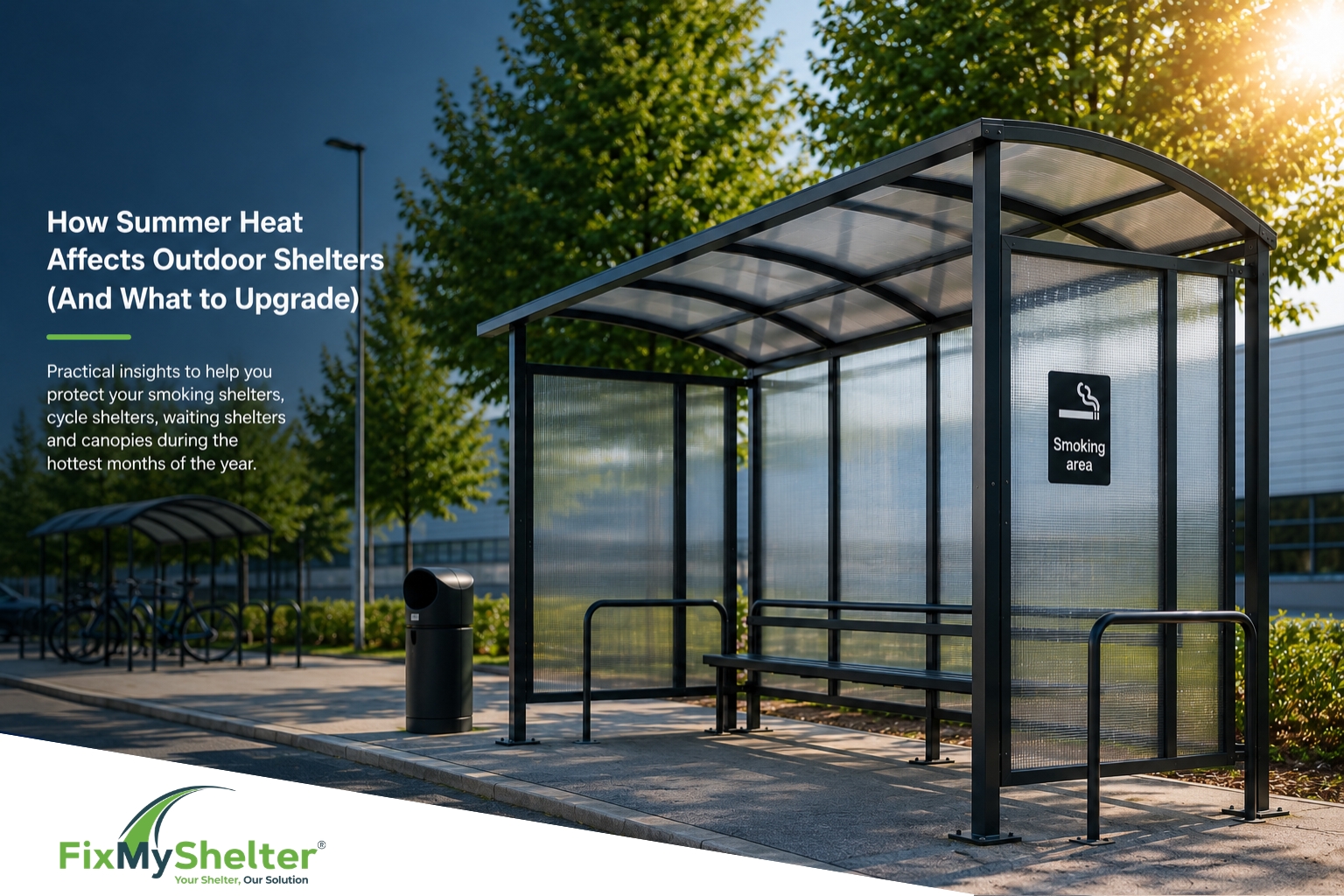
- Preparation for increased summer usage
- Reduced disruption to operations
- Improved appearance ahead of peak periods
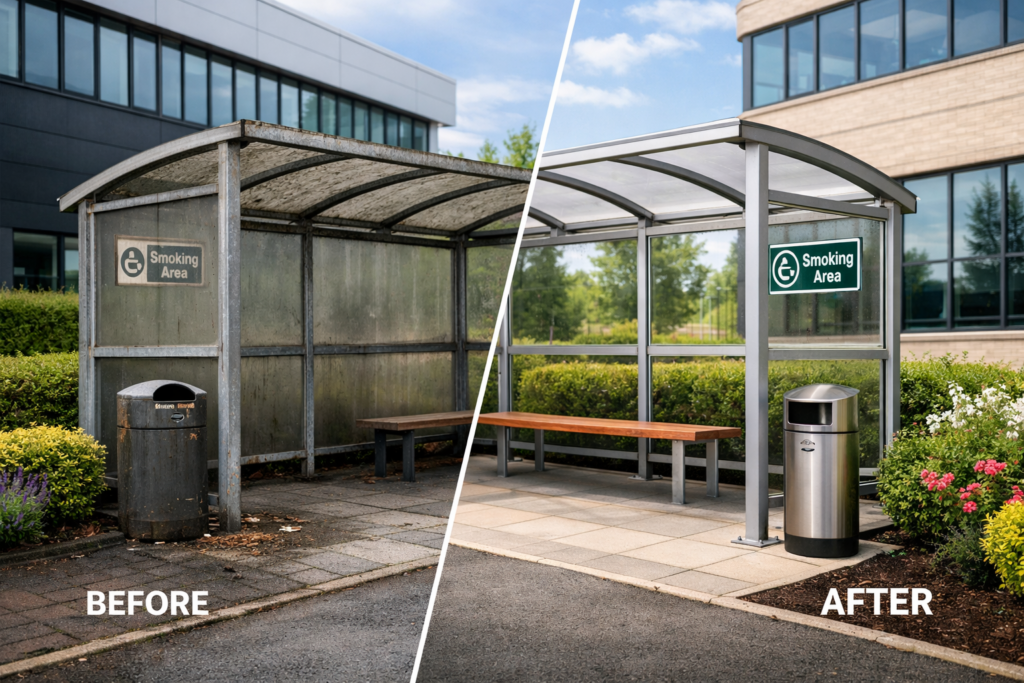
Refurbishment can include replacing glazing panels, adjusting the structure for compliance, upgrading materials, and adding accessories such as seating and bins.
In many cases, refurbishment is significantly more cost-effective than full replacement, especially if the main structure is still sound.
Refurbishment vs Replacement
If your smoking shelter is structurally stable but showing signs of wear or non-compliance, refurbishment is often the best solution.
Choose refurbishment if:
- The frame is still intact
- Issues are related to panels or layout
- You want a cost-effective upgrade
Consider replacement if:
- The structure is severely damaged
- It cannot be modified to meet regulations
- Usage requirements have changed significantly
Final Thoughts
Smoking shelters play an important role in maintaining a safe, compliant, and organised outdoor environment.
However, regulations, wear and tear, and changing site needs mean that regular reviews are essential.
To summarise, your smoking shelter may need refurbishment if:
- It is more than 50 percent enclosed
- Ventilation is poor
- It is too close to buildings
- The structure is damaged or outdated
- Facilities and signage are lacking
Spring is the perfect time to take action. By refurbishing now, you ensure your shelter is fully compliant, ready for increased use, and aligned with modern standards.