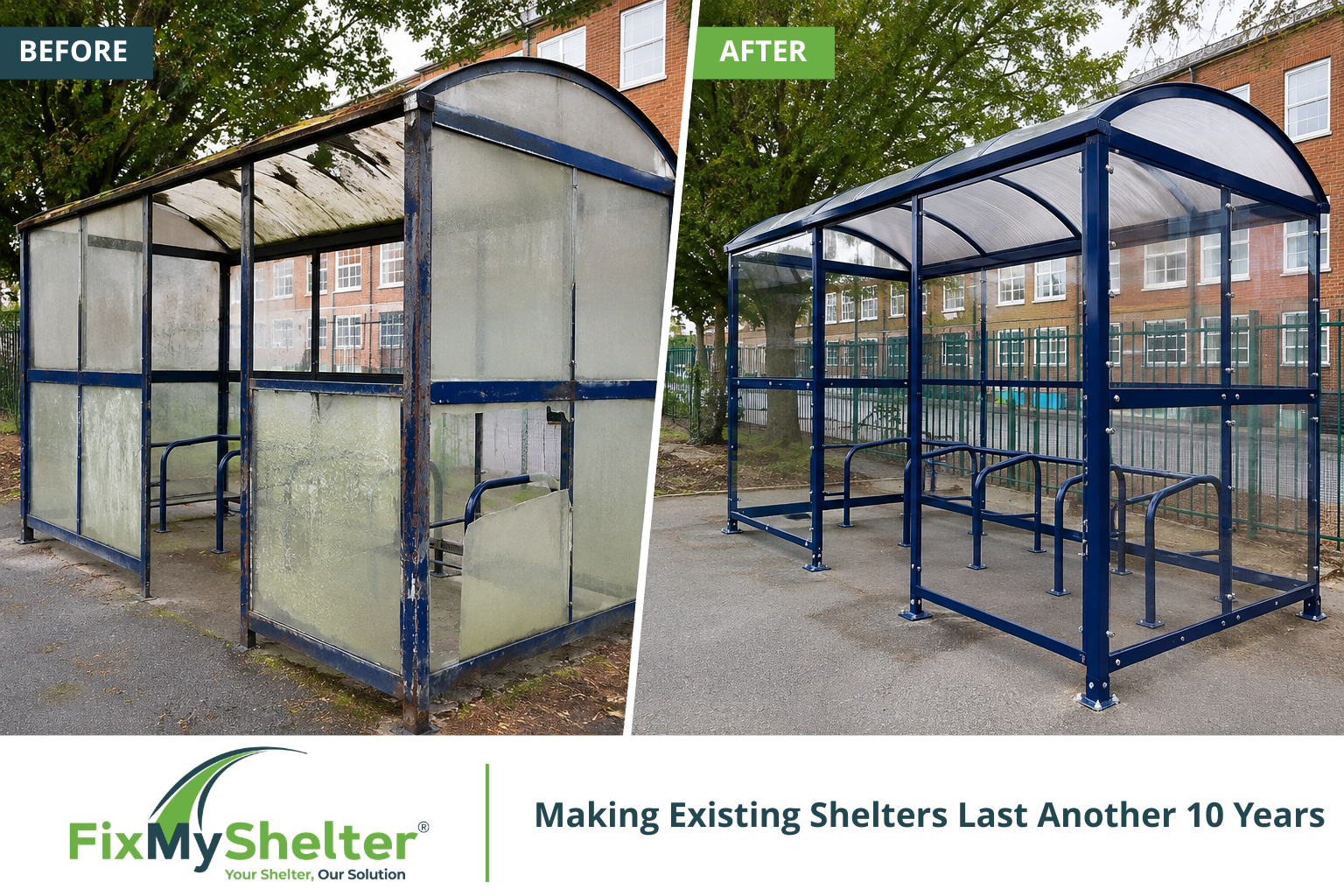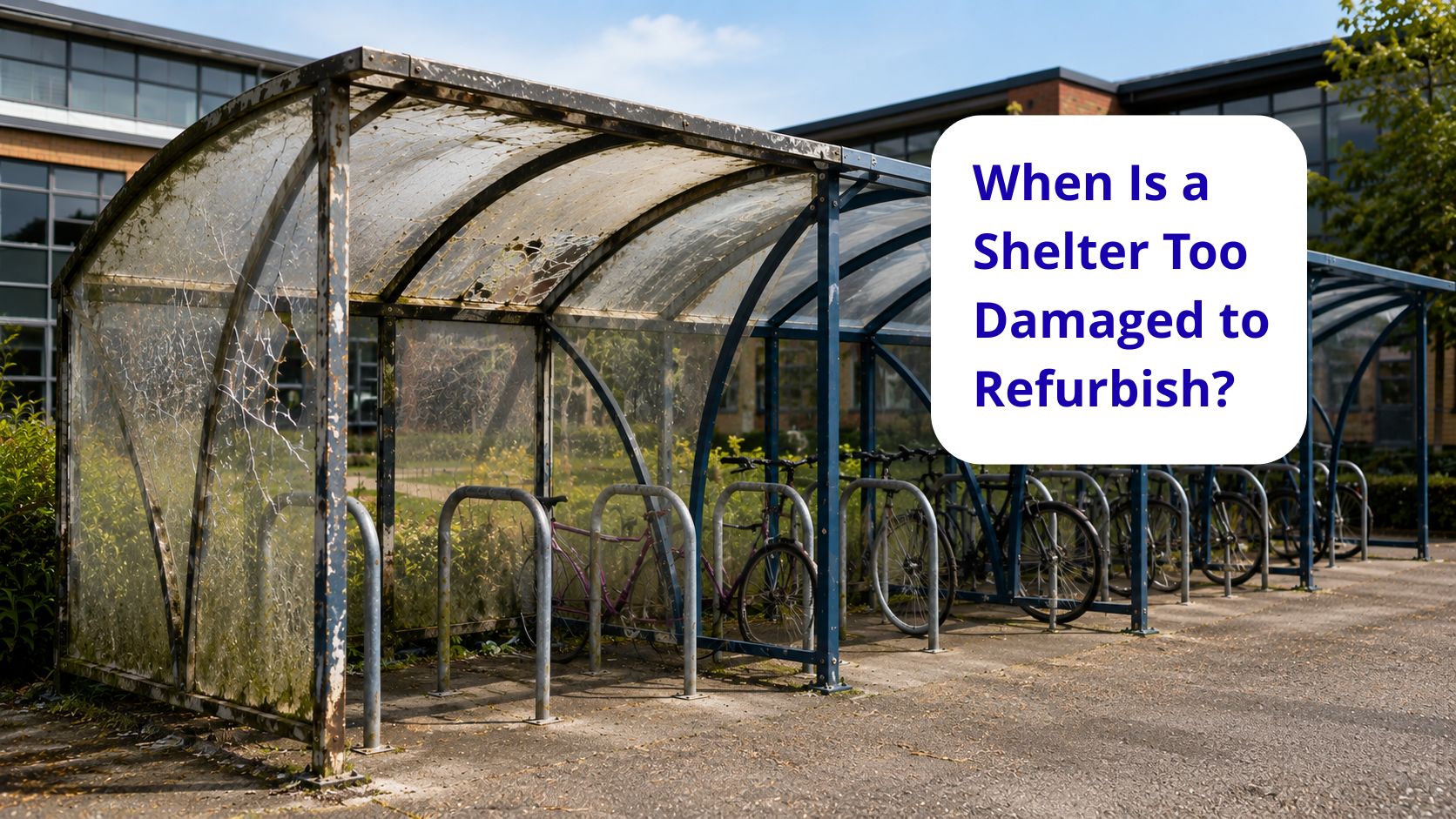
When an outdoor shelter starts looking tired, cloudy or missing glazing, rattling panels, corrosion spots, water ingress, or loose fixings, the default reaction is often: “We need a new one.” But for many smoking shelters, cycle shelters, walkways and canopies, a targeted refurbishment can deliver a “like-new” result for a fraction of the cost, and often with far less disruption to your site.
This is exactly why refurbishment is becoming the smarter first step for UK facilities managers, schools, councils, NHS sites, commercial landlords, and employers: you keep the asset you already own, upgrade the parts that fail, and avoid the full replacement bill. Whole-life thinking (including maintenance, downtime, and end-of-life costs) is also strongly aligned with established life cycle costing approaches used in the UK built environment.
Why “replacing everything” is usually the most expensive option
A full shelter replacement isn’t just the cost of the new unit. It typically includes:
- Removal and disposal of the existing shelter
- Groundworks and making good (especially if base plates/anchors differ)
- Re-installation, labour, access equipment, traffic management (where needed)
- Site downtime (blocked walkways, restricted entrances, cordoned areas)
- Risk of “scope creep” (unexpected repairs to slabs, drainage, or surrounding finishes)
Restoration, on the other hand, focuses on where shelters most commonly fail: glazing panels, roof sheets, fixings, seals, and protective finishes, while retaining the main frame if it’s still structurally sound.
What usually fails first on smoking shelters and cycle shelters
In real-world UK weather and day-to-day use, these are the usual culprits:
1) Glazing panels go cloudy, cracked, or missing
Polycarbonate/Petg/Perspex-style glazing can become scratched, UV-aged, brittle, or vandalised, especially on smoking shelters and cycle shelters where panels take frequent impact.
2) Fixings loosen, and joints start to move
Once fixings loosen, you get rattles, leaks, and accelerated wear because the shelter moves in the wind.
3) Corrosion spots appear (often localised)
Corrosion frequently starts around fixings, base plates, or damage to protective coatings, meaning you may not need a new frame, just treatment and a protective recoat.
4) Roof sheets leak or degrade
A leaking roof doesn’t automatically mean “new shelter.” In many cases, panel replacement and sealing solves the problem faster and cheaper.
The refurbishment sweet spot: when you can save “thousands”
Refurbishment tends to be the best-value option when:
- The main frame is stable and safe (even if it looks tired)
- The issue is mainly panels/roof/fixings, not structural failure
- You need a quick turnaround and minimal site disruption
- You’re managing multiple shelters across an estate and want a repeatable, budget-friendly programme
Even if you plan to replace eventually, refurbishment can be a smart interim move to extend service life while you align budgets, approvals, and procurement cycles (especially common in education and public sector settings).
Refurbishment vs replacement: a practical decision checklist
Use this quick checklist before you commit to full replacement.
Refurbish if:
- ✅ Frame is solid (no major bends, cracks, or unsafe movement)
- ✅ Problems are mainly glazing, roof sheets, doors/gates, fixings, and seals
- ✅ Foundations are fine, and you want to avoid groundworks
- ✅ You want to improve your appearance quickly (first impressions matter)
- ✅ You want lower embodied waste and less disposal
Replace if:
- ❌ Frame is structurally compromised (impact damage, serious corrosion, instability)
- ❌ The shelter is the wrong size/layout and can’t be adapted
- ❌ Compliance or operational needs have changed significantly (capacity, access, location)
- ❌ Repairs would be repeated every few months (false economy)
From a whole-life cost perspective, the goal is to choose the option that minimises total cost over time, not just today’s invoice.
What a “proper refurbishment” can include (and why it works)
A strong refurbishment plan is typically a bundle of targeted upgrades:
Shelter glazing panel replacement (big visual impact, fast)
Replacing cracked, missing, or fogged panels instantly improves:
- Safety (no sharp edges, better integrity)
- Appearance (clear, professional finish)
- Weather protection (reduces wind and rain ingress)
Fix My Shelter supplies replacement glazing options (including polycarbonate and Perspex-style sheets) widely used for shelter applications.
New roof sheets and sealing (stops leaks, reduces complaints)
If water ingress is your main issue, replacing roof sheets and seals can remove the biggest “pain point” without touching the main structure.
Fixings, brackets, and stability improvements
Refurb isn’t cosmetic only, but swapping corroded or loose fixings and tightening joints can restore rigidity and reduce ongoing damage.
Protective treatments and clean-up
A deep clean plus protective coating/treatment (where suitable) can transform a shelter’s presentation, important for schools, hospitals, business parks, and visitor-facing sites.
The “hidden savings” most sites miss
Restoration isn’t only about the supplier quote. It often reduces costs you don’t see on a product page:
- Less downtime: quicker works are often completed in a day mean fewer closures
- Lower installation complexity: avoid major groundworks and re-anchoring
- Reduced disposal: fewer skips, less waste handling
- Faster approvals: easier to justify a refurb programme than a full capex replacement
There’s also a sustainability angle: the “refurbish vs replace” conversation is increasingly tied to embodied carbon and waste reduction in the built environment, where keeping existing assets in service can be favourable compared with replacement.
Why Fix My Shelter is a good fit for refurbishment-led projects
For facilities teams, the ideal partner isn’t just someone who can sell a new shelter; it’s someone who can assess what you already have and offer the most cost-effective solution.
With more than 15 years’ experience, Tamstar Ltd t/a Fix My Shelter is well-positioned as a UK supplier covering outdoor facilities management products (including smoking shelters, cycle storage and related components), and also supports shelter-related solutions such as replacement glazing sheets and installation support.
That matters because refurbishment lives in the details:
- Getting panel sizing right with our accurate cutting service
- Choosing the right glazing material for impact, clarity, and durability
- Using the right fixings and installation method for the shelter type
- Minimising site disruption while improving safety and appearance
FAQs facilities managers ask
“How do I know if my shelter is worth refurbishing?”
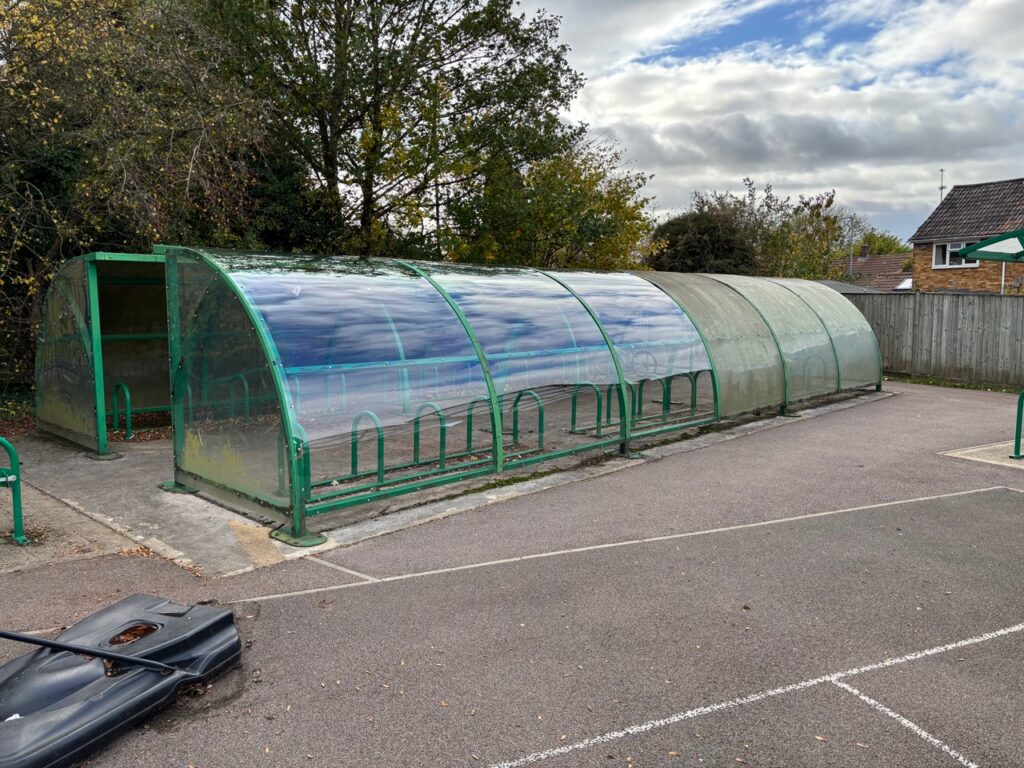
If the frame is stable and the problems are mostly glazing/roof/fixings/appearance, refurbishment is usually worth pricing. If the frame is unsafe or heavily deformed, replacement is more likely. (A quick photo survey often helps us advise)
“Will it still look ‘old’ after refurb?”
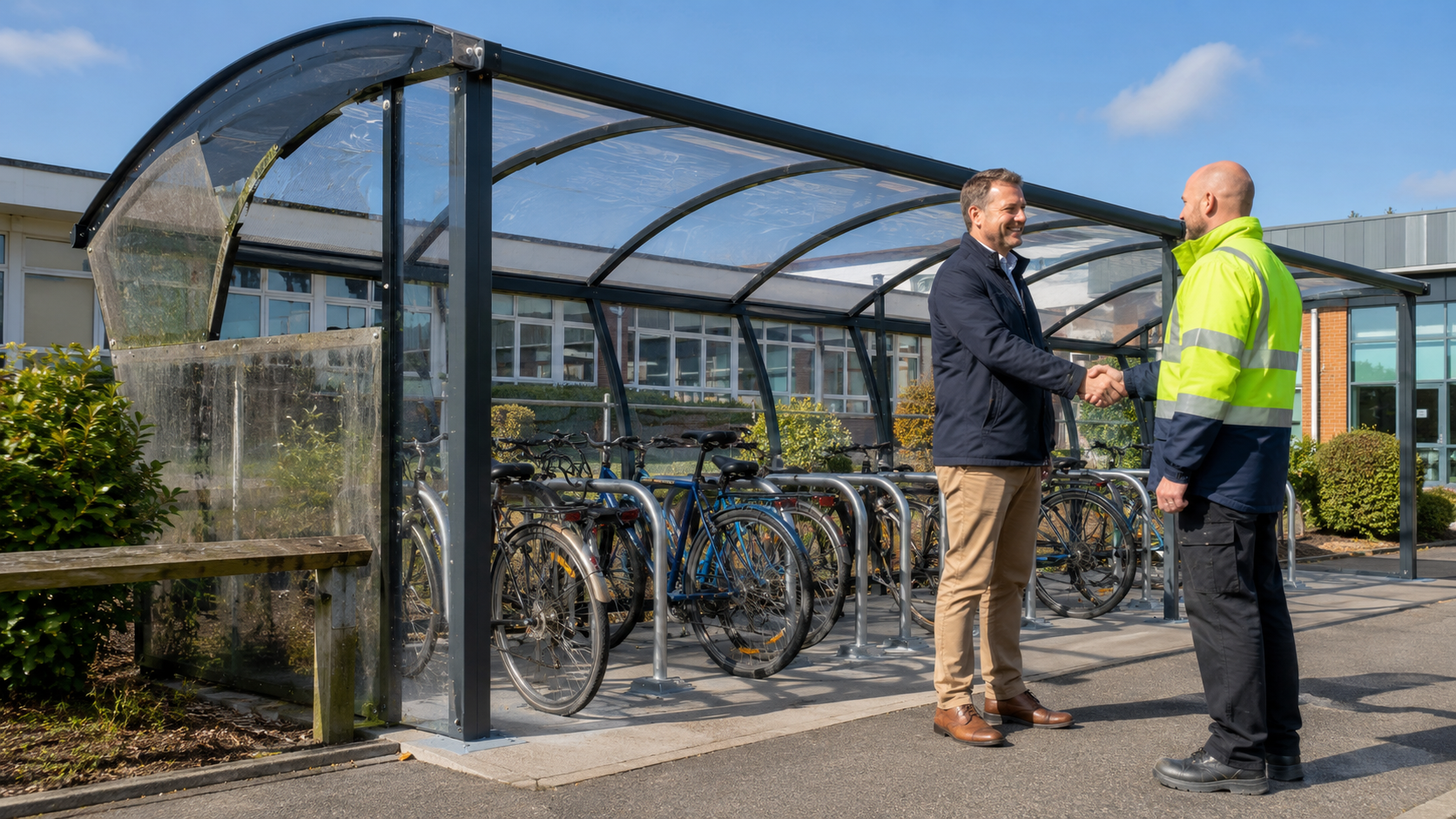
Not if you refurbish the right components. New clear panels + roof + tidy fixings often make a shelter look dramatically newer, especially for schools and workplaces where cloudy panels are the main “aged” look.
“Is refurbishment compliant?”
Compliance depends on your site requirements and shelter use, but refurbishment can improve safety (e.g., replacing cracked panels, eliminating sharp edges, restoring structural rigidity) and weather protection. For smoking/vaping shelters, you’ll also be thinking about practical considerations like airflow and location policies.
Next step: price the refurb before you price the replacement
If your outdoor shelter is “past its best,” don’t assume it’s end-of-life. A refurbishment/restoration quote is often the quickest way to uncover real savings, and it can help you justify budgets with a clear refurb vs replace comparison. Refurbish first, replace only when you must, and you’ll often protect your budget and your site operations at the same time.